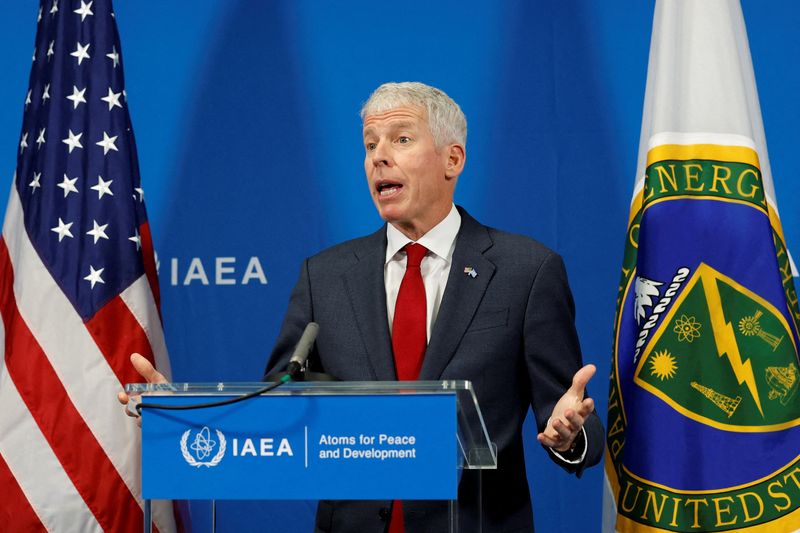
US energy secretary confirmed no plans for nuclear explosions in 2025, a crucial announcement amid heightened global uncertainties. This statement aims to de-escalate geopolitical tensions, providing a degree of reassurance for investors worldwide.
Such pronouncements are vital for market stability, particularly in sectors sensitive to geopolitical risks like energy and defence. Investors are closely monitoring diplomatic efforts for potential economic impacts.
Key indicators to watch include crude oil prices, defence stock performance, and global currency fluctuations. As of market close, the VIX index showed mild volatility.
Our analysis delves into the broader implications for these sectors.
Expert Market Analysis
The US Energy Secretary’s confirmation regarding no planned nuclear explosions for 2025 arrives at a critical juncture in global geopolitics. Historically, any discourse concerning nuclear activity has sent significant ripples through international financial markets, often precipitating sharp declines in equity valuations and a concurrent surge in demand for safe-haven assets like gold. The explicit denial of such intentions serves as a vital reassurance, especially as major global powers navigate a complex web of international relations where energy security and national security are inextricably linked. The year 2025 is poised to be a dynamic period, marked by ongoing geopolitical realignments and rapid technological advancements that could further shape these intricate dynamics. Understanding the historical precedents, such as the immense weight carried by similar pronouncements during the Cold War era, is essential for contextualizing the current global landscape and its potential impact on energy markets and defence stocks. The US administration’s clear stance aims to foster a more predictable investment environment, reducing tail-risk premiums associated with extreme geopolitical scenarios.
From a fundamental analysis viewpoint, the immediate market reaction to this statement might be subdued, given its nature as a clarification rather than a new policy shift. However, for companies operating within the defence sector, any perceived de-escalation of nuclear threats could prompt a reassessment of future contract revenues and research and development expenditures. Conversely, while energy markets may not be directly impacted by this specific announcement, they remain highly sensitive to the broader geopolitical stability. Examining key metrics, such as the VIX index (volatility index) and the order books of defence contractors, can offer deeper insights into market sentiment and risk premiums. Analysts suggest that while immediate investor sentiment might not see dramatic shifts, the long-term implications for defence budgets and strategic investments are significant. The absence of nuclear escalation fears allows for a more focused analysis of company-specific fundamentals.
A comparative analysis of US energy policy stances against those of other global powers reveals diverse approaches to nuclear doctrine and energy security. While the United States consistently emphasizes non-proliferation and the peaceful application of nuclear energy, other nations may harbor distinct strategic considerations. The defence sector, a key area profoundly influenced by geopolitical tensions, includes major international players like Lockheed Martin (LMT) and Raytheon Technologies (RTX), as well as relevant domestic counterparts such as Hindustan Aeronautics Limited (HAL) in India, whose financial performance is intrinsically tied to government defence spending. The current statement from the US administration suggests a strategic pivot away from extreme escalatory scenarios, potentially reallocating resources and focus towards other strategic priorities. Companies like LMT and RTX may see adjusted revenue forecasts based on a calmer geopolitical outlook.
The expert takeaway for investors is to interpret this statement as a signal of sustained diplomatic engagement rather than a definitive resolution to underlying geopolitical risks. While the immediate anxiety surrounding potential nuclear escalations may subside, the fundamental geopolitical currents remain active. Retail investors are advised to exercise caution and avoid speculative trades based solely on this single announcement. Institutional investors, who typically possess longer investment horizons, might find this an opportune moment to re-evaluate their exposure to sectors disproportionately affected by geopolitical uncertainty, such as defence stocks and broader energy markets. A diversified portfolio remains key, with a focus on companies exhibiting strong fundamentals independent of geopolitical events. The confirmed outlook for 2025 in US energy policy provides a clearer landscape for strategic investment decisions.
Related Topics:
US energy policy, nuclear threats 2025, geopolitical risks analysis, defence stocks outlook, energy markets stability, global finance news, market outlook 2025, LMT stock, HAL stock
About the Author