The model Erin O’Connor has spoken out about the need for social media platforms to apply “clearer, more context-sensitive guidelines” after Instagram repeatedly removed two nude photographs she had posted on Mother’s Day, celebrating her heavily pregnant body.
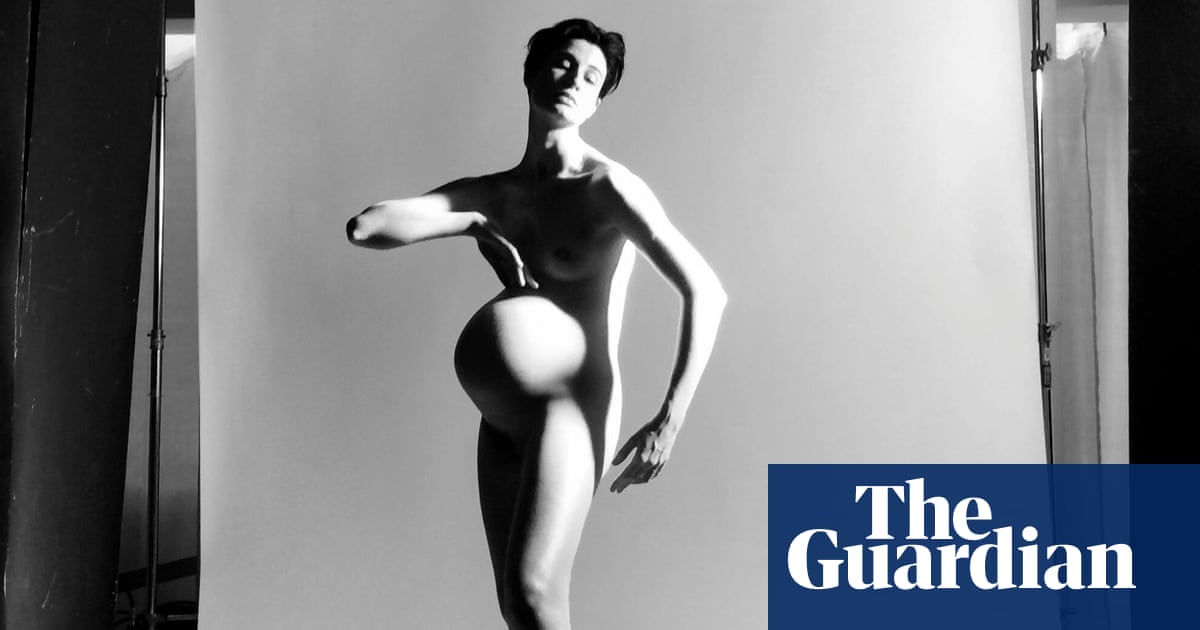
The photos – which were removed, reinstated and then removed again by the platform – were taken in 2014 when O’Connor, who is 48, was eight and half months’ pregnant with her son Albert.
In one portrait, the model, who has worked for Dior, Versace, Alexander McQueen and Chanel, touches her baby bump with an expression of maternal bliss on her face. Another highlights the swell of her pregnant belly and casts her erect nipples in shadow.
O’Connor revealed on Friday that after she shared the photos on Instagram to mark Mother’s Day in the UK on 15 March, the social media platform removed her post and messaged her to explain she had breached “nudity guidelines”.
The message included a note on “freedom of expression”, which stated: “We want you to share freely with others. We only remove things or restrict people to keep the community respectful and safe.”
Alongside the two photos, which were taken by the photographer Nick Knight, O’Connor wrote a post paying tribute to “all those who continue to nurture, support, love and protect children (close to home and across the world) in every way, shape and form”. She also included a poem addressed to her “baby boy”.
The entire post was removed, as well as the photographs, but Meta, which owns Instagram, restored the post on Sunday after O’Connor complained and the Sunday Times and the Guardian covered the story.
But just minutes after the post was restored, it was flagged to Instagram users as “sensitive” and shortly afterwards it was removed again.
O’Conner said she had received another message from Meta, which she suspected was automated, advising her the post had been removed because it “may show nudity” and “this goes against our community standards on nudity”. She immediately challenged the decision for the second time.
At an event at the National Gallery in London last Friday, O’Connor argued Meta’s decision to ban the photographs of her pregnant body while women were “hypersexualised on a daily basis” was an example of double standards.
When she discovered her post had been restored on Sunday afternoon, O’Connor told the Guardian: “I’m incredibly grateful that Meta took the time to review and ultimately restore such a meaningful and important image. It means so much to have this moment of strength, vulnerability and celebration of motherhood, recognised and respected.
“Meta should apply clearer, more context-sensitive guidelines so that meaningful content – like pregnancy, birth, and body-positive imagery – is not mistakenly removed.
“Meta should also ensure faster, more thoughtful human review processes so creators feel heard and respected when decisions are appealed.”
She added she was grateful the story has been picked up by the media because “it felt like the only way my voice could truly be heard. If I can use my platform to encourage others to challenge Meta when necessary, then this experience has been a positive one – one I hope helps support others who want to express themselves freely on a platform that should be both informative and trustworthy.”
She was disappointed to discover the post had been taken down a second time, giving Meta’s communications about its removal a thumbs down in a message to the Guardian. “Wanted to share with you after all that progress,” she wrote.
On Friday, speaking to an audience who had gathered to hear her being interviewed by the BBC Radio 4 presenter John Wilson for the National Gallery’s monthly Picture This series, she said: “It feels inconceivable that a heavily pregnant naked woman could be perceived as offensive, when she stands in her full power, her body at its most extraordinary, embodying its innate ability to grow, birth and sustain new life.”
It was the first time she had ever allowed herself to be photographed naked: “It’s such a shame that that would be offensive in the 21st century, and yet in galleries everywhere you have these very sensual and erotic images of women.”
“[My son] Albert arrived a couple of weeks later and I did the interview to accompany these pictures when I was in labour in the hospital bed. It was a lovely distraction, I’m not going to lie,” she said. “It really wasn’t about nudes, it was about expectation … That abundance of life being right there.”
The model recently celebrated her 30th year in the industry and revealed she was going through perimenopause. She was once described by Karl Lagerfeld as “one of the best models in the world” but she told the audience at the National Gallery she had spent most of her career feeling uncomfortable in her body.
It had only been in the past three years that she had come to accept herself, she said: “It took 45 years. I’ve had three years of living well and truthfully, and it’s the most wonderful thing.”
Meta said its default response was to remove “sexual imagery” to prevent the sharing of non-consensual or underage content.
A spokesperson added that its policy is to restrict images of female breasts that include the nipple, but it allows other images, including those depicting acts of protest, women actively engaged in breastfeeding and photos of post-mastectomy scarring.
Allowances can also be made for “real world art and certain medical, educational and awareness-raising content”.
The platform did not immediately respond to a further request for comment on why the post had been removed a second time.
Last year, just before Mother’s Day, O’Connor posted both photos on Instagram with a very similar message. That post received 2,500 likes and has not been removed.
Source: https://www.theguardian.com/fashion/2026/mar/29/erin-oconnor-says-instagram-removed-pregnancy-photo-nudity-breach
About the Author