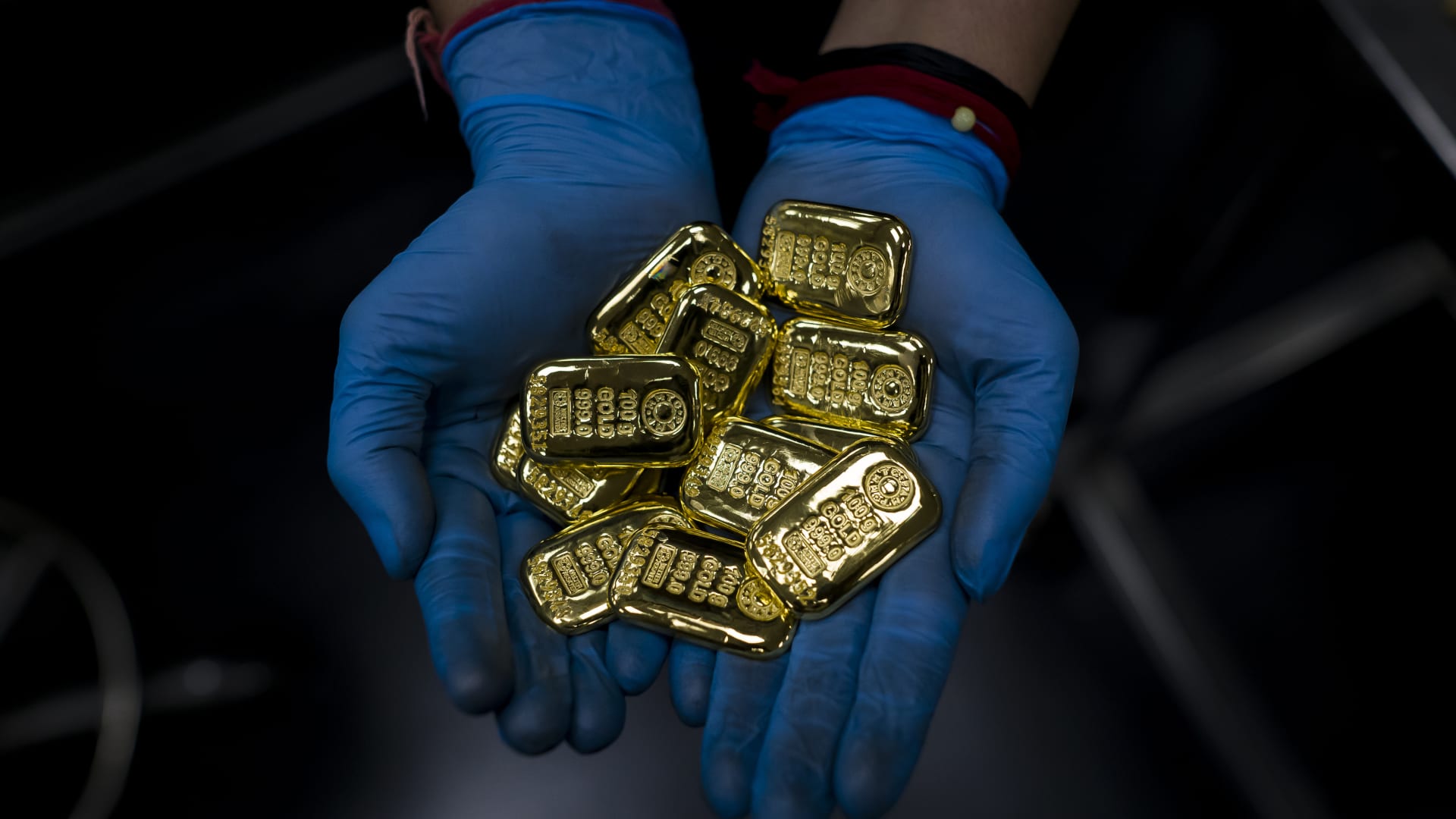
Indian consumers spent a staggering $11 billion on gold this Diwali, highlighting its enduring appeal as an investment and signifying strong demand for the yellow metal. There was a notable pivot towards investment in coins and bars.
This trend is crucial for investors, underscoring gold’s growing importance in Indian household investment strategies and its role as a tangible hedge against inflation and currency fluctuations.
As of market close October 25, 2025, gold prices saw a significant 55% year-to-date gain, with over 40 tons sold on Diwali day. Market analysts anticipate continued price appreciation.
We delve into the factors driving this surge and its implications.
| Metric | Previous | Current | Change |
|---|---|---|---|
| Diwali Gold Spending (USD Billion) | 8 | 11 | +37.5% |
| Diwali Day Gold Sales (Tons) | 38 | 40 | +5.3% |
| Year-to-Date Gold Price Gain | 30% | 55% | +83.3% |
| Gold ETF Inflows (Sept 2025) | 1x | 6x | +500% |
Expert Market Analysis
Diwali 2025 marked an unprecedented surge in gold spending by Indian consumers, with estimates ranging between $8 billion and $11 billion. This figure significantly surpassed typical year-on-year festive expenditures, fueled by a pronounced shift from traditional jewelry towards investment-grade gold in the form of coins and bars. Major bullion markets reported historically high demand for these investment products. Trade bodies confirmed sales exceeding 40 tons of gold on Diwali day alone. This robust demand, even amidst elevated prices, underscores gold’s deepening integration into Indian household investment portfolios. This trend has been gaining momentum over recent years, as consumers increasingly perceive gold as a crucial hedge against economic volatility and currency depreciation.
The primary catalyst for this surge has been the substantial appreciation in gold prices, which rose 66% by mid-October 2025, culminating in a 55% year-to-date gain. Market analysts anticipate continued price appreciation, with some predicting gold could reach $5,000 per ounce by 2026, signaling a transformation in its perception from a mere consumer product to a key investment asset. This shift is clearly visible in consumer behavior, favoring gold bars and coins for their investment potential. This trend is further bolstered by global factors, including significant increases in central bank gold purchases since 2022, indicating a structural shift in reserve management and driving sustained price momentum. Gold is increasingly viewed as a hedge against currency depreciation and equity market volatility, a sentiment echoed by wealth management firms re-evaluating their asset allocations in response to these evolving market dynamics.
The Indian gold market, the second-largest globally, is undergoing a significant structural transformation. While demand for jewelry saw a 30% decline compared to the previous year, investment products like gold ETFs and digital gold have experienced a surge, with September 2025 gold ETF inflows increasing more than six-fold. This performance contrasts sharply with traditional jewelry retailers who faced stock depletion due to the heightened demand for coins and bars. The overall volume of gold sold during Diwali was only about 5% lower than the previous year, indicating that higher prices were absorbed by strong investor appetite for gold as an asset class, rather than a decline in overall consumption. Competitors in the broader precious metals market are closely observing these shifts, with silver prices also showing a notable upward trend, reflecting a broader sentiment towards safe-haven assets.
Sustained global central bank buying, coupled with retail investors’ fear of missing out on the rally, suggests a continued upward trajectory for gold prices. Analysts are advising increased allocation to gold in investment portfolios, with recommendations ranging from 5-10% to as high as 15%. This growing confidence in gold as a stable and high-return asset class is particularly significant for the Indian market. Investors should closely monitor central bank policies, geopolitical events, and currency movements, as these will significantly influence gold’s price dynamics. Key risks include potential interest rate hikes by major central banks and a de-escalation of global geopolitical tensions, while opportunities may arise from price dips offering attractive entry points for long-term investors seeking to capitalize on the asset’s defensive qualities.
Related Topics:
Diwali Gold Spending 2025, Gold Investment India, Gold Coins India, IBJA, GJC, Commodity Market India, Festive Season Demand, Gold ETF Inflows, Gold Price Analysis, Bullion Market India
About the Author