Key Takeaways
Analyze the Congo peace accord’s market impact for 2025. Understand commodity outlook, investor risks, and key insights for Central Africa’s stability.
Market Introduction
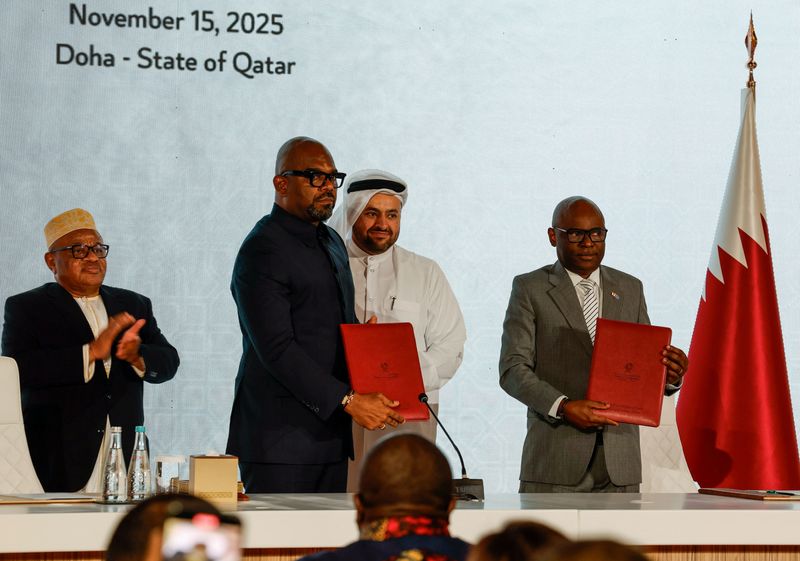
The Congo peace accord signed in Qatar offers a critical juncture for 2025, potentially reshaping Central Africa’s economic landscape. This development is keenly watched by investors for its impact on commodity supplies, particularly cobalt and copper, essential for the global EV and electronics industries.
A stable Congo signifies increased investment potential and predictable resource extraction, influencing global market dynamics for essential minerals like cobalt and copper. Analysts are closely monitoring regional indicators for shifts in supply chain reliability.
While immediate stock fluctuations remain uncertain, analysts will focus on metrics such as the EBITDA margins of mining firms and their free cash flow generation. According to recent exchange data, volatility is expected.
This analysis delves into the market impacts and investor considerations stemming from this accord.
In-Depth Analysis
The recent peace framework agreement between Congo and the M23 group, brokered in Qatar, represents a pivotal moment that could redefine Central Africa’s geopolitical and economic trajectory for 2025. For years, the Democratic Republic of Congo (DRC) has grappled with persistent conflict, often fueled by disputes over its abundant mineral wealth. Should this accord be effectively implemented and sustained, it could cultivate an environment ripe for augmented foreign direct investment and more consistent commodity output. Historical peace initiatives have, however, often fallen short of delivering lasting stability, underscoring the importance of a ‘cautious optimism’ approach and diligent observation of this new agreement’s progress. International observers will also be keenly focused on the broader regional ramifications, including the evolution of inter-state relations and the effectiveness of international mediation efforts as the framework moves towards practical application. Past experiences in other resource-rich regions marred by conflict suggest that enduring peace can indeed unlock substantial economic potential, drawing parallels to economic recoveries seen in nations like Ghana and Zambia.
From a fundamental analysis perspective, the prospect of sustained peace within the DRC presents significant economic advantages. As a foremost global supplier of indispensable minerals such as cobalt and copper, vital for the burgeoning EV and electronics sectors, a decrease in conflict-related disruptions could bolster mining operations, enhance the efficiency of logistical networks, and improve the transparency of revenue collection, thereby contributing to robust GDP growth. Financial analysts are expected to scrutinize key performance indicators, including the EBITDA margins of mining conglomerates operating in the DRC and their free cash flow generation capabilities. Concurrently, technical indicators may offer insights into evolving investor sentiment, potentially signaling upward trends in mining and infrastructure-related equities if stability is demonstrably maintained. Management outlooks published by prominent resource extraction companies will be instrumental in assessing the tangible economic benefits and realistic revenue growth prospects anticipated.
Comparing the DRC’s current situation to that of peer nations situated in comparable resource-rich yet conflict-prone territories offers invaluable context. Countries that have successfully navigated transitions from periods of conflict to stable governance have frequently witnessed notable upswings in their respective equity markets and improvements in their sovereign credit ratings. While the IT sector might not exhibit direct correlation with the DRC’s primary export commodities, it could indirectly benefit from a potential increase in global demand for electronics if commodity prices achieve greater stability. The ultimate success of this peace framework hinges critically on its capacity to address the underlying drivers of conflict, encompassing resource governance issues and the imperative for political inclusion. The prevailing regulatory climate, both domestically and internationally, will significantly shape investment attraction and the security landscape in the post-conflict phase, mirroring challenges previously encountered by countries like Ghana and Zambia in effectively managing their mineral endowments.
The prevailing consensus among expert analysts for investors is characterized as ‘cautious opportunity.’ Despite the inherently positive nature of the peace framework agreement, considerable risks persist, including the latent possibility of conflict recurrence and the intrinsic complexities associated with implementing a comprehensive and lasting peace. Key developments that warrant close monitoring encompass the effective execution of the disarmament, demobilization, and reintegration (DDR) process for M23 combatants, as well as the transparent and equitable management of natural resource revenues. Retail investors are strongly advised to undertake thorough due diligence, giving priority to companies exhibiting strong corporate governance and transparent operational practices. Institutional investors may contemplate establishing longer-term positions within diversified investment portfolios, contingent upon observing concrete evidence of sustained peace and tangible economic advancement. Potential strategic entry points for investments will likely be influenced by further de-escalation of tensions and the implementation of clear, supportive policy reforms by the Congolese government, with analyst price targets potentially being revised upwards following positive on-ground developments.
About the Author