Key Takeaways
Colombia suspends US intel sharing, impacting regional security. Explore geopolitical analysis and potential market implications for investors in 2025.
Market Introduction
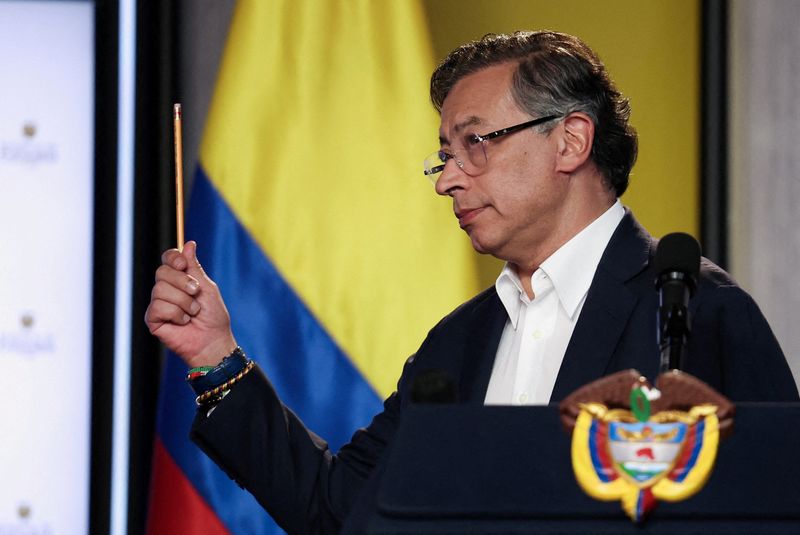
Colombia suspends US intelligence sharing, a pivotal geopolitical event impacting regional security and potential market implications for 2025. This action by President Gustavo Petro signals a significant recalibration of foreign policy.
Investors are closely watching for shifts in geopolitical stability and its indirect influence on investment flows, particularly concerning South American economies and defense sectors.
While direct financial impacts are pending detailed announcements, market analysts are evaluating potential shifts in investor sentiment towards emerging markets.
This analysis delves into the immediate and long-term consequences for investors.
In-Depth Analysis
Colombia’s decision to halt intelligence sharing with the United States represents a significant geopolitical shift, potentially indicating a broader recalibration of its foreign policy under President Gustavo Petro. Historically a crucial security partner for the U.S. in counter-narcotics and combating insurgencies, this suspension, made without extensive public explanation, raises critical questions about the future trajectory of bilateral relations. Global markets, especially those with exposure to Latin American stability and defense sectors, will be closely observing for any discernible fallout. However, direct market impacts are anticipated to be indirect and nuanced, heavily dependent on the specific intelligence domains affected and the overall duration of this suspension. Historical precedents in international relations often show that such unilateral actions can lead to periods of uncertainty, impacting investor sentiment towards emerging markets. Similar geopolitical realignments in other regions have sometimes preceded shifts in capital allocation, highlighting the interconnectedness of security and economic stability.
From a fundamental perspective, the immediate financial impact on specific Colombian companies remains unclear without further detailed announcements. However, any perceived increase in regional instability or a perceived weakening of anti-narcotics enforcement efforts could indirectly dampen investor sentiment towards Colombian sovereign debt and equities. Analysts will be closely scrutinizing key economic indicators and capital flows into the country over the coming weeks. The absence of concrete financial metrics directly attributable to this event necessitates reliance on geopolitical risk assessment and projected shifts in foreign investment patterns. Potential impacts on sectors reliant on stable security conditions, such as tourism and certain agricultural exports, may also emerge, affecting their revenue growth and profit margins. Evaluating these risks requires a deep understanding of the Colombian economy and its ties to international markets.
Comparing Colombia’s strategic position with other regional players, this suspension could create security vacuums or prompt shifts in existing dynamics. Neighboring countries such as Brazil, Venezuela, and Ecuador are likely to observe these developments with keen interest, potentially adjusting their own bilateral security arrangements. While specific intelligence competitors to Colombia are not publicly defined, the U.S. maintains robust intelligence-sharing agreements with numerous nations worldwide. The crucial question for the market is whether this suspension represents an isolated incident or signals a broader trend that could affect other U.S. partnerships. The evolving landscape of global alliances and shifting geopolitical priorities will inevitably shape how international investors perceive and react to this event, influencing foreign direct investment and sector-specific growth outlooks.
The expert takeaway suggests that while the immediate financial impact may be relatively muted, the long-term implications for foreign investment and regional stability warrant careful monitoring by market participants. Investors are advised to consider portfolio diversification to mitigate any unforeseen geopolitical risks arising from this announcement. Key events to track include further statements from the Colombian government or the U.S. State Department, alongside observable shifts in regional security cooperation or drug interdiction statistics. While precise price targets are difficult to ascertain at this juncture, a cautious investment approach is strongly recommended until greater clarity emerges regarding the scope and ultimate intent behind this significant suspension of intelligence sharing.
About the Author