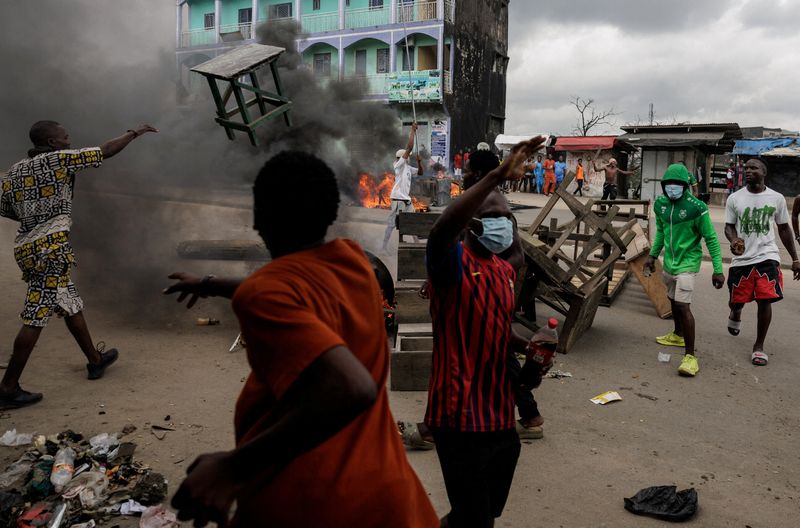
Cameroon’s President Paul Biya has secured a seventh term amid protests, introducing significant political uncertainty for investors and potentially dampening foreign direct investment (FDI). Market analysts are closely monitoring the situation.
This instability poses a direct threat to economic activity, potentially disrupting trade and supply chains, and impacting consumer confidence, a key concern for emerging market tracking.
While specific Cameroonian stock data is scarce, political stability is crucial for capital inflow and economic growth. Investors are assessing repercussions.
This analysis explores the economic implications of Biya’s re-election.
Expert Market Analysis
Cameroon’s political landscape is under intense scrutiny following President Paul Biya’s re-election at 92 years old. This seventh term, however, is overshadowed by widespread protests and challenges to electoral legitimacy from opposition parties and international observers. Historically, contested transitions and periods of perceived political stagnation in Cameroon have often preceded economic volatility. Previous election cycles have frequently been marred by allegations of fraud and sporadic violence, fostering an environment of uncertainty for both domestic and international stakeholders. The broader African political context views elections as critical junctures, and Cameroon’s situation is being observed for potential regional ripple effects and geopolitical implications, a sentiment echoed by market analysts assessing emerging market risks and political instability.
From a fundamental economic perspective, sustained political stability is a cornerstone for attracting investment and fostering long-term economic growth. The current protests, reportedly involving clashes and demands for electoral reform, pose a direct threat to this crucial stability. Key economic indicators such as foreign direct investment (FDI) inflows, GDP growth rates, and currency stability are inherently sensitive to political developments. While detailed financial data for specific Cameroonian companies, like EBITDA margins or P/E ratios, is not readily accessible on global exchanges, the overall investment climate is paramount. Analysts are meticulously observing the government’s response to the demonstrations and the opposition’s strategic maneuvers, as these will significantly shape investor sentiment and the ease of conducting business within the nation, impacting the economic outlook for 2025.
Drawing parallels with other African nations experiencing political transitions provides valuable context for understanding Cameroon’s economic trajectory. Countries with more established democratic processes, such as Nigeria or Ghana, often offer more predictable economic environments, though they are not entirely immune to political risks. Cameroon’s economy, heavily reliant on natural resources like oil and timber, renders it particularly susceptible to disruptions in production and exports stemming from internal conflict or unrest. Consequently, its trade partners are also evaluating the potential impact on their own supply chains and market access. The development of robust regulatory frameworks and transparent governance standards is crucial for attracting diversified investment beyond primary commodities, a common theme across emerging markets.
The expert takeaway for investors signals a need for pronounced caution. While President Biya’s re-election ensures a degree of policy continuity, the immediate public reaction and ongoing protests highlight potential challenges to his administration’s legitimacy and its capacity for effective governance. Retail investors may perceive this as a high-risk environment, while institutional investors are likely reassessing their exposure, seeking assurances regarding security and economic policy. Key developments to monitor include further statements from opposition leaders, potential government responses to the unrest, and any interventions from regional bodies. While opportunities for strategic investment might emerge if the situation stabilizes, the immediate outlook remains clouded by uncertainty, necessitating a defensive investment stance until greater clarity prevails in Cameroon’s political and economic landscape.
Related Topics:
Cameroon Election Analysis, Paul Biya Economic Outlook, Africa Political Instability, FDI Cameroon Risk, Emerging Markets Volatility, Geopolitical Risk Africa, Cameroon Investment Climate, Economic Outlook 2025
About the Author