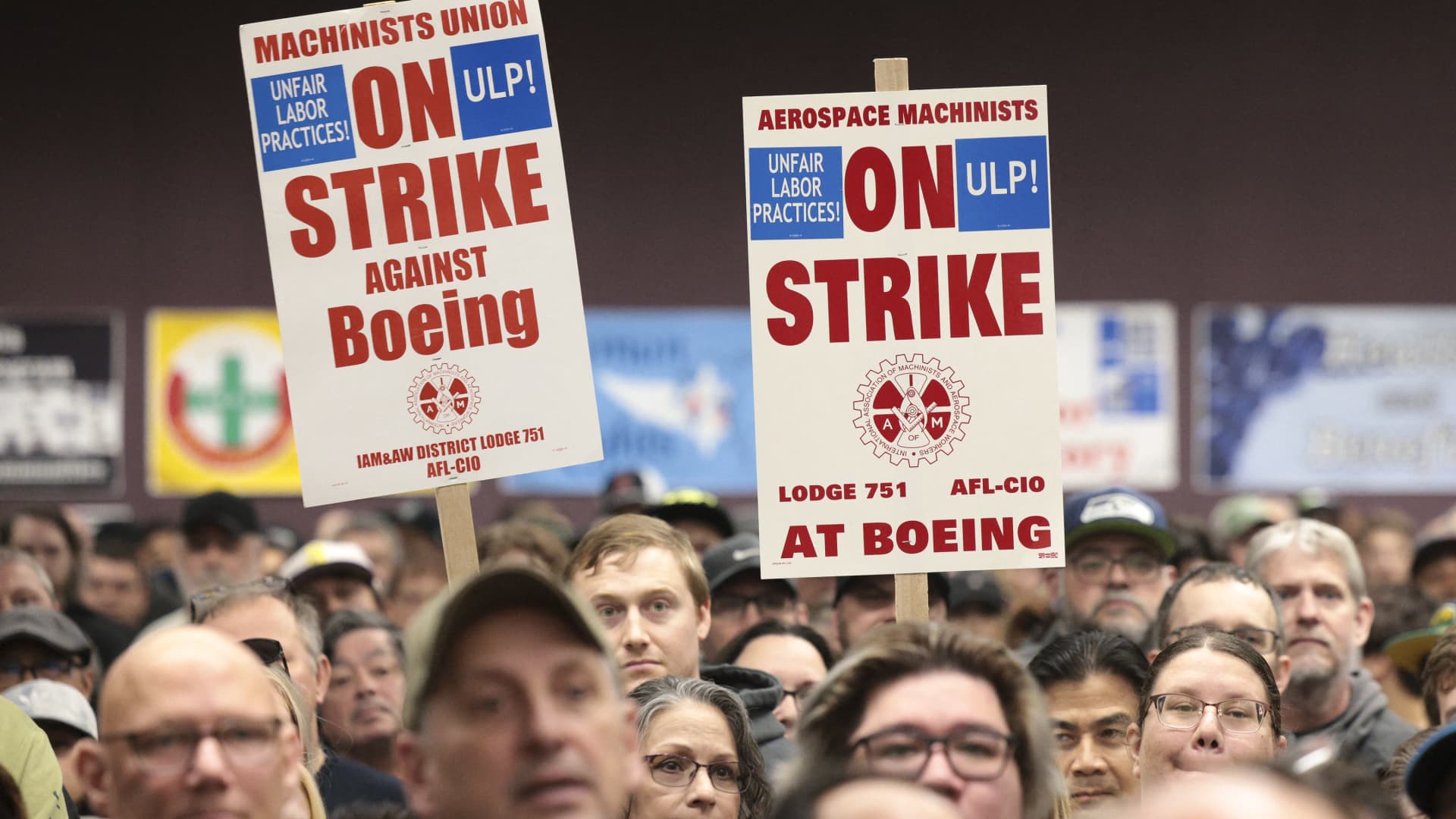
Boeing’s production outlook for 2025 is under significant pressure as defense workers reject a contract, extending a strike impacting crucial fighter jet deliveries. This labor dispute affects 3,200 IAM members and signals deep-seated disagreements over compensation and benefits, potentially impacting operational efficiency and investor confidence throughout 2025.
For investors monitoring the aerospace and defense industry, prolonged strikes directly influence production schedules and financial performance, putting pressure on both Boeing and IAM District 837 to find a swift resolution.
As of market close October 26, 2025, BA stock performance reflects this uncertainty, with analysts watching negotiation progress for impacts on revenue and profit margins.
This analysis delves into the financial repercussions.
Expert Market Analysis
The protracted labor dispute at Boeing Defense, now extending beyond thirteen weeks, underscores significant operational hurdles within the critical aerospace and defense manufacturing sector. The decisive rejection of the company’s latest contract offer by International Association of Machinists and Aerospace Workers (IAM) District 837 members in the St. Louis area signifies a continuation of industrial action that began nearly three months ago. This rejection directly impacts production timelines and the scheduled delivery of vital defense assets, including advanced fighter jets, which are crucial for national security and Boeing’s revenue streams. Union leadership has articulated that the proposed five-year agreement inadequately addressed member requirements, highlighting a substantial divergence between management’s offers and the workforce’s expectations. Historically, such sustained industrial actions have demonstrable effects on a company’s quarterly earnings, resulting in revenue shortfalls and elevated operational expenditures due to logistical complexities and potential contractual penalties for delayed deliveries. The postponement of fighter jet deliveries, a core revenue driver for Boeing, is already a tangible consequence of this labor unrest, creating downstream effects on supply chains and customer satisfaction.
From a fundamental analysis viewpoint, the failure to achieve a labor agreement directly compromises Boeing’s production capacity and, consequently, its financial viability. The company’s management has adopted a strategic position focused on cost control, suggesting an unwillingness to substantially enhance its offer. However, this stance carries the inherent risk of further alienating a workforce that is indispensable for sustaining production momentum. Investors are strongly advised to maintain diligent oversight of key performance indicators such as Boeing’s order backlog status, the projected financial impact of the strike on its revenue streams and profit margins, and any potential escalation in labor costs should a resolution eventually necessitate significant concessions. Market analysts are keenly observing for indications of progress in negotiations, as a protracted strike could precipitate a downward revision of earnings forecasts and negatively affect the company’s valuation multiples. Boeing’s capacity to preserve its competitive advantage in the defense market is inextricably linked to its labor relations and operational stability, with metrics like EBITDA margins and free cash flow potentially exhibiting adverse trends.
Within the broader landscape of the aerospace and defense industry, Boeing’s labor situation holds particular significance. Competitors such as Lockheed Martin and Northrop Grumman are currently operating under comparatively more stable labor conditions. While these peer companies also contend with their own supply chain and production challenges, Boeing’s internal labor dispute introduces a distinct vulnerability. The defense sector is heavily reliant on the punctual fulfillment of contracts, and any prolonged disruption at a major entity like Boeing can create strategic openings for rivals to capture market share or secure new government contracts. Regulatory oversight from entities such as the Department of Defense plays an instrumental role; any perceived instability in production capabilities could invite increased scrutiny or prompt the government to explore alternative suppliers, thereby impacting Boeing’s long-term market standing and its share within the defense procurement ecosystem. This situation can also influence broader geopolitical considerations regarding defense readiness.
The expert consensus for investors remains one of cautious optimism. While Boeing stands as a titan in the aerospace industry, bolstered by a substantial order backlog, the persistent labor unrest presents a significant overhang. The union’s resolve, coupled with Boeing’s articulated inflexibility, suggests that a lengthy negotiation period is highly probable. Investors should carefully consider the potential for further delays in program deliveries, which could adversely affect revenue recognition in the upcoming fiscal quarters. The duration of the strike will undoubtedly be a critical determinant in quantifying the severity of the financial impact. Risk-tolerant investors may perceive a substantial decline in the stock price as a potential entry point, contingent on an eventual resolution and the company’s enduring long-term prospects. Conversely, a more conservative approach would advocate for awaiting clear confirmation of a labor agreement before committing capital, with key events to monitor including future negotiation sessions and any revised guidance from Boeing’s management concerning production impacts and financial forecasts for 2025.
Related Topics:
Boeing strike, IAM District 837, aerospace defense stocks, fighter jet production, labor dispute analysis, defense industry news, Boeing contract negotiations, BA stock analysis, US defense sector, Boeing production delays 2025
About the Author