Key Takeaways
Tragedy in Assam as Rajdhani Express hits elephant herd, killing eight and derailing five coaches. Understand the collision’s impact on wildlife and rail services.
Market Introduction
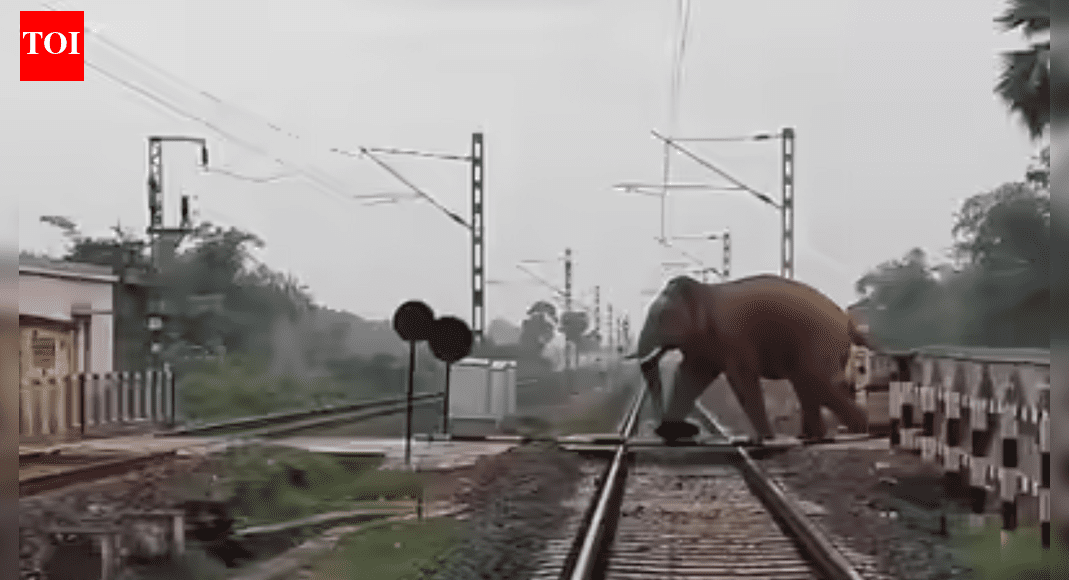
A tragic incident in Assam saw the Sairang New Delhi Rajdhani Express collide with a herd of elephants in the early hours of Saturday, leading to the death of eight elephants and injury to one. This devastating Assam Rajdhani accident highlights the persistent challenge of human-wildlife conflict near railway tracks across India.
The collision, occurring around 2:17 am in the Changjurai area of Hojai district, not only resulted in significant wildlife loss but also caused the derailment of five coaches and the engine of the New Delhi-bound train. For general readers and news consumers, such events underscore the critical need for robust safety measures and ecological considerations in infrastructure development.
Nagaon divisional forest officer Suhash Kadam confirmed the elephant casualties, while a Northeast Frontier Railway spokesperson reported no injuries to passengers. Railway services on the affected Jamunamukh Kampur section have been disrupted, with trains diverted as restoration work commences.
This incident demands immediate attention to prevent future such tragedies and will prompt a closer look at existing protocols for elephant movement corridors and railway safety measures in sensitive zones.
In-Depth Analysis
India’s diverse landscape, rich in biodiversity, frequently experiences a delicate balance between human development and wildlife conservation. The recent Assam Rajdhani accident, where eight elephants tragically lost their lives, serves as a stark reminder of the escalating human-wildlife conflict, particularly along critical infrastructure such as railway lines. Historically, railway expansion in regions like Northeast India has often intersected with established animal migratory routes and elephant corridors, creating inherent risks. Incidents of trains striking elephants are not uncommon, prompting ongoing debates and efforts to implement preventative measures. This latest tragedy in Assam’s Hojai district, involving a premier express train like the Sairang New Delhi Rajdhani Express, brings the issue back into sharp focus, emphasizing the urgent need for a more harmonious coexistence between human progress and environmental preservation. Understanding the geographical vulnerabilities and the behavioral patterns of elephant herds is crucial for developing effective long-term solutions.
The devastating collision took place in the early hours of Saturday, specifically around 2:17 am, within the Changjurai area of Hojai district, Assam. According to Nagaon divisional forest officer Suhash Kadam, the impact was severe, leading to the immediate death of eight elephants and leaving one injured. The train involved, the Sairang New Delhi Rajdhani Express, connects Mizoram’s Sairang with the Anand Vihar Terminal in Delhi, a crucial long-distance route. Beyond the tragic loss of wildlife, the incident significantly impacted railway operations. A Northeast Frontier Railway spokesperson confirmed that five coaches and the engine of the train were derailed. Fortunately, authorities reported no injuries among the passengers, mitigating what could have been an even larger human tragedy. Restoration work has commenced, and train services on the affected Jamunamukh Kampur section have been temporarily disrupted, with alternative routes via the UP line being utilized to manage traffic flow, as stated by railway authorities.
This incident, while tragic, is not an isolated event but rather indicative of a broader challenge faced across India concerning wildlife and railway infrastructure. Similar collisions have occurred in various elephant-inhabited states, highlighting systemic issues in safeguarding these majestic animals. Compared to previous incidents, the high number of elephant casualties in a single event makes this particularly concerning. The disruption to the Jamunamukh Kampur railway section, a vital transit route, draws parallels with other infrastructure projects where unforeseen ecological impacts lead to operational delays and necessitate costly mitigation efforts. The diversion of trains via the UP line, while a practical short-term solution, underscores the inherent fragility of single-point dependencies in critical transport networks and the ripple effects such incidents have on scheduled services and passenger convenience. This situation reiterates the importance of proactive measures over reactive responses when development impinges on natural habitats.
For general readers and news consumers, the Assam Rajdhani accident serves as a poignant reminder of the environmental costs associated with unchecked development and the delicate balance required to protect India’s rich wildlife. This current affairs event calls for public awareness regarding the challenges faced by both railway authorities and forest departments in securing animal corridors. Citizens should monitor ongoing efforts by the Northeast Frontier Railway to fully restore services and implement enhanced safety protocols to prevent future tragedies. Key aspects to watch include potential government initiatives to fortify elephant movement zones, such as the construction of underpasses or improved early warning systems. The incident also prompts a conversation about community involvement in reporting elephant movements near railway lines. Moving forward, a collaborative approach involving policy makers, conservationists, and local communities will be essential to ensure both efficient transport and the survival of India’s precious elephant population.
About the Author