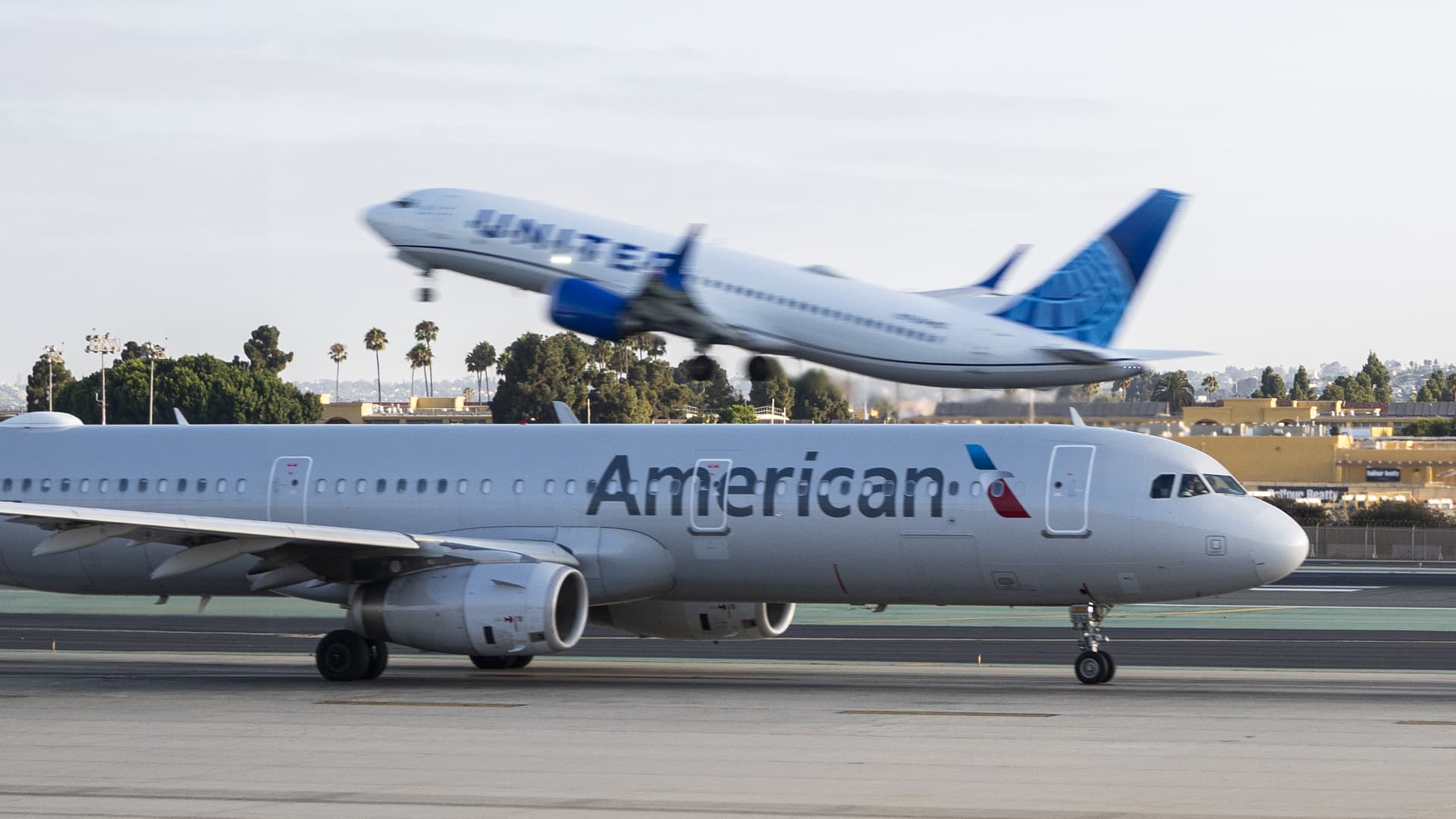
American Airlines (AAL) reported a stark profit disparity, generating only $12 million in the first nine months of 2025. This performance places them significantly behind industry leaders like Delta and United, despite operating more flights.
For investors, this highlights a critical period for AAL as it attempts to capture growth in the lucrative luxury travel market, an area where it has lagged behind competitors.
As of market close today (Oct 25, 2025), AAL stock is down 20% year-to-date, compared to gains by Delta and United.
This analysis delves into American’s challenges and its strategy.
| Metric | Previous | Current | Change |
|---|---|---|---|
| Nine-Month Profit (Millions USD) | N/A | 12 | – |
| Delta Nine-Month Profit (Billions USD) | N/A | 3.8 | – |
| United Nine-Month Profit (Billions USD) | N/A | 2.3 | – |
| AAL Stock YTD Change | N/A | -20% | -20% |
Expert Market Analysis
American Airlines (AAL) is navigating a challenging post-pandemic landscape, notably trailing industry leaders Delta and United in profit generation despite a higher flight volume. This performance gap is a significant concern for investors as AAL aims to leverage the lucrative luxury travel market, a segment where it has struggled to compete effectively. The company’s current financial standing, marked by a $12 million profit for the first nine months of 2025, stands in stark contrast to Delta’s $3.8 billion and United’s $2.3 billion over the same period. This disparity underscores fundamental issues in revenue generation and cost management, exacerbated by a 20% year-to-date decline in AAL’s stock price, while its competitors have seen gains. Historically, such a profit lag as seen in Q3 2025 analysis signals underlying structural challenges that require immediate strategic intervention.
The core of AAL’s underperformance appears rooted in strategic missteps and market positioning, particularly its delayed adaptation to evolving luxury travel demands. While competitors have proactively invested in premium seating, enhanced onboard amenities, and improved digital platforms, American Airlines’ efforts in these areas have been slower to yield significant returns. From a fundamental perspective, the disparity in nine-month profits between AAL and its peers—$12 million versus $3.8 billion (Delta) and $2.3 billion (United)—is alarming. This severe profitability gap, coupled with a notable 20% year-to-date stock decline, indicates underlying operational inefficiencies and a struggle to capitalize on market opportunities. Although AAL is implementing new initiatives like enhanced business class suites and digital platform improvements, the return on these investments remains uncertain. Technical analysis also suggests that AAL’s stock price is facing significant downward pressure, with current RSI levels indicating potential oversold conditions but lacking strong bullish divergence.
From a sector-wide perspective, American Airlines (AAL) is facing intense competition from Delta Air Lines and United Airlines. Delta, with its $3.8 billion nine-month profit, has demonstrated strong performance in premium segments, while United’s $2.3 billion profit highlights its successful market strategies. AAL’s inability to match these figures, despite operating more flights, suggests a potential market share erosion or a less effective revenue per passenger mile compared to competitors. The broader US airline industry is experiencing a rebound, with a focus on premium offerings and digital customer experiences, areas where AAL appears to be lagging, impacting its overall competitive standing and profitability margins.
Market analysts suggest that while American Airlines has initiated a turnaround, the process will be lengthy and capital-intensive. The airline needs to foster a stronger customer-centric culture, as noted by industry observers who point out a long-standing neglect of customer needs. Key opportunities lie in successfully executing its fleet upgrades and enhancing the digital customer journey, which could lead to improved free cash flow and investor sentiment. However, risks include ongoing operational challenges, intense competition, and the long lead times required for significant fleet modernization. Investors should monitor AAL’s progress in improving on-time performance and its success in attracting and retaining premium travelers in the coming quarters. The long-term outlook hinges on its ability to regain competitive footing in the premium travel segment, with many expecting a gradual recovery if strategic initiatives gain traction.
Related Topics:
AAL stock, American Airlines Q3 2025, US airline industry, Delta Air Lines profit, United Airlines stock, Luxury travel market analysis, Airline profit margins 2025, AAL stock performance, US airline competition, AAL profit disparity
About the Author