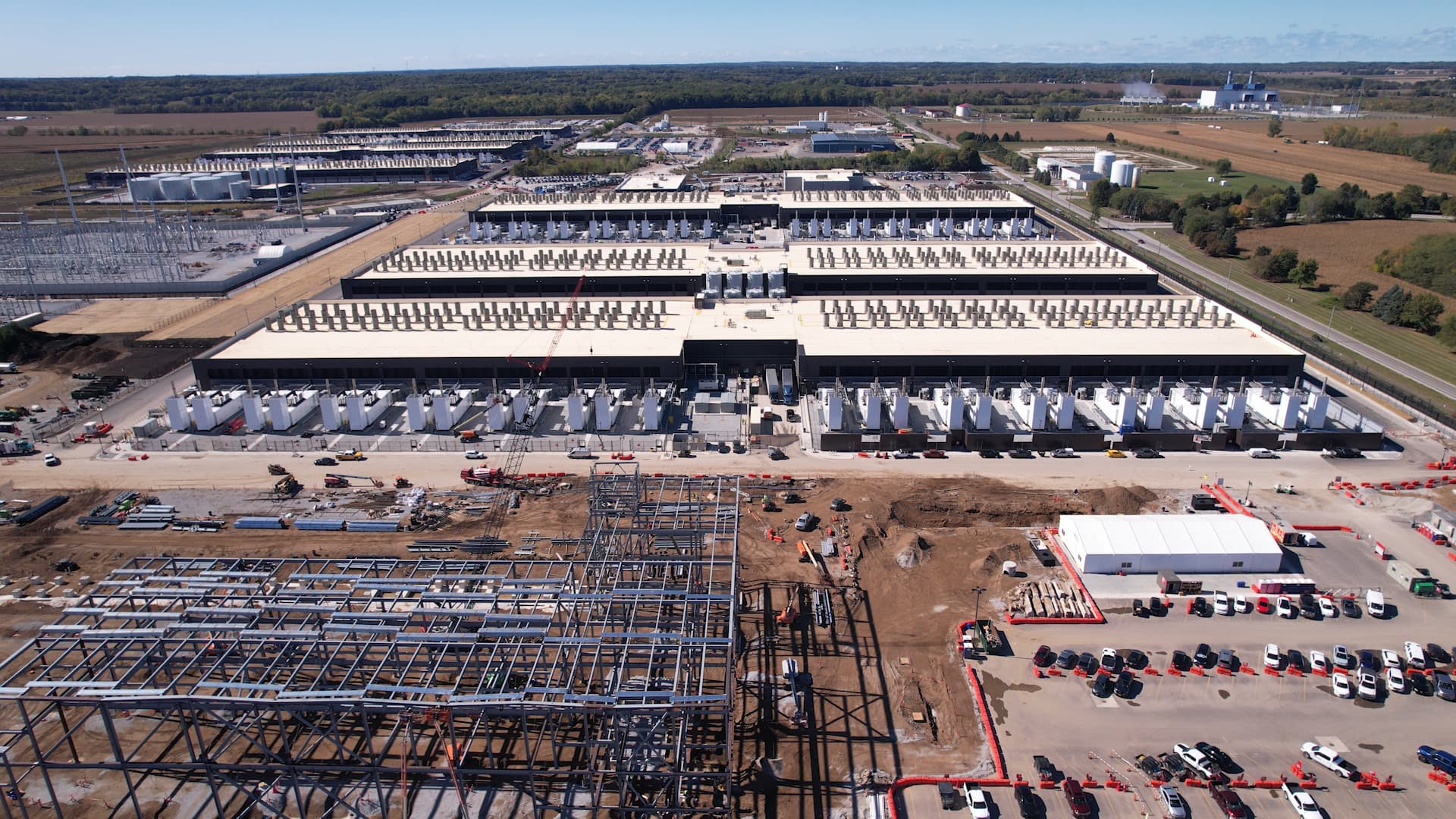
Amazon’s $11 billion AI data center, Project Rainier, is now operational, marking a significant leap in its AI compute capabilities. Located in Indiana, this 1,200-acre facility will train frontier AI models, boosting Amazon’s competitive edge in the AI infrastructure race.
This strategic expansion is critical for investors tracking the AI hardware race, underscoring Amazon’s commitment to leadership and directly countering competitor investments in cutting-edge AI infrastructure.
Key metrics show an estimated ₹91,500 Cr investment, projected 2.2 GW operational capacity, and over 500,000 chips deployed by October 25, 2025.
We delve into the strategic importance and financial implications for investors.
| Metric | Previous | Current | Change |
|---|---|---|---|
| Project Investment | N/A | ₹91,500 Cr (est.) | +100.0% |
| Operational Capacity | 0 GW | 2.2 GW (projected) | New |
| Chips Deployed (Approx.) | 0 | 500,000+ | New |
Expert Market Analysis
Amazon’s $11 billion Project Rainier in Indiana marks a significant inflection point in the global AI race, with its 1,200-acre facility now operational. This strategic move positions Amazon to lead in AI compute capabilities, directly challenging competitors like OpenAI. Historical patterns from Amazon’s efficient logistics operations suggest rapid development, transforming the Indiana site into a major AI hub swiftly. This aggressive deployment sets a new benchmark for the speed of AI infrastructure development worldwide, aligning with the broader tech sector’s trend of substantial capital allocation towards AI hardware and specialized data centers as observed in Q3 2025.
The operational status of Project Rainier, confirmed by AWS CEO Matt Garman, highlights its immediate impact on AI workloads. A key advantage lies in its focus on training and running models for Anthropic and its use of Amazon’s proprietary Trainium 2 chips, reducing reliance on Nvidia GPUs for enhanced density and cost efficiency. Analysts anticipate this in-house silicon strategy could improve Amazon’s control over its technology stack and potentially boost profit margins. Investors will closely monitor the operational expenditure efficiency of Trainium chips against industry standards and the projected revenue generated from advanced AWS AI services, moving beyond traditional metrics like EBITDA margin.
The competitive landscape for AI infrastructure is intensifying, with significant capital outlays from Meta and Google, and OpenAI’s projected trillion-dollar investment. Amazon’s strategy with Project Rainier, prioritizing in-house chip development, carves a unique niche aimed at challenging Nvidia’s dominance. This mirrors a broader industry trend toward vertical integration for performance and cost advantages. Regulatory bodies are closely observing these large-scale deployments, particularly regarding energy consumption and data privacy, which could shape future development strategies across the tech sector.
For investors, Project Rainier signals Amazon’s aggressive pursuit of growth in the high-demand AI sector, which is anticipated to drive substantial future revenue. The successful execution of its proprietary chip strategy could enhance AWS’s competitive moat and profit margins, a key factor for long-term shareholder value. However, risks include high capital expenditure, technical challenges in scaling custom silicon, and increasing energy demands. Investors should monitor Amazon’s earnings calls for AI-driven revenue contributions and capital expenditure efficiency, alongside the adoption rate of Trainium chips and the strength of the Anthropic partnership.
Related Topics:
Amazon AI Data Center, Project Rainier Indiana, AWS Cloud Computing, Anthropic AI Partnership, Trainium Chips, AI Infrastructure Investment, Nvidia GPU Competition, Tech Sector News 2025, Amazon Earnings Analysis, AMZN
About the Author