NEWYou can now listen to Fox News articles!
The fall of Fort Washington in Manhattan in November 1776 was one of the lowest points in the war for Gen. George Washington. Multiple sources report seeing the general cry like a child while watching the action through his spyglass from across the river in New Jersey. That led to over 2,800 American troops being taken prisoner in addition to the strategic loss of the fort and huge battle casualties.
One of the those who survived the conflict, however, was one of the first female combat veterans: Margaret Corbin.
At daybreak on Nov. 16, 1776, when British Gen. William Howe attacked the clifftop, earthen-walled American fortress with some 8,000 British and Hessian troops from four sides, Margaret’s husband manned a cannon as part of the 1st Company of Pennsylvania Artillery. The company, with its furious fire into the hordes of advancing Hessian troops, was supporting several companies of the crack-shot riflemen positioned outside the fort walls. Outnumbered three to one, commanding officer Col. Robert Magaw tried to hold the indefensible fort by placing these elite riflemen about a mile outside the fort, along the likely avenues of the British advance.
EVERYDAY REVOLUTIONARY WAR HEROES TAKE CENTER STAGE IN TRUMP’S ‘SPIRIT OF ’76’ EXHIBIT
The full story of these remarkable riflemen and the role of the Pennsylvania long rifle in helping win the Revolutionary War can be found in my latest bestselling book, “Revolutionary Snipers: Washington’s Frontier Commandos Whose Marksmanship Forged a New Way of War and Helped Win the Revolution,” the third book in a trilogy on the elite units of the war.

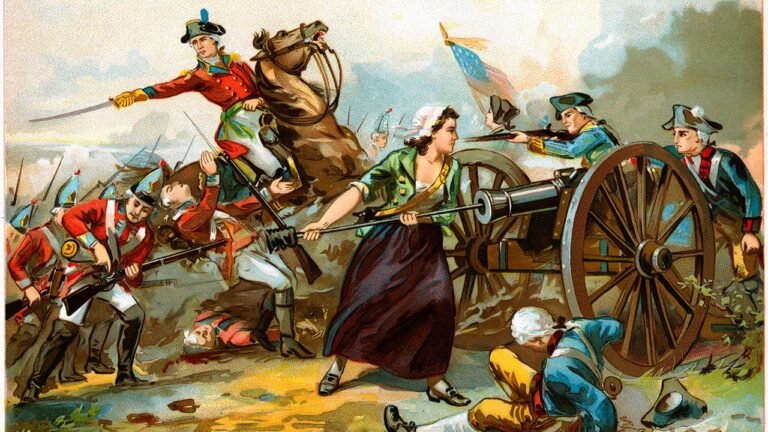
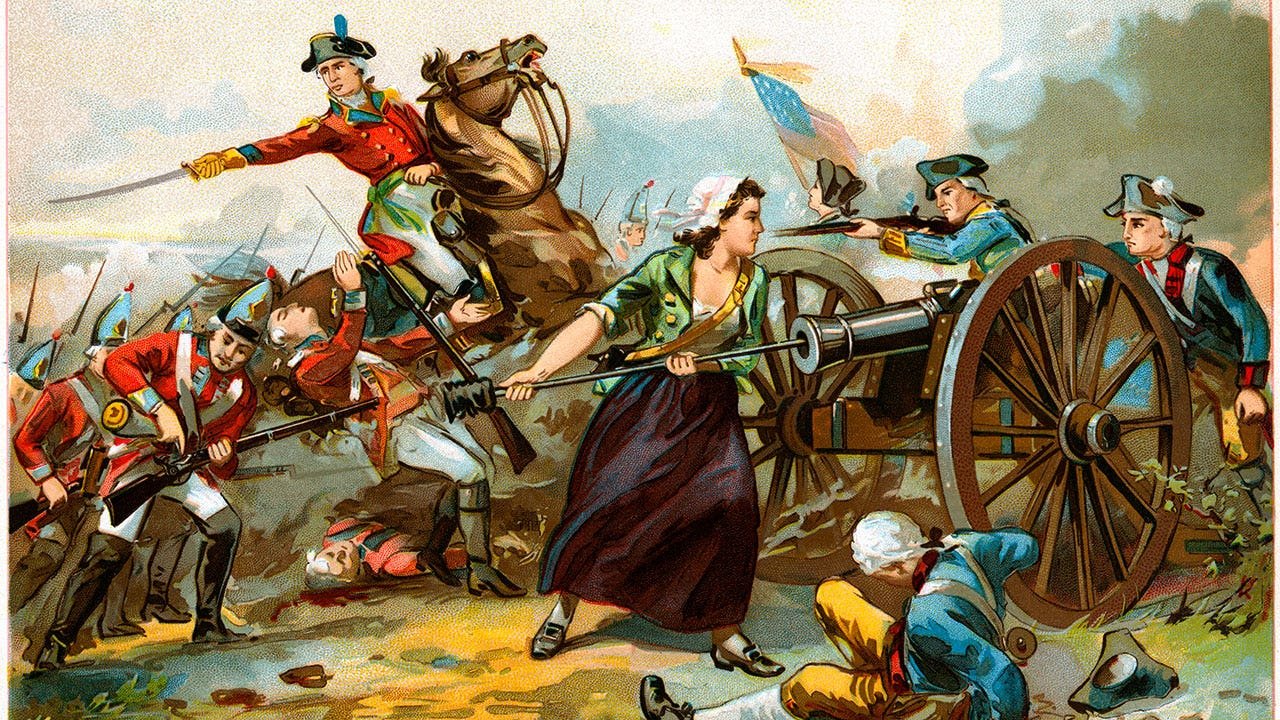
Another of the powerful women of the Revolution, Molly Pitcher, “The Heroine of Monmouth,” is depicted in this 1778 engraving. (Universal History Archive/Universal Images Group)
This groundbreaking look at the Revolutionary War recounts the untold story of the Continental Army’s first soldiers in an immersive “Band of Brothers”-style narrative that puts the reader in the boots of the snipers who preceded today’s U.S. Army special operators.
PATRICK K O’DONNELL: REVOLUTION’S EPIC TEST SHOWED STRENGTH OF OUR GREATEST GENERATION
When a bullet felled Margaret’s husband as he manned a cannon, she sprang into action. A fiery redhead known for her foul mouth and brashness, Corbin “heroically filled the post of her husband, who was killed by her side,” words Congress used when officially recognizing her status as one of America’s first female combat veterans. The intrepid woman typified the grit and independence intrinsically woven into the DNA of people of the American frontier. She had suffered the death of her father during an Indian raid and the kidnapping of her mother, whom she never saw again.
She had followed her husband into war as a camp follower. Known as “Mollies,” camp followers had a complicated relationship with the military. Many officers despised having these wives, mothers, daughters, mistresses and their children along, believing they distracted soldiers and slowed their movements.
AMERICA HAS FOUNDING FATHERS. A CATHOLIC SAINT WAS A FOUNDING MOTHER
Others noted that men might not continue fighting if they couldn’t bring their wives. Washington wrote that he “was obliged to give Provisions to the extra Women in these regiments, or lose by Desertion, perhaps to the enemy, some of the oldest and best Soldiers in the Service.”

The cover of Patrick K. O’Donnell’s latest book about our founding heroes, “Revolutionary Snipers: Washington’s Frontier Commandos Whose Marksmanship Forged a New Way of War and Helped Win the Revolution.” (Atlantic Monthly Press)
Camp followers provided valuable services as well as working as laundresses, cooks or nurses. A few even spied on British camps while working as cooks or laundresses there. But as Margaret Corbin demonstrated, some did even more.
THE STORY BEHIND BETSY ROSS AND THE FIRST AMERICAN FLAG AS AMERICA CELEBRATES 250TH BIRTHDAY
As she stepped up to help work the gun after her husband fell, musket balls or grapeshot tore into her chest, arm and jaw, gravely wounding her. The men nicknamed the courageous widow “Captain Molly.” Nearly every member of the company she served with would be injured or killed during the stand. The Americans, however, made the Hessians pay a high price as well in blood for their victory.
After the battle, British surgeons found Captain Molly Corbin barely alive, stabilized her and later paroled her. Although Corbin never regained the use of her left arm and continued to suffer from her numerous combat wounds, the hard-drinking, swearing, proud, disabled combat veteran found employment at West Point in the Corps of Invalids for wounded soldiers, where she often smoked a pipe and wore an artillery coat over her dress.
CLICK HERE FOR MORE FOX NEWS OPINION
Although she was initially denied the rum ration owed to her, the mistake was corrected, with the admonishment that the ration “will render her present wretchedness a little more tolerable.”
CLICK HERE TO DOWNLOAD THE FOX NEWS APP
In 1926, West Point recognized the services of one of America’s first female combat veterans by reburying what were believed to be her remains with full military honors and erecting a monument at the U.S. Military Academy. Her actual final resting place is unknown, as the remains were later found not to be hers.
CLICK HERE TO READ MORE FROM PATRICK K. O’DONNELL
Source: https://www.foxnews.com/opinion/revolutionary-war-captain-molly-took-up-husbands-fight-freedom
About the Author