The security threat was discovered by ethical hackers at a firm called Omega Systems – it was then verified and expanded upon by experts at Pentest Partners who helped raise the alarm.
The National Cyber Security Centre (NCSC), the Department for Environment, Food & Rural Affairs (Defra) and Food Standards Agency (FSA) were then involved in the campaign to plug the security holes.
They held industry conference calls and tasked teams to contact firms at risk.
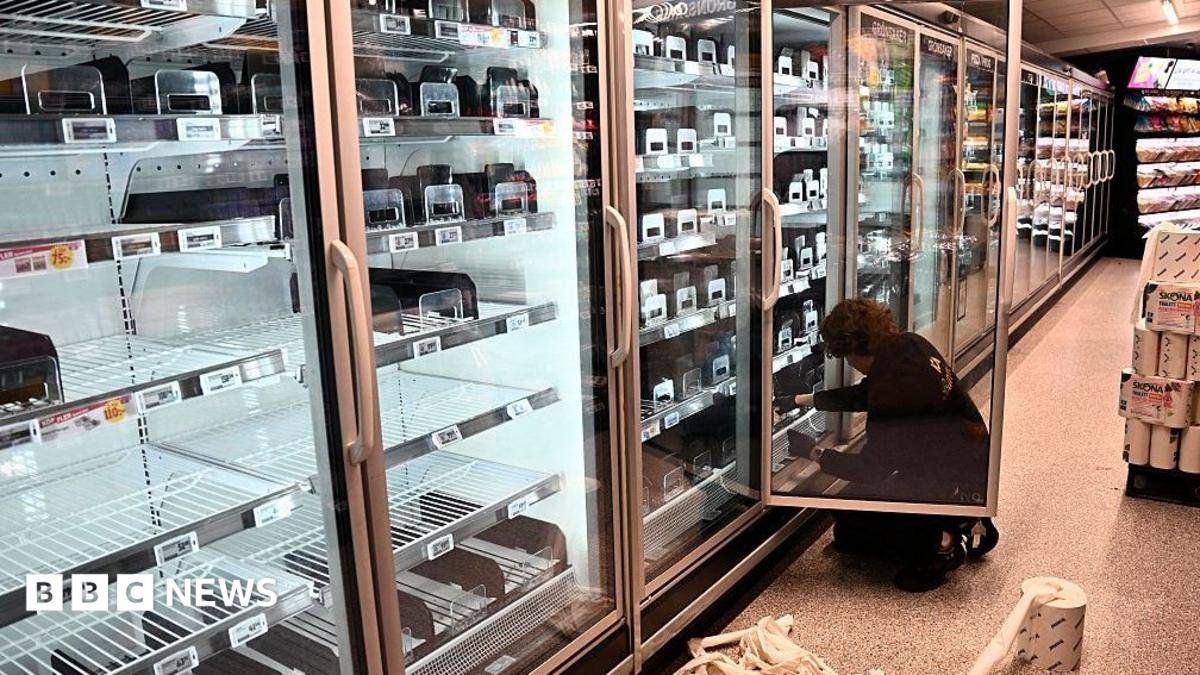
Thousands of devices controlling tens of thousands of refrigeration devices were taken off the open internet either remotely, or in some cases, physically – with staff ordered to remove internet cables and monitor temperatures manually.
BBC news has learnt most major supermarkets have been forced to divert IT teams to address the risks, with a worker at one large chain saying they took hundreds of devices offline every day over the course of a week.
“It did feel like a race against time as we were expecting another wave of these fridge hacks to come,” said the person, who did want to be publicly named.
“From a business perspective it could have been potentially devastating with business interruption and supply chain problems. Our warehouses have millions of pounds worth of food that could have been spoiled if any hackers found out about this method of attack,” they added.
There have been three waves of hacks on refrigeration temperature controllers so far this year:
-
In August, fridges at a small number of US military bases were impacted
-
On 11th and 12th October hundreds of supermarkets and food processing sites in France were hit when Danfoss temperature control systems were targeted
-
On the 1st and 2nd of November dozens of supermarkets across seven European countries were hit, with Belgium, Luxembourg the were worst affected. A small number of blood bank sites in France were also impacted
The waves of attacks prompted an expert at Omega Solutions to examine the security of the most popular refrigeration controllers in the UK, made by British firm Resource Data Management (RDM).
RDM disputes the critical nature of the vulnerabilities exposed but has been praised for its professional response to address the concerns, the BBC understands.
As well as supermarkets, multiple other areas of UK food and beverage industry were also warned to take action about the risks.
These include convenience stores, petrol stations, restaurants and fast food chains, sports arenas, hotels, food processing plants and cold storage sites.
Source: https://www.bbc.co.uk/news/articles/c6eq49zyx7p4o?at_medium=RSS&at_campaign=rss
About the Author