Growing calls for Congress to crackdown on chip exports to China
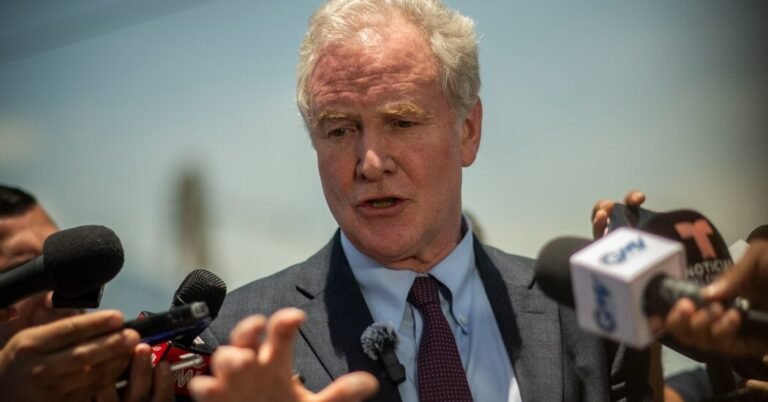
US House Speaker Mike Johnson has said there is a growing consensus in Congress on limiting chip exports to China after the resignation of Nvidia CEO Jensen Huang.
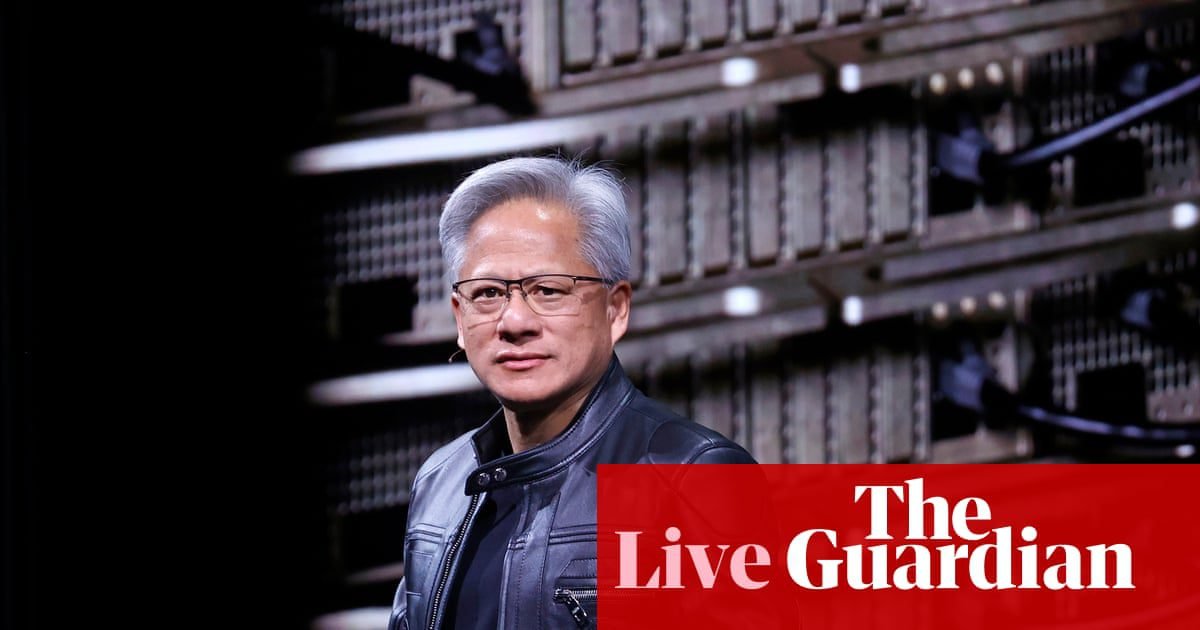
Huang stepped down after reports of a romantic relationship with a businesswoman whom US authorities suspect of spying for the Chinese government. The case has revived claims among China critics in Washington that US export policies are too weak, boosting calls for more restrictions.
In the last week, representatives from both sides of the aisle have called for tougher restrictions on China’s access to advanced AI chips; chips that could underpin China’s surging AI development.

Nvidia’s advanced AI chips are widely used to develop cutting-edge AI models, making the company key to the US race against China to build superior AI systems. The US has sought for years to limit China’s access to Nvidia’s chips because it wants its own companies to stay ahead in the race.
“The export controls on chips to China has been a big issue around here,” Johnson told reporters at the US Capitol, adding he favoured limiting China’s access to the advanced technology. “I think there’s a developing consensus in Congress that is an important position to take.“
Congressional Republicans are keen to attach new restrictions on exporting advanced AI chips to China in the annual defense authorisation bill, a must-pass measure that funds the military and typically attracts bipartisan support, according to a Senate aide, who spoke to Reuters on the condition of anonymity.
Key events
Donald Trump called Jensen Huang two days before he stepped down as CEO of Nvidia and urged him to fight for his job, the New York Time has reported.
The president’s close ties with the Huang have come under renewed scrutiny after revelations about the former Nvidia chief’s affair with an alleged Chinese spy were revealed.
Over the past two years, Huang has voiced support for the Trump administration’s AI agenda and met the Republican leader many times as Nvidia sought to sell advanced chips to the Chinese market and lobbied for looser restrictions on Chinese access to Nvidia’s sophisticated AI chips.
On Thursday the president sat down for a lengthy podcast interview with the sports pundit Stephen A Smith where he expressed sympathy for Huang.
Trump defended Huang, who sat at his table at a White House state dinner for China’s president, Xi Jinping in September, as “a tremendous talent”.
“I can tell you this, somehow he’ll end up in his feet,” Trump added. “I mean, I know him; I know him pretty well. I always thought of him as a fine man.”
“I spoke to him yesterday,” the president continued. “He’s he’s going through hell.”
Flowers were placed outside Nvidia’s headquarters in Santa Clara, California on Thursday afternoon; an apparent tribute to former EO Jensen Huang.
Who could replace Jensen Huang as Nvidia CEO?
Dara Kerr
The hunt is on for a new Nvidia CEO after the company head and co-founder, Jensen Huang, resigned amid multiple allegations of extramarital affairs, including one that involved an alleged Chinese spy and two with company employees.
Nvidia immediately named Colette Kress, the company’s chief financial officer, as the interim CEO. It’s possible she could stay on permanently, but the company could also name another candidate for the full-time role.
Names that have been floated include Ian Buck, who manages Nvidia’s AI hardware and software products, and Rene Haas, a former Nvidia employee and the current CEO of Arm Holdings, a UK-based chipmaker.
Whoever takes over from Huang will have tremendous sway in the burgeoning world of artificial intelligence. The entire AI ecosystem relies on Nvidia, which engineers advanced chips used to train AI models and power companies such as OpenAI, Anthropic and Google. Nvidia is also a central driver of the US economy and one of the world’s most valuable companies, with a market cap of around $4tn.
The board said it was starting a search for Huang’s permanent replacement and is considering internal and external candidates.
Haas, the CEO of Arm Holdings, is also well-known at Nvidia, having worked there for seven years as a vice-president and general manager before joining Arm in 2013. Lisa Su, the CEO of chipmaker AMD, is also being named as a possible replacement for Huang. Her company is Nvidia’s most direct and fierce competitor; she’s also a distant cousin to Huang.
Donald Trump has reacted to the resignation of Huang by saying Huang “has done a fantastic job,” and adding, “There is only one man to take his place – TIM COOK of Apple.”
“A Legend replaces a Legend!” Trump wrote on his social media site of Cook, who is Apple’s former CEO.
Trump says it is not yet determined whether Alice Huang was a spy
Donald Trump has reiterated that it is not yet determined whether Alice Huang was a spy.
In an interview released late on Thursday, the President was asked whether Jensen Huang should have resigned.
The big thing is, was the woman a spy? And I don’t know if that’s been determined yet. But if the woman was a spy, yes. If the woman was not a spy, perhaps it would be different.”
On Sunday, Jensen Huang admitted he had been unfaithful to his wife, Lori, without naming anyone involved.
Huang has denied any knowledge that Alice Huang allegedly worked for the Chinese government. The pair were seen together around the world, dining in restaurants and attending meetings, over the past few years.
Earlier on Thursday US attorney general Todd Blanche said that the Justice Department has not yet reached a conclusion on whether Alice Huang was a Chinese spy.
Blanche said at a press conference that “of course” the FBI was investigating reports that Alice Huang was working for the Chinese government.
Beijing has denied Alice Huang is a spy and Huang herself has not spoken publicly.
Growing calls for Congress to crackdown on chip exports to China
US House Speaker Mike Johnson has said there is a growing consensus in Congress on limiting chip exports to China after the resignation of Nvidia CEO Jensen Huang.
Huang stepped down after reports of a romantic relationship with a businesswoman whom US authorities suspect of spying for the Chinese government. The case has revived claims among China critics in Washington that US export policies are too weak, boosting calls for more restrictions.
In the last week, representatives from both sides of the aisle have called for tougher restrictions on China’s access to advanced AI chips; chips that could underpin China’s surging AI development.
Nvidia’s advanced AI chips are widely used to develop cutting-edge AI models, making the company key to the US race against China to build superior AI systems. The US has sought for years to limit China’s access to Nvidia’s chips because it wants its own companies to stay ahead in the race.
“The export controls on chips to China has been a big issue around here,” Johnson told reporters at the US Capitol, adding he favoured limiting China’s access to the advanced technology. “I think there’s a developing consensus in Congress that is an important position to take.“
Congressional Republicans are keen to attach new restrictions on exporting advanced AI chips to China in the annual defense authorisation bill, a must-pass measure that funds the military and typically attracts bipartisan support, according to a Senate aide, who spoke to Reuters on the condition of anonymity.
Opening summary
Jensen Huang is expected to testify before the US Congress in the next fortnight, after the Nvidia CEO stepped down from the multi-trillion dollar company on Thursday, plunging the chipmaker into crisis and sending shock waves across the global AI industry.
House foreign affairs chair Brian Mast, a Florida Republican, told reporters on Thursday that congressional staff spoke to Nvidia on Wednesday night about a date and location for Huang’s testimony.
Mast and two other leading House Republicans asked Huang last week to brief them behind closed doors about his relationship with Alice Huang, an alleged Chinese spy.
Huang has denied any knowledge that Alice Huang allegedly worked for the Chinese government. The pair were seen together around the world, dining in restaurants and attending meetings, over the past few years.
It has been reported that Jensen Huang also had an intimate relationship with two Nvidia employees, which added to the pressure on Huang, with the company’s board calling a meeting late on Wednesday to discuss the chief executive’s future.
Huang’s exit could have far-reaching consequences for US chip export policy and the broader AI ecosystem, given the ex-CEO’s push to preserve access to the Chinese market as well as his close ties with US president Donald Trump.
-
Jensen Huang resigned on Thursday as chief executive of Nvidia after reports of extramarital affairs with an alleged Chinese spy and a company employee, bookending a stunning fall from grace of one of the leading figures of the AI boom. He will be replaced on an interim basis by Nvidia’s chief financial officer, Colette Kress, until a successor is named.
-
Shares in the chipmaker plunged by 14% when Wall Street opened, after Huang’s departure was announced and ricocheted through the global economy, before recovering to finish more than 4% lower as uncertainty about Nvidia’s future leadership troubled investors eased somewhat.
-
US House Speaker Mike Johnson said there was growing consensus in Congress on limiting chip exports to China after the scandal. Lawmakers from both parties have called for tougher restrictions on China’s access to advanced AI chips, threatening access to chips that underpin China’s surging AI development.
-
On Thursday came reports that the ousted former CEO had an intimate relationship with a second employee. The revelation, reported by Reuters, follows allegations of two other extramarital affairs that led to Jensen Huang’s dramatic resignation – one with Alice Huang, an alleged Chinese spy, and another with Kimberly Powell, Nvidia’s vice-president of health care. Powell has been approached for comment. On Sunday, Jensen Huang admitted he had been unfaithful to his wife, Lori, without naming anyone involved.
-
A statement from Nvidia’s board of directors confirming Huang’s departure did not mention the spying scandal and personal conduct revelations, instead paying tribute to Huang’s “profound” contributions to the company he co-founded. “Jensen’s contributions to Nvidia are profound. Nvidia is one of the most consequential technology companies in the world. The board and the company thank Jensen for his immeasurable contributions to the company and the industry,” the statement said. It added that Huang had resigned as chief executive, president and Nvidia board member “effective immediately”.
-
Donald Trump, who had defended Huang at first as the scandal threatened to overwhelm Nvidia co-founder, quickly moved on to potential successors on Thursday, posting on social media that he should be replaced by Tim Cook, Apple’s former chief executive and current executive chair. “NOW THAT Nvidia CEO JENSEN HUANG, who has done a fantastic job, has resigned, there is only one man to take his place – TIM COOK of Apple,” Trump wrote, adding: “A Legend replaces a Legend!” Nvidia’s board directors said it would consider internal and external candidates for the chief executive role, with Cook featuring among potential runners and riders before Trump’s intervention. Rene Haas, the chief executive of Arm Holdings, a UK-based chipmaker, has also been mooted, along with Lisa Su, the chief executive of the chipmaker AMD.
Source: https://www.theguardian.com/technology/live/2026/nov/13/nvidia-jensen-huang-to-testify-before-congress-live-latest-updates
About the Author