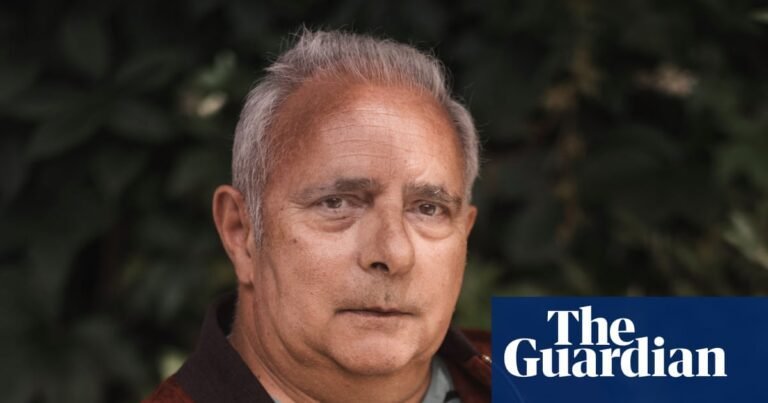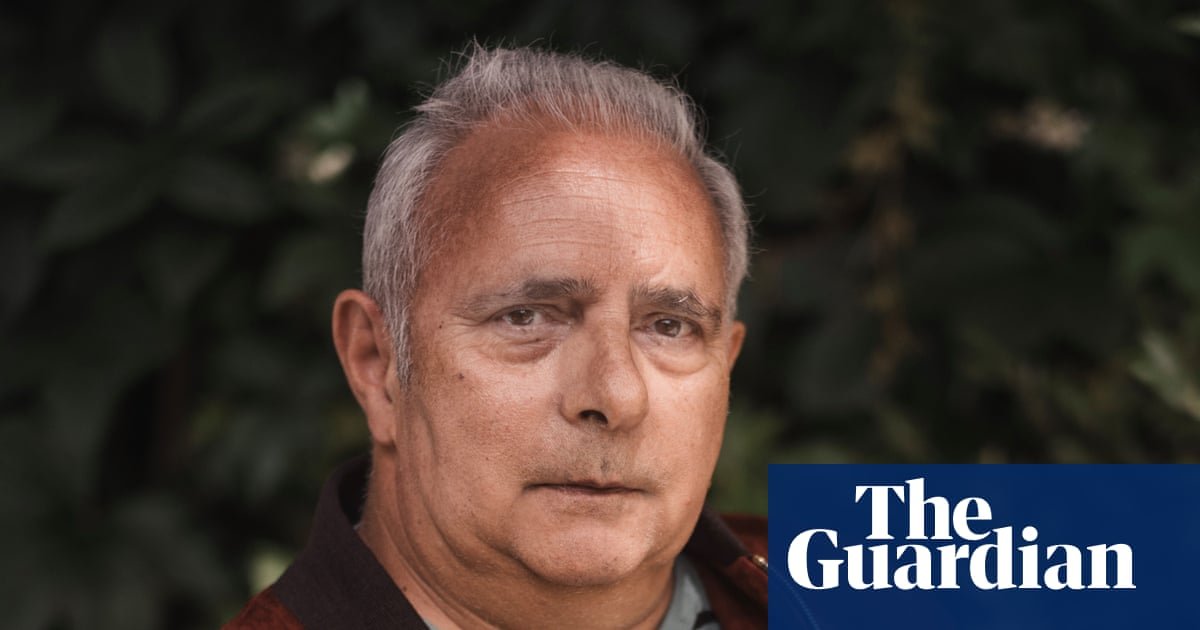
Some months after returning home, after a grim year in hospitals in Rome and London, Hanif Kureishi begins to rebel. Not against his family, or the physical reality of being tetraplegic (and how could he?), but the liberal homogeneity of Shepherd’s Bush. He gets a diamond stud in his left ear at Westfield shopping centre, a piercing that enraged his father when he was 17. He sends off for a Maga cap and wears both to the farmers’ market, hoping for vitriol but getting nothing. “These quiescent scumbags only cared about themselves and their shopping,” he grumbles. “Being a fascist is far less thrilling than I imagined.”
Kureishi’s “re-punking” after decades in the metropolitan elite remains an ongoing project, just one response to his paralysis after a fall on Boxing Day 2022. His memoir Shattered was written in the long shock of that severance from a former life, which left him with no movement in his hands or legs, “a Beckettian chattering mouth”.
But Kureishi’s mind remains intact, even unleashed: free from the pull of a phone (he can’t scroll), he is funny, nostalgic, profound, petty and never sentimental, not even about the family he relies on. His latest collection of essays, co-written with his son Carlo, takes its title from a song he used to listen to while driving in Italy, his partner Isabella at the wheel while he smoked a fat joint. (It’s also a question his iPad asks him in Shattered – “Are you still there?” – when paralysis leaves him unable to hit refresh.) Now, Carlo is always with him as he dictates, each chapter the product of a conversation between 10am and 1pm. The book has a more outward-looking feel – less stunned, less homesick, sometimes transcribed as a dialogue.
These back-and-forths have a distinctive energy. An argument over what to write becomes a disquisition on art versus politics, Kureishi wanting to reflect on beauty, Carlo insisting that the only subject is Gaza. An experiment with a sex chatbot hits a wall of shared embarrassment. Carlo convinces his father of AI’s usefulness – but their collaboration is the perfect illustration of its limits: here are two humans with a long history of navigating each other’s weaknesses with love.
There are great, gossipy digressions on taking acid with Billy Idol, a schoolmate, and Kureishi’s friendship with David Bowie. Bowie would call at 2am with an urgent question about serial killers, when Kureishi was “a new father of twins, dressed in only my underpants”. Dennis Hopper, Kureishi’s co-juror at the 1992 Venice film festival, was a disappointing square. Isabelle Huppert was a “sweet and intelligent” ally as jury president at Cannes 2009, “a frantic, crazy party that you could never leave”. He misses it all, but these memories push the horrors of the spinal injuries ward – the patient crawling across the floor at 2am, the bodies removed at dawn – that bit further away.
Meanwhile, Kureishi has a house full of strangers, a drama he plays as comedy and farce. There are the carers fighting in the kitchen, and the nice woman who tells him “I really don’t like penises” as she washes his. Someone always has a finger up his arse. He and Carlo are working on a movie about his accident: who will play them, they wonder? But life is mostly a thousand small humiliations: in the park, an acquaintance pats him on the head.
Kureishi revels in a new kind of writing – the essays were originally drafted as Substack posts – discursive, energised by a readership that writes back. His best novels have a clear-eyed quality that can border on cruelty – the famous “fucks for which a person would have their partner and children drown” in the autobiographical novel Intimacy. Here, that deep attention to his own ego expands to the world around him and becomes fiercely illuminating. What a thrill it is to be here, he writes from the edge of the abyss, as well as frustrating and often boring.
The book ends with his marriage to Isabella, Elton John pulling up in a cherry-red Bentley. Kureishi is rawdogging life, he tells his son Sachin, in the gen Z sense of doing it without distraction: “I am compelled to be present”. Sex is difficult, but desire – for everything – remains. This exhilarating book looks death and decay in the face and asks: is that all you’ve got?
Source: https://www.theguardian.com/books/2026/oct/29/are-you-with-me-now-by-hanif-kureishi-review-back-to-basics
About the Author