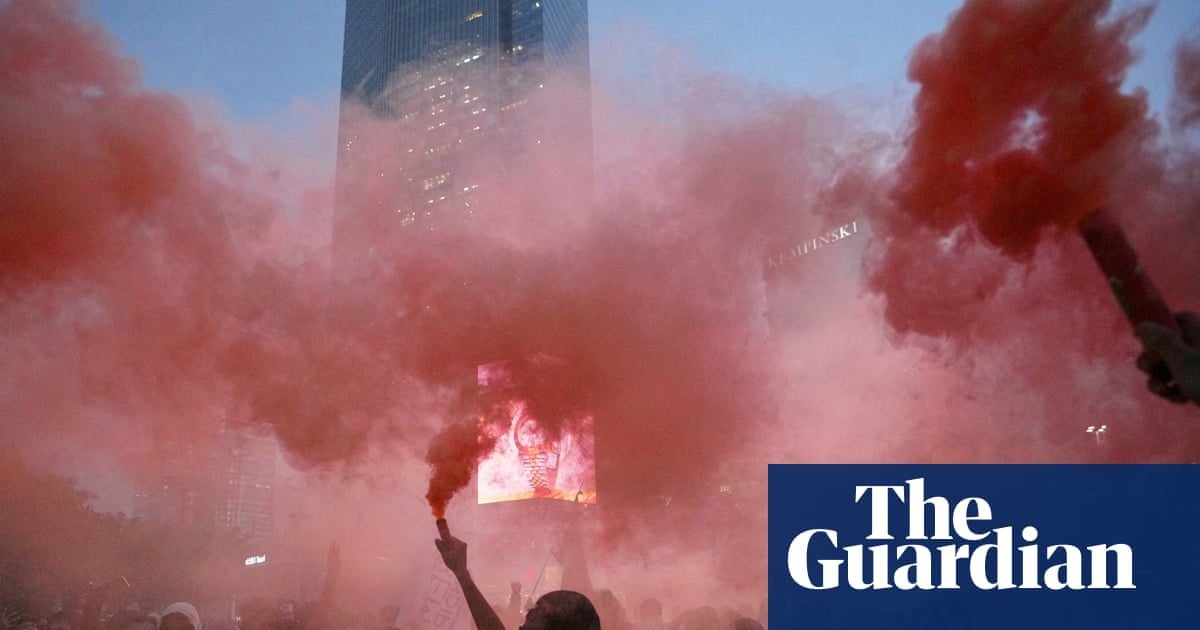
As almost 2m hectares has gone up in smoke in Indonesia’s worst fire season in a decade, enveloping the region in a thick dystopian haze, 33-year-old university researcher Nurul Amalia has grown increasingly exasperated.
“The government claims to be continuously increasing the number of personnel to extinguish it. But we have yet to see any significant progress,” she says.
“People in Kalimantan continue to report toxic air conditions, and now we hear news of firefighters losing their lives,” she adds, of four volunteers killed fighting fires this month.
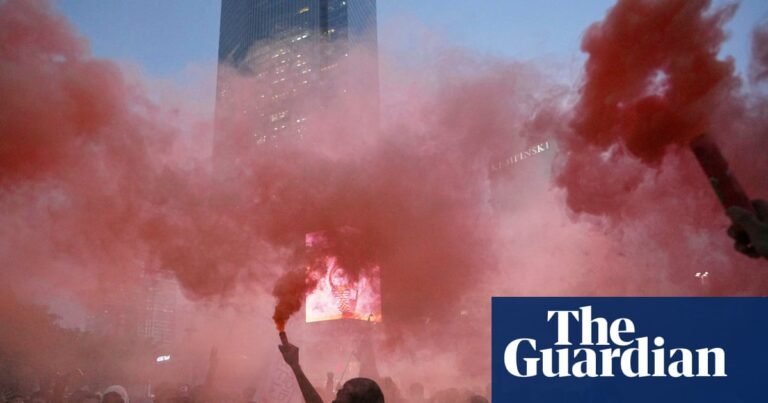
On Wednesday, Amalia joined hundreds in Jakarta protesting against the government, the second demonstration in a week. Chief among their demands was that President Prabowo Subianto declare the fires a national disaster.
The demand is just one on a list of grievances amid brewing anger in the world’s third-largest democracy, where analysts say a confluence of policy blunders, economic stress and a government seen as increasingly out of touch is sending Indonesia into a period of volatility unseen for decades.
Civil society groups have criticised the Prabowo presidency for wasteful government programs, increasing militarisation and centralisation of power, deepening patronage, attacks on the press, and what they say is a weakened judiciary.
The government communications agency said in a statement on Wednesday that it welcomed the aspirations of student protesters as part of an effort to nurture democracy, and that concerns raised about the environment, economy and legal reform were being addressed.
Some 70,000 firefighting personnel, it added, had been sent to fire-hit regions, and it was investigating corporations and individuals allegedly involved in starting the fires.
Prabowo marked two years in power this month, but some who voted for him say the country is, at best, stagnating.
“Not only has there been no progress,” says Ika Anastasia, a PR professional and Jakartan mother of three, “it actually feels like we’ve gone backwards.
“In my 32 years, I think this government is probably the worst,” says Aryana, a private-sector employee. “The problems keep coming one after another, and before one is solved, another appears.”
President’s approval rating sinks
Prabowo, a former military general and the ex-son-in-law of former dictator Suharto, ran in 2024 on a platform of continuity, cuddly vibes and a multibillion-dollar free meals program intended to target malnutrition.
Yet the flagship policy has been riddled with controversy.
In June this year the head of the national nutrition agency responsible for rolling out the program was arrested on allegations of corruption. Since it began, thousands of schoolchildren have been inadvertently poisoned after eating tainted meals. Among their complaints have been maggots and glass in their rice.
“This current government is strong at agenda setting in public policy, but it is very weak at delivery,” says Yanuar Nugroho, a former presidential staffer for Prabowo’s predecessor and a visiting fellow at Singapore’s ISEAS Yusof Ishak Institute.
“Never have I seen the situation like this,” he adds. “I think this is the worst and the most messy.”
In a statement on Wednesday, the government said it would strengthen supervision and involve local government in implementing the free meals program, with many children, pregnant women and lactating mothers benefiting from it.
But a poll this month by Saiful Mujani Research and Consulting showed that about 62% of Indonesians now oppose it.
The same poll gave Prabowo an approval rating of 44.5%, the lowest of any Indonesian president since polling started 20 years ago.
“It’s just a horrific result. It shows that Prabowo has lost the country,” says Kevin O’Rourke, a longtime Indonesia analyst.
“I think that it’s the programs that he’s put out are failing, and those are things that people see in their communities,” he says, referring to the free meals and a costly village cooperatives program.
Economically, Indonesia is looking a bit wobbly too.
This year the Indonesian rupiah sank to record lows against the US dollar, while the country is up to its third finance minister in two years. In recent weeks footage has shown people forming snaking lines for fuel in Bali, Sulawesi and Kalimantan.
And, in what could be a major setback for south-east Asia’s biggest economy, this month global index provider MSCI threatened to downgrade Indonesia to “standalone market” status over unclear share ownership and suspected coordinated trading.
The government pointed out the economy had grown 5.29% in the second quarter of this year and poverty had fallen by 8%, while it had accelerated market reforms to address the issues raised by the MSCI.
Some analysts say the MSCI, which is not a regulator, may have gone too far.
The president was pugilistic in his response.
“Our country continues to face all sorts of disturbances, including the MSCI. They are trying to intimidate us,” he told his cabinet. “I simply want to tell MSCI: the Indonesian nation fears no one and will never back down.”
Amid the turbulence, analysts say Prabowo has developed a reputation for being stubborn, and reluctant to accept advice. The government disputed this claim, saying Prabowo holds continuous dialogue with various stakeholders.
“I can sense on the one hand, he is detached from the reality,” observes Yanuar Nugroho. “On the other hand, he has very, very strong ideas of him as like a saviour.”
So far demonstrations have been small, but the complaints are adding up.
“There is a lot of uncertainty at the moment and we’ve seen there is a lot of potential for demonstration,” says Kennedy Muslim, an analyst from Indonesian pollster Indikator. “What it needs is a trigger, but that couldn’t be predicted.”
Indonesia is now in a situation unprecedented since its reform era began after Suharto stepped down in 1998, says O’Rourke, noting that in previous administrations there were flaws but more democratic openness, independent institutions and checks and balances.
“In the past, actors always had to respect democracy and the rules of the elections and the rights of opponents in parliament. None of that exists now,” he says.
“Prabowo has a free hand. And so it’s very ugly and very unpredictable, volatile.”
Source: https://www.theguardian.com/world/2026/oct/29/indonesia-protests-fire-haze-economy
About the Author