Eritrea, the east African country embroiled in a row with the UK over its refusal to accept the return of rejected asylum seekers and criminals, is considered one of world’s most secretive and repressive states, with reports of arbitrary detention and severe restrictions on freedom of expression, opinion and religion.
Situated in the Horn of Africa and bordering Sudan, Ethiopia and Djibouti, it became a sovereign state after gaining independence from Ethiopia in 1993 following a 30-year war.
The country is run by an authoritarian regime under Isaias Afwerki, who led separatist forces to defeat Ethiopian forces in 1991 and became president in 1993. He has served as president since independence and heads the People’s Front for Democracy and Justice, the country’s only legal political party.
Eritrea has not held a national election since independence. A constitution that was ratified in 1997 by the constituent assembly has still not been implemented nearly three decades later.
In 2001, the government shut down all independent newspapers after the publishing of an open letter by senior ruling party officials calling on the government to implement the constitution and hold elections.
A highly militarised state, Eritrea runs a compulsory national service system that requires students to study at a military training centre in their final year of secondary school. They undergo military training and political education before working in either military units or civilian national service roles that can last decades.
The repression and conscription has forced many Eritreans to risk harsh punishment for evading, deserting or escaping the military by fleeing the country. It is estimated that up to one-third of the Eritrea-born population lives abroad.
Eritreans were the most common nationality arriving by small boat to the UK in the year ending June 2026. Earlier this year, Eritrea abruptly withdrew cooperation with the UK on migrant returns, and on Thursday the UK home secretary, Shabana Mahmood, said all Eritreans could be stopped from coming to the UK unless the country agreed to accept more rejected asylum seekers and criminals.
Eritrea’s political, economic and social framework has been defined by a doctrine of economic self-reliance, with the country notably rejecting foreign aid.
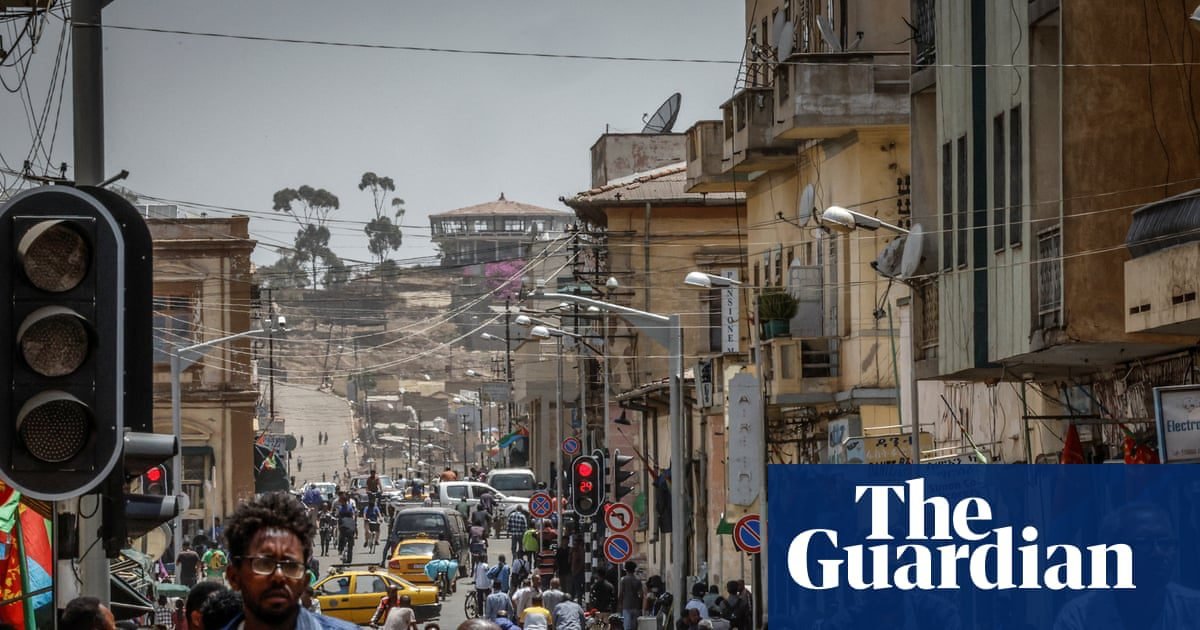
A former Italian colony, parts of the country feature early to mid-20th-century Italian modernist architecture. The capital, Asmara, was inscribed as a world heritage site in 2017, with Unesco describing it as “an exceptional example of early modernist urbanism at the beginning of the 20th century and its application in an African context”.
A multi-ethnic nation, Eritrea is mainly made up of the Tigrinya people. Its extensive Red Sea coastline (1,388 miles) gives it a strategic position along the Red Sea corridor.
The country has been in the spotlight in recent weeks because of fears of war with Ethiopia. Both countries have accused each other of aggression. Ethiopia has claimed Eritrean troops crossed up to 60km (37 miles) into Ethiopia’s northern Tigray region, while Eritrea has said the accusation is a fabrication to create a pretext for war.
The escalation is linked to renewed fighting between Ethiopian government forces and the Tigray People’s Liberation Front, an armed opposition group, in Tigray, which borders Eritrea.
Ethiopia has accused Eritrea of supporting the TPLF, a claim that Eritrea has denied. On Tuesday, Ethiopian forces advanced to Zalambessa, a town on the border with Eritrea that was under Tigrayan rebel control.
Source: https://www.theguardian.com/world/2026/oct/15/eritrea-repressive-secretive-uk-asylum-returns
About the Author