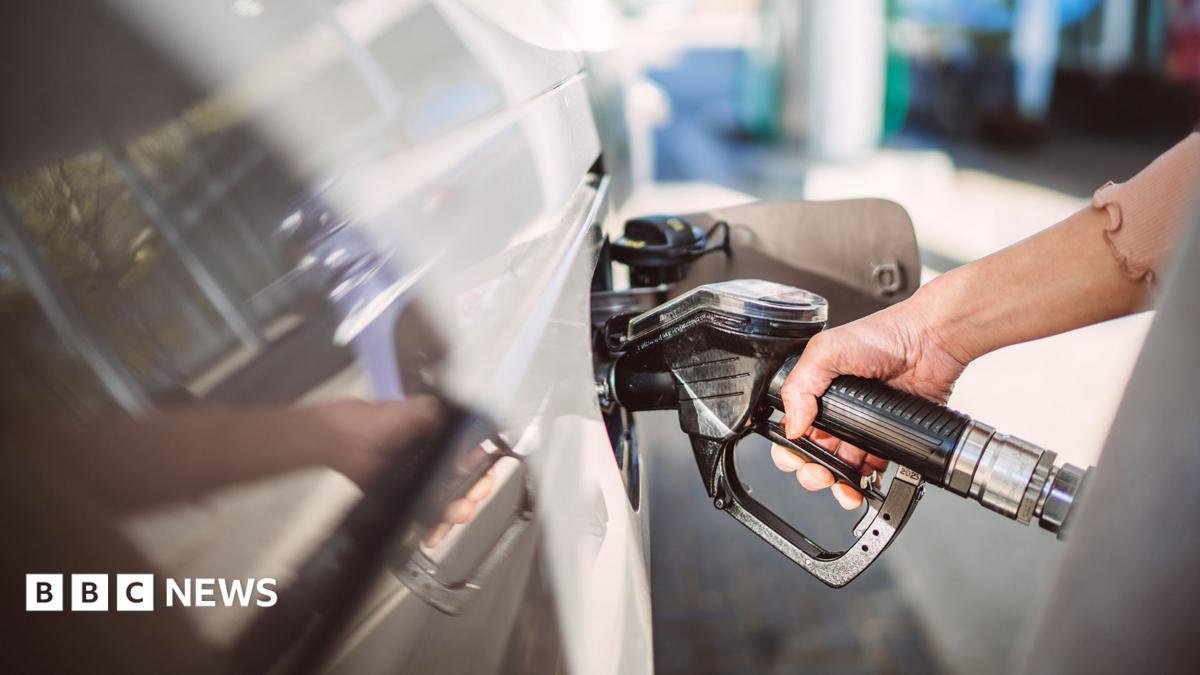
Diesel prices have hit an all-time high of 199.18p per litre, according to the motoring organisation RAC, as the war in the Middle East continues to push up the cost of fuel.
Petrol prices are also still rising, with a litre currently costing 174.13p.
Over the past seven months, the Iran war has severely disrupted the production and transportation of wholesale oil across the region, causing the price of fuels made from oil to surge.
RAC said diesel prices had entered “uncharted territory” and served as a reminder of “just how exposed the UK is to events occurring far away”.
The cost of diesel has now risen by 59p a litre, or just under 40%, since the conflict between the USA and Iran erupted at the end of February. The previous record was 199.09p in June 2022.
The increase means the cost of filling an average family car with diesel is now £110, £31 more than at the start of the conflict.
Petrol prices are now 41p per litre more than at the start of the conflict, but still well below a 2022 peak.
Simon Williams, RAC’s head of policy, said the diesel record “spells pain not only at the pumps for drivers, but for everyone who buys goods or services that rely on diesel lorries and vans”.
“Undoubtedly these increased costs will be passed on to consumers,” he said. Williams said prices at the pumps will not come down until there is a “sustained lower oil price – over several weeks, not days”.
Supplies of diesel internationally have been heavily constrained by the conflict in the Middle East, which has restricted the flow of both crude oil and refined diesel onto global markets.
Russia, which is also a major producer, has also implemented an export ban on diesel, following attacks on its refineries by Ukraine, further limiting supply.
Diesel is harder to refine than gasoline and, because it is used by the haulage industry and in agriculture, it is very difficult to reduce demand.
The UK is heavily reliant on imports. Although the four refineries in the UK make more than enough petrol to meet demand, they do not make enough diesel for the country’s needs.
Source: https://www.bbc.co.uk/news/articles/c6n4k987k981o?at_medium=RSS&at_campaign=rss
About the Author