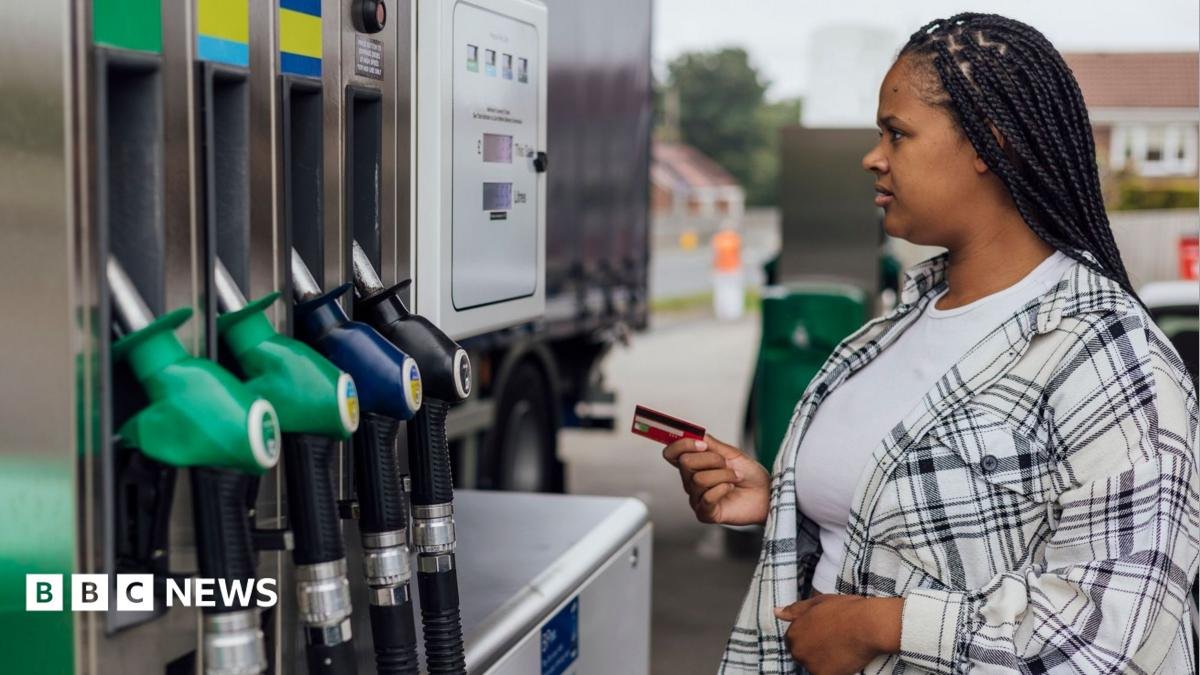
As well as hitting drivers in the pocket, higher oil prices also affect forecourts.
Goran Raven, owner of Essex petrol station RJ Raven, told the BBC: “Things are down. We’ve got lots of pressure on us at the moment. I’d say we’re about 20% down on this time last year.”
Raven said changes in the oil price have a “real-time impact on us”.
In recent days, Brent crude – the global benchmark for oil prices – has surpassed $100 a barrel.
“We only have small tanks here, so we need a tanker almost every day at the moment and we have to pay a daily spot price,” said Raven. “When the price goes up, we have to go up with it. There’s no way around it.
“The margins here are wafer-thin on fuel. People like to think we’re earning a lot on it. Unfortunately, we really aren’t. It’s single digits of pence we earn per litre.”
The rise in inflation means it has moved further away from the Bank of England’s 2% target.
The bank uses interest rates to control inflation.
The rate currently stands at 3.75% and the Bank of England is meeting on Thursday to decide whether to change it.
Chancellor John Healey, who is preparing to announce his first Budget next month, said: “The war in the Middle East is impacting on inflation worldwide, not just here at home. In our bills, our weekly shop and at the petrol pumps.”
He said: “Despite this serious global uncertainty, our UK economy is proving resilient.”
The most recent figures showed that the UK economy expanded by 0.4% in July, boosted by investment in artificial intelligence.
But, for the second quarter between April and June, Britain’s economic growth slowed to 0.4% from 0.6% in January to March.
Commenting on inflation, shadow chancellor Andrew Griffith said the government’s “jobs tax and employment red tape are being passed on to consumers in the weekly shop and their mad energy policies are pushing up costs and leaving Brits exposed”.
The government is cutting VAT on household electricity bills from 5% to zero on 1 October, saving a typical household about £45 a year.
At the same time, the price cap on both electricity and gas bills will rise by 4%.
It means a home using a typical amount of gas and electricity will pay £60 a year more.
Yael Selfin, chief economist at KPMG, said the VAT cut will only partially offset the impact of higher gas prices, which have been rising because of the Iran war and disruption to global supplies, including liquefied natural gas.
“If gas prices remain around current levels, household energy bills could rise by a further double-digit amount from January, with an even larger increase possible if wholesale prices climb further,” she said.
Source: https://www.bbc.co.uk/news/articles/cv2dw7lw4rkpo?at_medium=RSS&at_campaign=rss
About the Author