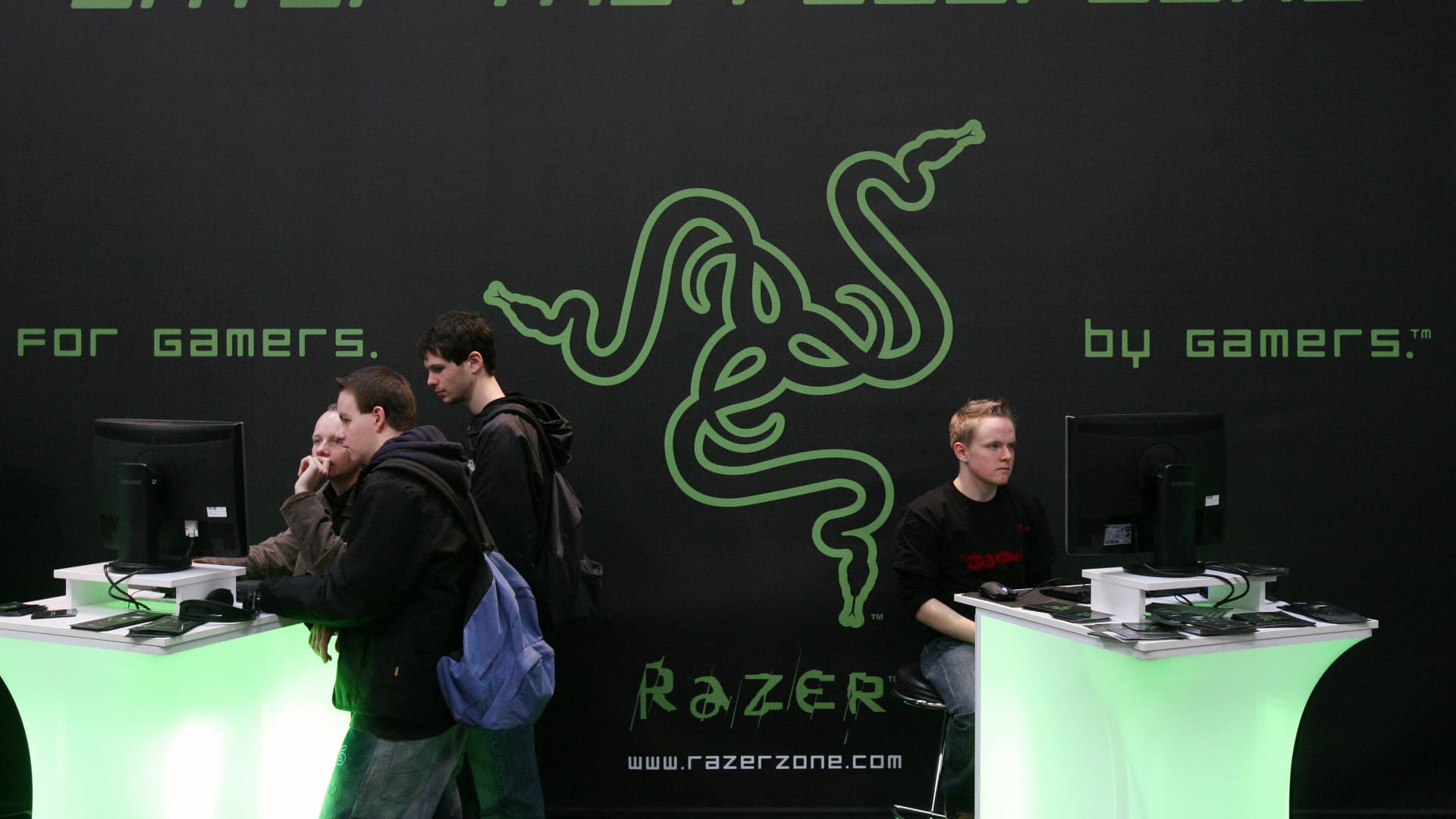
AI is poised to disrupt the $189 billion gaming industry, with Razer CEO Min-Liang Tan predicting a significant transformation by 2025. This shift impacts billions globally and reshapes market dynamics for investors. As of market close, Razer’s stock is attracting attention for its AI integration strategies.
This strategic evolution presents considerable opportunities and challenges for both established giants and emerging startups in the digital entertainment space, a trend closely watched by market analysts.
Razer’s proprietary Game Co-AI tool, slated for a 2025 beta release, exemplifies this AI-driven trend, with analysts anticipating major innovation.
Our analysis delves into this AI-powered transformation and its market implications.
Expert Market Analysis
The global gaming industry, a colossal entity with 3.6 billion players and annual revenues approaching $189 billion, stands at the precipice of a profound AI-driven revolution. Razer CEO Min-Liang Tan emphatically predicts that AI will ‘completely disrupt everything’ within this dynamic sector, signaling not just an incremental upgrade but a fundamental paradigm shift. This transformation will permeate every aspect of gaming, from the initial creative sparks of development to the intricate player experiences within virtual worlds. Historically, technological advancements originating in gaming have rippled outwards, often spawning entirely new industries and market segments. The current anticipation surrounding AI’s role in gaming bears a striking resemblance to previous technological inflection points, such as the widespread adoption of GPUs or the evolution of seamless online multiplayer experiences, suggesting a significant shift is underway and impacting future revenue streams.
Fundamentally, AI is poised to revolutionize game development by automating repetitive tasks and significantly augmenting creative workflows. Tools like Razer’s Game Co-AI, which leverages computer vision to analyze player behavior for in-game assistance, and AI QA Companions designed for bug detection and resolution, represent substantial leaps forward. Tan estimates that AI can streamline quality assurance (QA), a process that traditionally consumes 20-30% of development costs and time. This integration promises more efficient development cycles, allowing human testers to dedicate their efforts to more complex challenges and creative problem-solving. While some industry leaders, like Strauss Zelnick of Take-Two Interactive, express reservations about AI replacing human developers, Tan believes AI will empower smaller teams by removing ‘tedious’ tasks, stressing the continued necessity of ‘human creativity.’ Key performance indicators such as development cost reduction, accelerated time-to-market, and enhanced player retention will serve as critical benchmarks for AI’s success in this domain, influencing future profit margins.
Examining Razer’s proactive approach to AI integration against its competitors offers valuable insight into broader industry trends. While numerous gaming firms are exploring AI applications, Razer’s commitment to developing proprietary tools like Game Co-AI and AI QA Companion positions them as early pioneers in this disruptive wave. Major players like Sony Interactive Entertainment and Microsoft are undoubtedly making substantial investments in AI research and development, although their specific strategic implementations may differ. The intensely competitive gaming sector rewards companies that effectively harness AI, bestowing significant advantages in product quality, development efficiency, and player engagement. The establishment of industry-wide AI standards and ethical guidelines will also be instrumental in shaping the competitive landscape and ensuring responsible innovation for all stakeholders, influencing market share.
The opportunities presented by AI in gaming are vast, encompassing hyper-personalized player experiences and entirely AI-generated game content, thereby promising novel revenue streams and potential stock surges. However, potential risks, including debates surrounding AI in esports training and the ethical implications of AI-generated content, require careful navigation by both developers and regulators. Investors would be wise to closely monitor companies like Razer, which are actively shaping the future of AI in gaming through strategic development and early adoption. Key events to track include the beta release of Game Co-AI in 2025 and potential announcements from other major technology and gaming corporations. While investor entry points may be influenced by the pace of AI adoption and the success of new AI-driven game titles, the long-term outlook for AI-integrated gaming remains highly optimistic, suggesting substantial returns for early adopters and innovators in this rapidly evolving sector.
Related Topics:
Razer Stock, Razer AI Gaming, Min-Liang Tan, Gaming Industry Disruption, Game Development AI, Game Co-AI 2025, Future of Gaming, AI QA Companion, Tech Stock Analysis, Gaming Sector News
About the Author