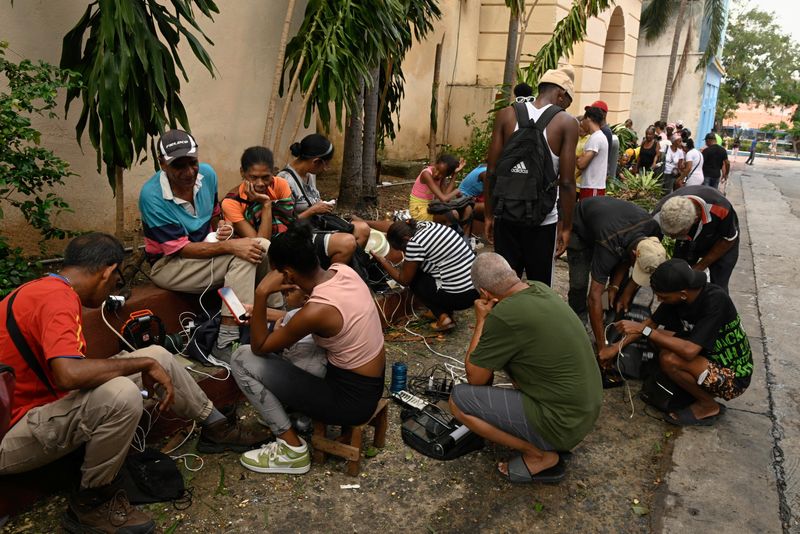
Cuba faces critical economic vulnerabilities in 2025 following Hurricane Melissa. This event highlights inherent infrastructural weaknesses and climate-related risks for developing nations, a significant concern for market participants. The analysis focuses on broader economic implications for investors.
Understanding these ripple effects is crucial for navigating indirect influences on global stock markets, particularly through reconstruction demands and potential shifts in government spending priorities affecting sovereign debt.
As of market close October 25, 2025, immediate disruptions affect key sectors. Market analysts anticipate significant government expenditure towards reconstruction.
This analysis delves into the economic implications and lessons learned for investors.
Expert Market Analysis
The aftermath of Hurricane Melissa in Cuba starkly illustrates the profound economic vulnerabilities faced by developing nations confronting increasingly frequent and severe extreme weather events. Historically, such natural disasters inflict immediate and widespread disruptions across local economies, severely impacting critical sectors like agriculture, tourism, and essential services. The long-term ramifications invariably involve substantial governmental expenditure directed towards reconstruction and robust disaster mitigation strategies. This often necessitates a difficult reallocation of funds away from other vital development initiatives, potentially leading to increased sovereign debt. Past events, such as the economic recovery challenges in Puerto Rico post-Hurricane Maria or the extensive rebuilding efforts following devastating floods in Pakistan, exhibit a consistent pattern of prolonged recovery periods and an elevated reliance on international aid, underscoring the substantial financial and logistical hurdles involved. The economic reverberations are undeniably profound, with the immediate priority universally lying in humanitarian assistance and critical infrastructure repair, requiring immense resource commitment.
While direct, granular financial metrics from Cuba’s economy are notoriously difficult to obtain, the economic repercussions of Hurricane Melissa are undeniably significant. The immediate imperative involves extensive humanitarian assistance and the crucial, large-scale task of infrastructure repair, which will undoubtedly require substantial resource commitment. This scenario could potentially stimulate an increased, albeit localized, demand for construction materials and engineering services, contingent upon the availability of international trade and financing. From a broader global financial perspective, such catastrophic events can sometimes trigger short-term surges in commodity prices, particularly for those essential for rebuilding efforts like cement and steel. Moreover, they can significantly influence the performance of global reinsurance companies as they absorb a portion of the insured losses. The financial strain experienced by a nation grappling with such widespread devastation can also impact its sovereign debt and credit ratings, though the unique economic system of Cuba complicates direct comparisons to standard financial assessments and global credit markets. The absence of easily obtainable market data for Cuban companies renders traditional peer analysis, such as comparing P/E ratios or EBITDA margins, practically impossible, necessitating a more qualitative assessment of economic resilience.
When comparing Cuba’s current situation to that of other nations that have experienced similar extreme weather events, the scale of the challenge becomes strikingly apparent. Countries possessing more developed insurance markets and robust disaster management agencies, such as the United States or Japan, are generally better equipped to absorb such shocks with less prolonged economic fallout. For instance, following Hurricane Sandy in the U.S., substantial insurance payouts and significant federal aid played a pivotal role in facilitating a relatively swift recovery process for many affected regions. In stark contrast, nations with less diversified economies, more constrained financial reserves, and a higher dependence on external funding face a significantly more arduous and prolonged recovery path. The lack of readily accessible market data for Cuban companies means that traditional comparative analysis, like comparing P/E ratios or EBITDA margins of publicly traded entities, is unfeasible, demanding a more qualitative evaluation of economic resilience and national preparedness.
The overarching lesson for investors and market observers globally is the undeniable and increasing interconnectedness between climate events and overall economic stability. While this specific event in Cuba may not have direct, immediate impacts on listed Indian stocks or major global exchanges, it serves as a potent and urgent case study for understanding the systemic risks posed by climate change on a global scale. Investors might strategically consider sectors that offer robust solutions for disaster resilience, sustainable infrastructure development, and advanced weather forecasting technologies. The efficacy with which a nation responds to and recovers from such crises often serves as a direct reflection of its overall economic management capabilities and preparedness. These factors are consistently relevant in the formulation of sound, long-term investment strategies and risk assessments for portfolios exposed to climate-vulnerable regions or supply chains.
Related Topics:
Cuba economic vulnerability, Hurricane Melissa impact, Climate change economic risks, Disaster preparedness analysis, Global economic trends 2025, Sovereign debt analysis, Commodity price volatility, Developing nations economy
About the Author