Later this week, he is expected to change the government’s stance on oil and gas exploitation, with a new energy secretary in place.
Those Labour MPs worried about the Green Party taking their seats will be concerned about this – but a lot more will be worried about whether this could be seen to be diluting the government’s commitment to net zero.
There was also a promise to do something about the cost of living, with more detail tomorrow on the “breathing space” he is offering hard-pressed families.
Extending Manchester’s £2 bus fare cap would be a tangible step and also different from the £3 cap under Keir Starmer and Rachel Reeves.
With energy prices rising again, there may be action there.
The former minister, Miatta Fahnbulleh, has spent the past few weeks working on policy options. She is the former head of the New Economic Foundation think tank and it wants bolder cost of living measures – from rent controls to making bus journeys entirely free for under 25s.
The question though is whether Burnham will go beyond announcing specific policies and outline a broader vision.
He indicated in his speech that he would set out how the cost of living measures will be paid for. So will he make the greater argument – which he believes – that taxes on income are too high, taxes on wealth are too low?
Will he expand on his Times interview and pledge to raise tax thresholds at least for basic rate taxpayers, while pushing up capital gains tax?
Burnham has said he will be “looking at” the tax-free personal allowance ahead of his first Budget in the autumn but stressed that changing it would be “difficult” in the current economic circumstances, and it could have “significant consequences”.
But if he wants to address people’s priorities more than his predecessor he may have to find a way to fund this as he also said he had “heard issues related to the personal allowance more than anything on the doorsteps in Makerfield” (the seat he represents).
He has pledged to stick to Rachel Reeves’s “fiscal rules,” which limit debt and borrowing – so it is likely to be “re-prioritisation” of existing spending rather than new money.
But that can still tell its own story about he intends to govern.
Burnham also promised a new kind of politics – re-using his recent catchphrase of “problem solving not point scoring”.
This could be making a virtue out of necessity. If he wants to achieve the ambition he set out today – not to leave office without reforming social care – then he will need cross party co-operation.
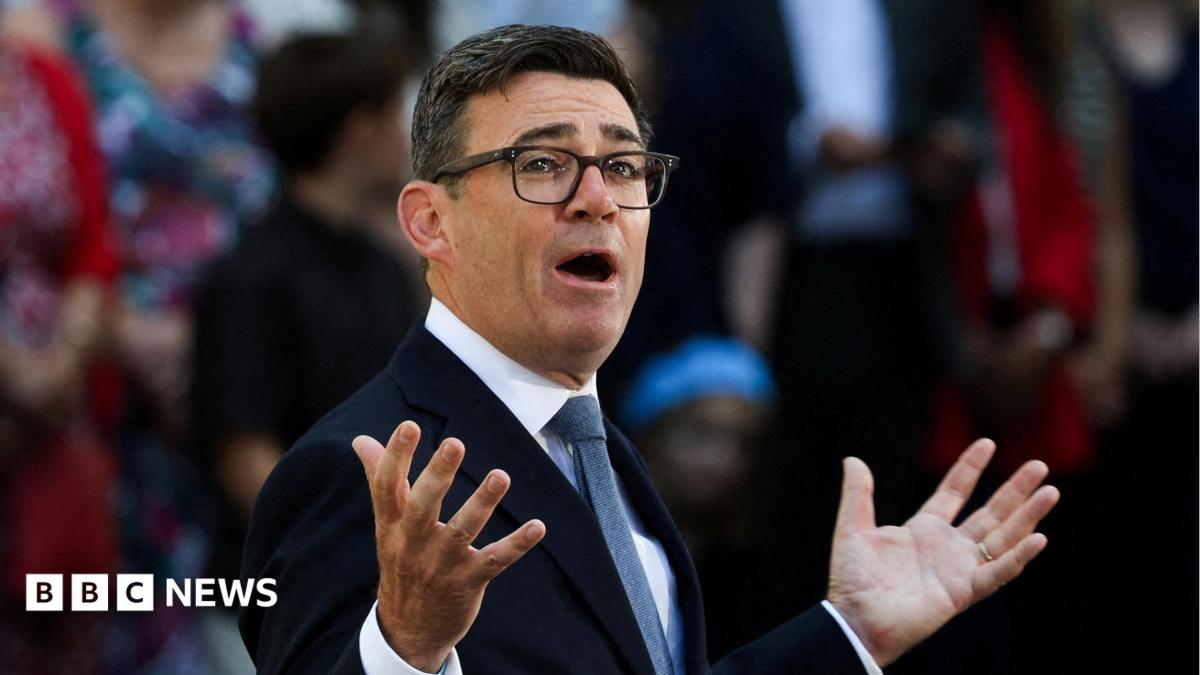
More widely, Andy Burnham has not exactly managed expectations.
He has promised nothing less than a new economic model, leaving behind an era of centralisation, privatisation and de-industrialisation.
Just as rough sleeping is meant to signal to party members where he stands, he will soon need to set out symbolic policies which reveal – to voters and the markets alike – what the economic reality will be behind the radical rhetoric.
Source: https://www.bbc.co.uk/news/articles/c3r0x5nzg0eo?at_medium=RSS&at_campaign=rss
About the Author