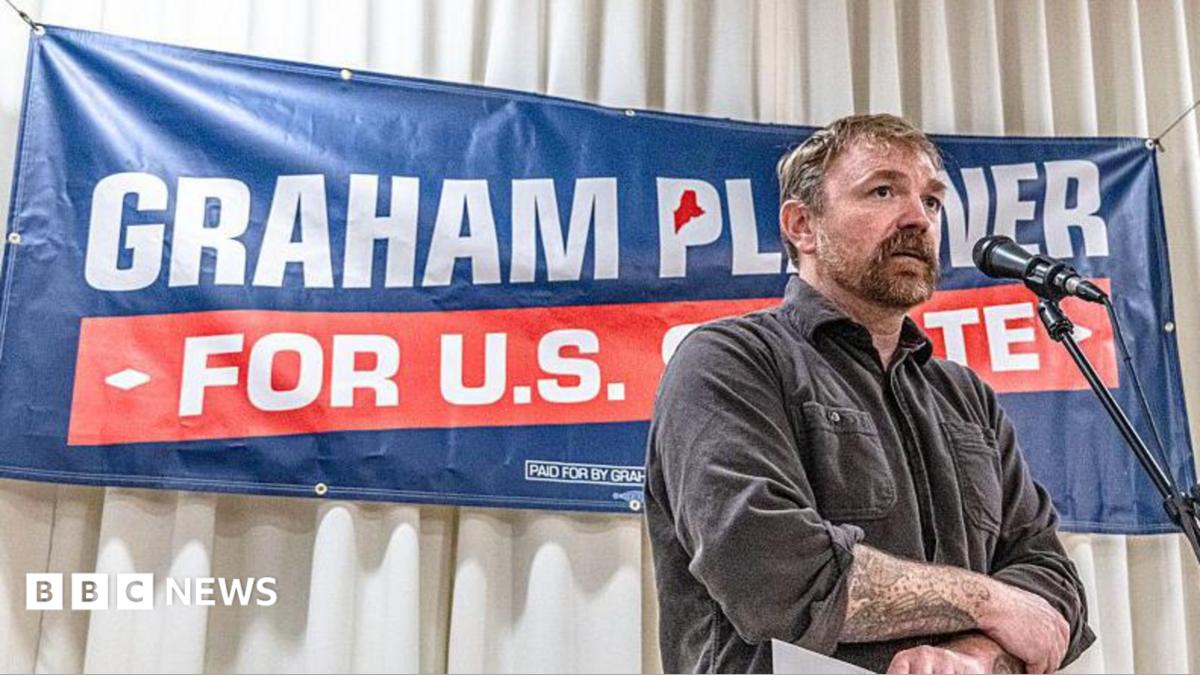
Platner said in his video announcement on Wednesday that he did not want to dictate the process to find his replacement on the ballot – but seemingly did want to ensure it was an open one before fully allowing his name to be removed from the ballot.
He said the process “needs to be reflecting the will and the values of the people that built this movement” in Maine and added that “people in DC need to stay in DC. Decisions should not be made in back rooms by people in places of political power”.
The Maine Democratic Party will have to walk a careful line of nominating a replacement aligned with the policies that Platner successfully ran on, while ensuring the new candidate can take on Collins and her formidable operation.
On Tuesday, Maine Democratic Party Executive Director Devon-Murphy Anderson accused the Platner campaign of trying to put its “thumb on the scale of what this process looks like”.
“We have repeatedly reiterated to Graham Platner’s team that they have no role in determining our next Democratic nominee to the US Senate, nor in determining what this process looks like,” Anderson said.
The state party would reveal its plan to replace Platner once he dropped out, she added.
Meanwhile, Senate hopefuls were vocal with their interest, but acknowledged they had few details on how a replacement race would play out. By Wednesday, it seemed as though every available Maine politician was gunning for the Senate.
Economist Nirav Shah, who ran for governor of Maine earlier this year, said he is evaluating a run but that the process is unclear at this time.
Maine Secretary of State Shenna Bellows has said she is “still considering” and Dan Kleban, founder of the Maine Beer Company who had suspended his initial Senate campaign last year, announced on Wednesday, “I’m in.”
Another potential candidate, former state senator Troy Jackson, said he was exploring options.
Platner’s previous opponent in the Democratic primary, Maine Governor Janet Mills, suspended her campaign before the election as she struggled to gain traction.
Mills had the backing of Senate Majority Leader Chuck Schumer, but Maine voters, frustrated with the party establishment, gravitated towards Platner’s outsider persona and populist views.
Platner officially won the Democratic nomination on 9 June. It was not immediately clear if Mills would revive her campaign.
Source: https://www.bbc.co.uk/news/articles/c9v229434p2o?at_medium=RSS&at_campaign=rss
About the Author