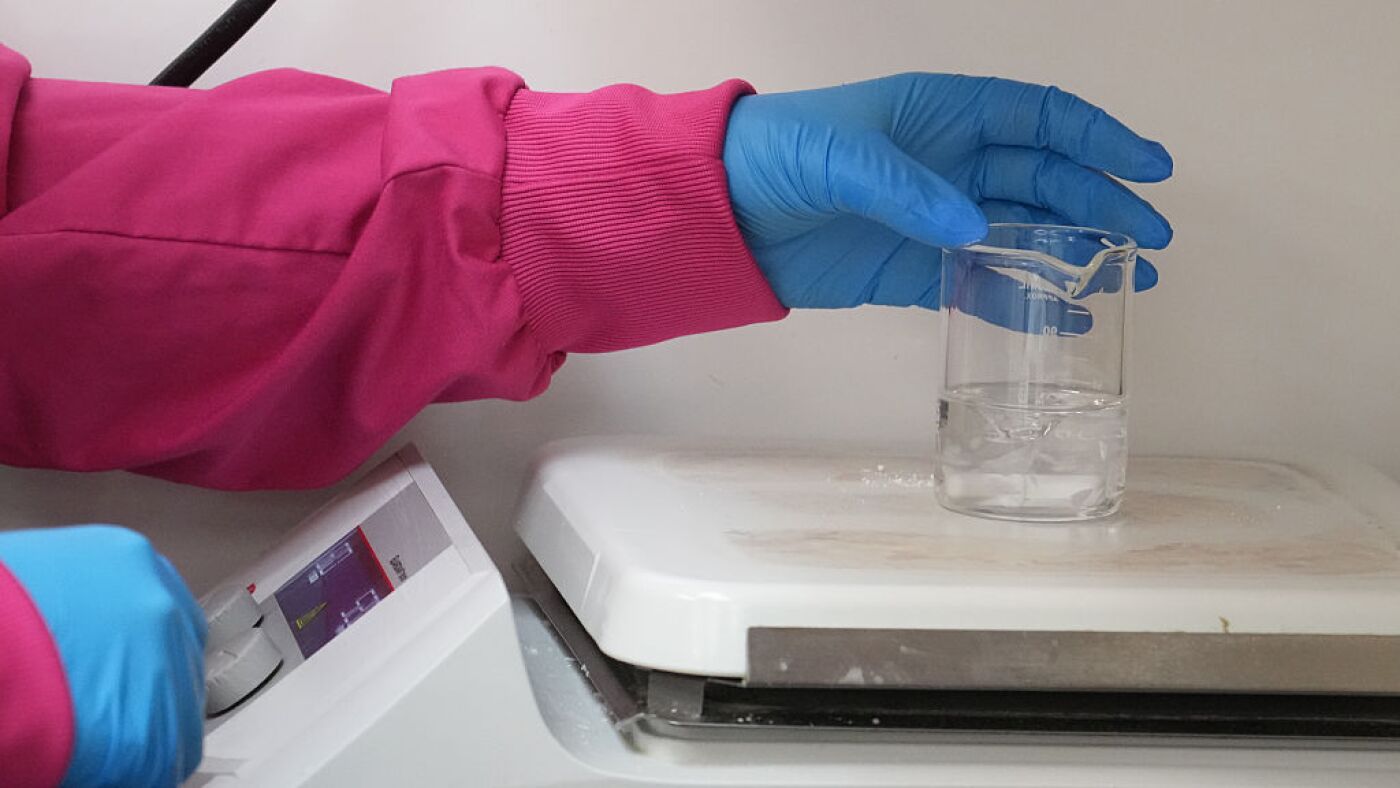

Federal regulators are considering allowing compounding pharmacies to manufacture several peptides that are currently popular among consumers.
George Frey/Bloomberg/Getty Images
hide caption
toggle caption
George Frey/Bloomberg/Getty Images
Every day, Dr. Alexander Weber finds himself fielding another round of questions about peptides — and whether the trendy therapies can help his patients recover from sports injuries or surgery.
He doesn’t offer them in his practice as an orthopedic surgeon, but he shares what the research shows about how well they actually work.
“My stock answer is we just don’t have enough data,” says Weber, chief of sports medicine at the University of Southern California.

“The anecdotal evidence, even from patients that I see, is that they feel like these injectables help them, but we just need to study it,” he adds. Weber authored a review of the research, published early this year, noting the lack of evidence supporting their clinical use.
However, cautionary words from the medical establishment seem to have done little to quench the public’s appetite for these therapies, which have not undergone the large-scale trials needed to gain approval from the Food and Drug Administration.
They are promoted widely in wellness and longevity circles for injury recovery, muscle growth, skin health, metabolism and more. Health Secretary Robert F. Kennedy Jr. has extolled their benefits in an interview with Joe Rogan earlier this year and promised to reverse Biden-era restrictions that have prevented compounding pharmacies in the U.S. from making them.
The restrictions have, in effect, relegated the substances to a grey market, fed by suppliers overseas — raising new safety concerns as users inject themselves with unvetted substances.
The era of peptide prohibition could soon be over, though.
Later this month, a new panel of outside experts appointed by the FDA will make recommendations on whether seven peptides — including some of the most popular injectables like TB-500, BPC-157 and MOTs-C — should be added to a list that gives compounding pharmacies the greenlight to, again, manufacture the products.

“Nobody is recommending these peptides. This is about ensuring patients have safe and effective access to these medications,” says Lee Rosebush, a pharmacist and attorney who represents peptide makers and others in the industry.
“The FDA’s actions during the Biden administration opened up the Wild Wild West,” he adds.
For new discoveries, everyday mysteries, and the science behind the headlines, follow NPR’s Short Wave podcast.
An air of credibility
Peptides are a string of amino acids — smaller than a protein — that often act as signaling molecules in our bodies and help regulate the immune system, metabolism and many other critical functions. They can be synthesized and delivered as drugs. Some of those like insulin are naturally occurring in the body. Others are modified versions, as with the blockbuster GLP-1 weight loss drugs.
One of the highly sought after synthetic peptides under consideration this month, called BPC-157, is based on a peptide found in human stomach juices. Another, TB-500, is related to a molecule found in many types of cells, called thymosin beta-4.
Weber believes the massive success of the GLP-1 drugs for diabetes and weight loss has lent an air of credibility to these injectable wellness peptides, even though those drugs underwent extensive human trials before coming to market. That’s not the case for any of the seven peptides under consideration this month.
“Whenever I see these people on social media saying they’re experts in this field and they’ve been doing it for a really long time, sure, you can say those things, but show me the data,” he says.
In a review of the evidence last month, the FDA’s own scientists recommended against changing the status of any of the seven peptides under consideration at the July meeting.
But it’s unclear how the newly-assembled FDA panel — called the Pharmacy Compounding Advisory Committee — will weigh the agency’s assessment of the data.
Many of its members have ties to the peptide industry and work for clinics that offer injectable peptides or for compounding pharmacies that stand to benefit.
“I think what’s going on here is the advisory committee may be stacked with people who are known to have certain viewpoints on a topic rather than who are coming at this in an unconflicted and unbiased way,” says Dr. Aaron Kesselheim, an expert on FDA law and professor at Harvard Medical School and Brigham and Women’s Hospital.
In a statement to NPR, a spokesperson for the Department of Health and Human Services said all the committee members have “undergone an ethics and vetting process,” and the agency is “committed to robust, transparent discussions about the products.”
While the panel is tasked with making recommendations, FDA leadership has the final say on what happens.
Risks vs. benefits
Outside groups have echoed the concerns raised by the agency’s career scientists. For example, the nonprofit Institute for Safe Medication Practices published a white paper on wellness peptides earlier this year, drawing attention to the gaps in evidence and warning that much of the data comes from preclinical studies done in animals, not humans.
“With anything that you’re taking, whether it’s an FDA-approved product or a supplement, you always have to weigh the risk versus benefit,” says the institute’s president Rita Jew.
“These peptides really do not have established effectiveness, so the only thing you have is risk,” she says.
Peptide proponents like Rosebush counter that pharmaceutical companies have no interest in running the kind of costly studies on these peptides that are needed to legitimize them because many of them can’t be patented.
“These products will likely never go through an FDA approval process,” he says. “So without allowing compounding pharmacies to do this, patients will never get access.”
The agenda for the July 23 and 24 meeting specifies that the committee will review the data behind these injectable peptides for specific indications, such as migraines, ulcerative colitis and osteoporosis.
But, if the FDA ultimately reclassifies these peptide therapies so they can be compounded, Kesselheim says patients will have no trouble finding doctors who are comfortable prescribing them for all sorts of conditions.
“That’s why this discussion is so important and why the FDA’s authority here is an important one to exercise appropriately with optimal outside advice,” he says.
Source: https://www.npr.org/2026/07/08/nx-s1-5885073/fda-peptides-compounding-pharmacies
About the Author