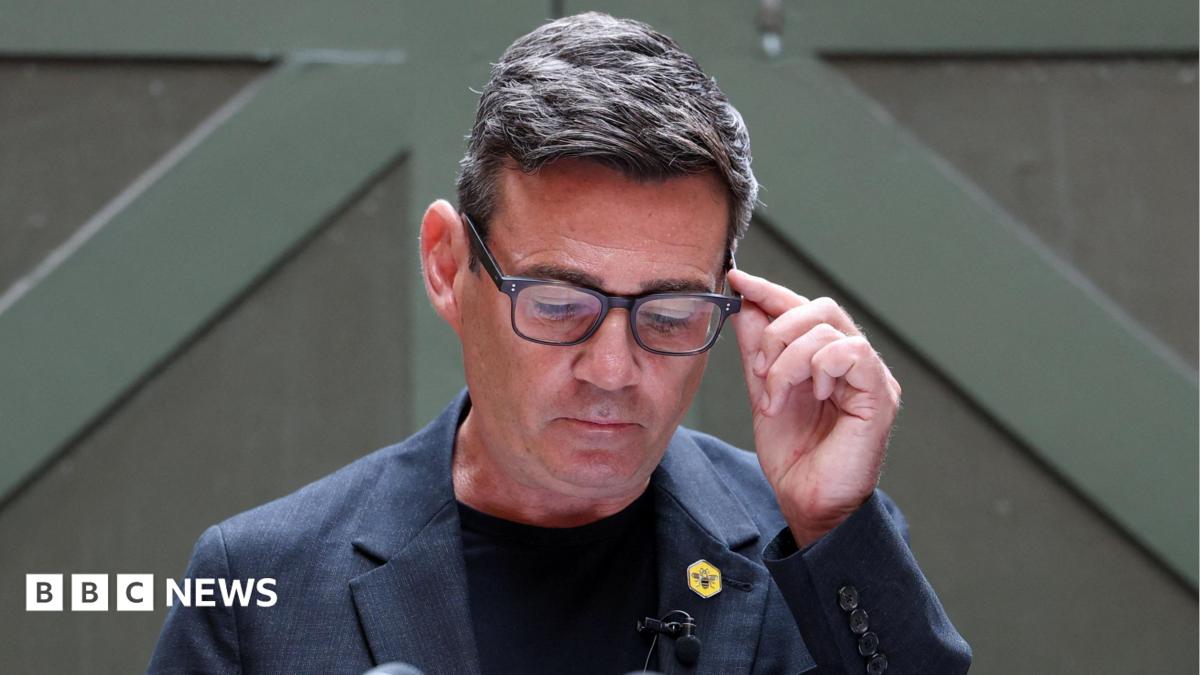
If, as expected, Andy Burnham becomes prime minister next month, he will inherit a £4.7bn bill to deliver the Defence Investment Plan, or DIP, and that is before he worries about how to boost defence spending further as the next general election looms.
The numbers accompanying the much delayed plan point to a big gap that the current government anticipates the next one will need to fill this autumn.
Already, the sharp trade-offs to get the DIP out of the door have provoked a backlash, including from a serving minister, Hamish Falconer, who went public about his frustration at the uncertainty that now swirls around a road widening project for the A46 Newark bypass near his constituency of Lincoln.
Finding the thick edge of another £5bn from existing budgets could prompt plenty more backbench gnashing of teeth.
Sir Keir Starmer was in a reflective mood as he took public ownership of the unveiling of the DIP.
He was keeping a promise to have it published before the Nato summit in Ankara in Turkey next week, his last scheduled set-piece foreign event as prime minister.
Heading there without it would have heaped further embarrassment on a man already en route to the fire exit of leadership.
But in getting a deal his new Defence Secretary Dan Jarvis was willing to put his name to he has also spared Burnham from having to front up its publication himself, potentially in just a few weeks’ time.
Observing Sir Keir over the last two years as prime minister, he has always sought to point out publicly the brutal trade-offs he confronts. All prime ministers confront them, but perhaps this one more than many.
An anaemic economy, a high tax burden, high national debt, a spiralling benefits bill and huge extra demands for defence spending are quite the combination.
Throw in that his first attempt to have a crack at changing the welfare system was rejected by his own MPs and the challenge got trickier still.
Well, it won’t be his challenge for much longer.
As Sir Keir set out the DIP, his tone and language had a knowing perspective to it: a prime minister who had pored over the numbers, examined the trade-offs, because that is what the job is all about.
“There will always be those who say, whatever the sum is frankly, it is not enough,” he told us.
He acknowledged it was the “end of my journey” but he would “depart the stage…knowing we have left this country in a better state that we got it.
“Are there wranglings between departments and the Treasury? Yes, of course there are, there always are, there always will be. At the end of the day the prime minister and the chancellor have to look at the overall judgements for the government, the overall affordability and prioritise between different things.”
He didn’t say good luck Andy, it’s harder than it looks.
But it rather felt like that was the subtext.
Source: https://www.bbc.co.uk/news/articles/c3vy7z35ve0o?at_medium=RSS&at_campaign=rss
About the Author