Key events
Ten minutes to go and final adjustments are being made to the cars.
On average, you have only about three seconds between cars. Of course everyone will jockey for space but there will be winners and losers.
Bernie Collins has been outlining one big issue at this track: it’s too short to have the cars well spaced out in qualifying.
And here are the constructors’ standings:
1 Mercedes 262pts
2 Ferrari 190
3 McLaren 141
4 Red Bull 89
5 Alpine 60
6 Racing Bulls 38
7 Haas 21
8 Williams 11
9 Audi 2
10 Aston Martin 1
11 Cadillac 0
Here are the drivers’ standings:
1 Kimi Antonelli Mercedes 156pts
2 Lewis Hamilton Ferrari 115
3 George Russell Mercedes 106
4 Charles Leclerc Ferrari 75
5 Lando Norris McLaren 73
6 Oscar Piastri McLaren 68
7 Max Verstappen Red Bull 55
8 Pierre Gasly Alpine 41
9 Isack Hadjar Red Bull 34
10 Liam Lawson Racing Bulls 26
After the past few days, it’s something of a triumph to get this far in without mentioning the weather. It may be cooling a little in the UK but Spielberg will be up to 33C this afternoon (and indeed tomorrow). F1 has therefore implemented its mercury rising protocol, as Giles explains:
This weekend’s race at the Red Bull Ring has been declared a heat hazard by the FIA as Europe swelters under a heatwave, with temperatures set to rise above the 31C defined by the regulations, under which conditions drivers are allowed to wear special cooling vests beneath their fireproof suits. The heat hazard has been declared twice before, in Singapore and Texas last season but this is the first time it has been declared in Europe.
However the drivers in Austria generally played down the likely impact. “It’s not nice. I think the moments where you have zero kph in the car, they are definitely the worst,” said Red Bull’s Isack Hadjar. “To be fair, when driving, it’s not too bad. We’ve got good AC with our open cockpit, so it’s fine. I think it’s more going to be tough on the car, on the tyres, than anything else.”
At the start of the season, the Ferrari was quick off the grid but heavy on the tyres and unable to match the Mercedes over race distances. But, writes Giles:
In Barcelona, Ferrari brought eight aerodynamic upgrades to their car, their biggest developments and they proved enormously effective … Ferrari’s SF26, in its upgraded configuration, demonstrated it was a serious package, hugely impressive through the corners and crucially now also less punishing on the tyres as a result of new wheel rims. As the defending world champion, McLaren’s Lando Norris, noted, “if they had a better engine they’re dominating”. In Austria they should boast a better engine.
Half an hour to go.
Why were Ferrari able to make their changes for Barcelona? From the sport that brought you Kers and fights with cricket for the rights to DRS, here comes Aduo: additional development and upgrade opportunities. Because of the regulation changes for this season, the FIA and the teams agreed to allow further engine upgrades, with the number based on the best combustion engine’s output.
Giles Richards, Our F1 correspondent, goes into more detail:
The Red Bull engine was assessed to be the top-performing machinery – a decision still questioned by Red Bull, understandably given the superiority of the Mercedes. However, the measurement considers only the internal combustion engine output not the electrical element of the power unit. There is scant room for complaint here given it was a methodology that was agreed by teams and engine manufacturers.
In the interim, with Aduo a goer, Ferrari were considered to be more than 4% off the Red Bull benchmark, entitling it to two engine upgrades this season, with Mercedes between 2% and 4%, giving it one. Eyebrows have been raised as to why Ferrari were ready with an engine upgrade so soon after the engine assessment was announced on race day in Monaco, the intimation being they were gaming the system.
Preamble
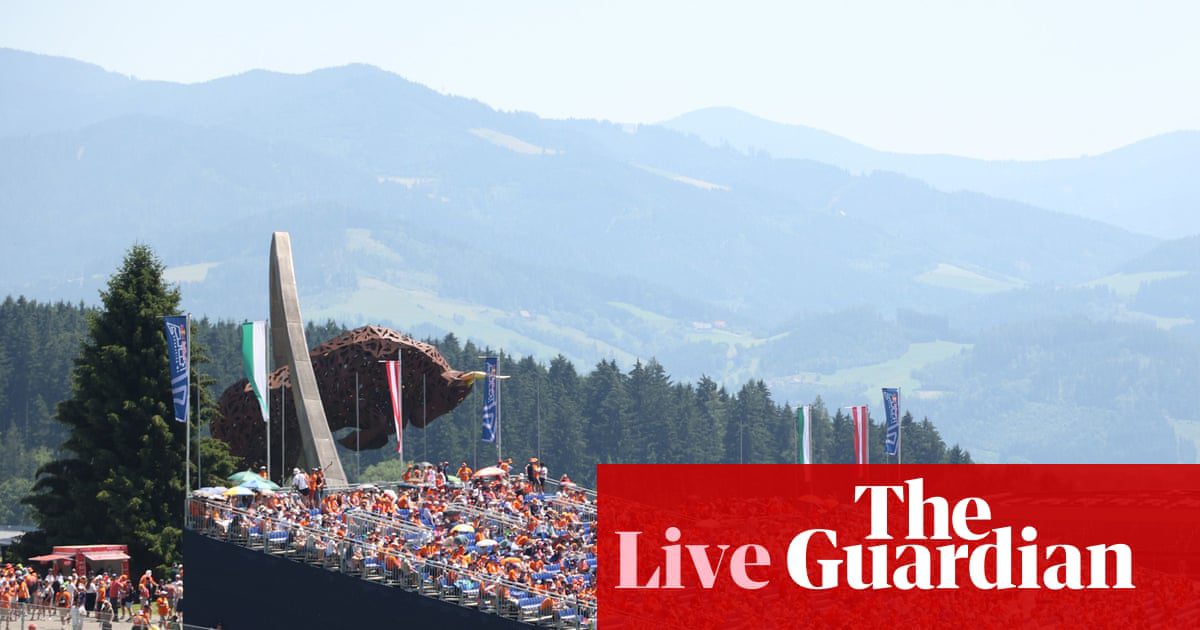
The hills are alive with the sound of engines. Two weeks on from the outskirts of Barcelona, F1 has left city life behind for a dedicated circuit in rural Austria and brought with it the makings of a multi-team title race.
Lewis Hamilton’s victory in Catalonia showed off the Ferrari’s improvements while the reliability problems of the Mercedes engine has been a concern for the eponymous team and also McLaren. The Briton won from second on the grid; OK, Kimi Antonelli had a small power problem in qualifying, but Hamilton was 0.064sec behind his compatriot George Russell in the pole-sitting Mercedes, suggesting that there was little to choose between their drives.
Antonelli suffered the kind of bad luck that has generally been afflicting Russell, losing power when second, so Hamilton took the full 25 points out of the championship leader’s advantage, cutting it to 41. Russell claimed that second place that seemed set for Antonelli, so at least took 18 out of his teammate’s lead, but he will surely be concerned about his former Mercedes teammate’s reinvigoration.
The past few years have been a slog for Hamilton, ever since the soon-to-be-former race director handed Max Verstappen the 2021 world title in Abu Dhabi. Swapping Mercedes for Ferrari for 2025 made matters worse on the face of it, with Hamilton’s only podium finishes coming in sprint races. Now he has once again taken the top step in a main race, and at a stage of the season with all to play for.
Still, in practice it has been Mercedes’s weekend. Antonelli led Russell, just, in FP1, followed by Oscar Piastri for McLaren and Max Verstappen in the Red Bull, with Hamilton fifth. Antonelli again led FP2, but ahead of Piastri and Lando Norris for McLaren and Verstappen, with Hamilton again fifth and Russell down in sixth. But Mercedes’s Briton was fastest in Saturday’s FP3, ahead of Antonelli by 0.038. Hamilton, though, was up to third.
Join me from 2.30 BST for the buildup to qualifying to see if Hamilton can continue to put pressure on the Mercedes with a challenge for pole position at the Red Bull Ring.
Source: https://www.theguardian.com/sport/live/2026/jun/27/austrian-grand-prix-formula-one-qualifying-live
About the Author