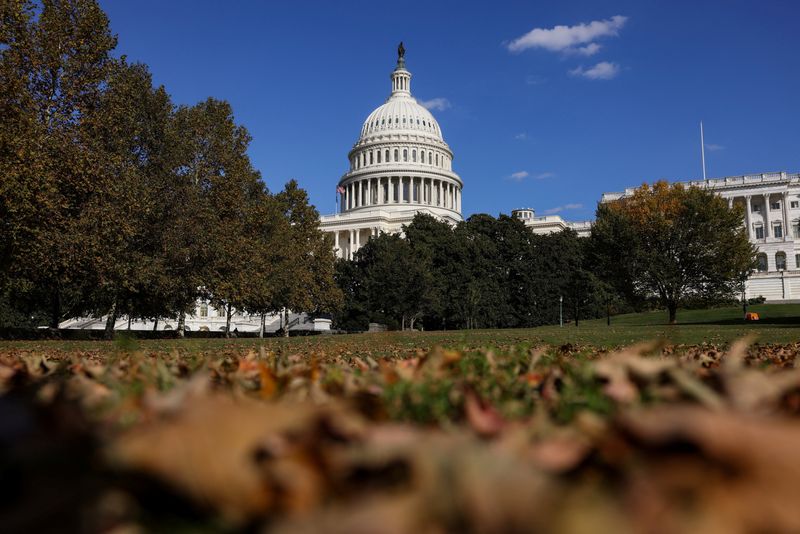
The US economy faces a potential $14 billion loss as a direct consequence of the ongoing federal shutdown, a critical disruption impacting overall economic stability. Investors are keenly observing for any broader market ripple effects as the shutdown’s economic ramifications continue to unfold. This event starkly underscores the intricate, vital link between government operations and national economic health, signaling a clear need for increased investor caution across all asset classes.
Such significant disruptions inevitably introduce heightened volatility and pervasive uncertainty, potentially impacting crucial investor and consumer confidence levels, alongside key business investment decisions. Delayed government payments and reduced federal spending could adversely affect various sectors directly reliant on government activity, prompting a careful, granular assessment of current market risks.
As of market close on October 25, 2025, key indicators such as consumer sentiment indices and forthcoming business investment reports will be crucial for sentiment. The full, ultimate repercussions are still developing, with many analysts projecting significant economic fallout.
This detailed analysis delves into the immediate and longer-term economic consequences of the federal shutdown.
Expert Market Analysis
The projected economic fallout from a federal shutdown, estimated at up to $14 billion, serves as a stark reminder of the intricate and often delicate relationship between robust government functionality and national economic health. Historical patterns, such as the prolonged 35-day shutdown experienced in late 2018-early 2019 which cost the U.S. economy an estimated $11 billion, consistently suggest that extended disruptions lead to measurable declines in Gross Domestic Product (GDP) growth and a general dampening of overall economic sentiment. This current $14 billion projection implies a potentially more severe impact, especially if the shutdown extends into critical economic reporting periods or disrupts key fiscal policy initiatives, as observed during past federal closures.
From a fundamental perspective, the shutdown impacts various critical economic drivers that form the backbone of market activity. Reduced government spending, a direct result of operational halts, coupled with furloughed federal employees and delayed payments to numerous government contractors, directly curtail overall economic activity. Businesses that are heavily reliant on government contracts or essential services face immediate cash flow challenges, significantly impacting their operational efficiency and future revenue projections. Furthermore, the pervasive uncertainty surrounding the shutdown’s eventual duration can deter vital private sector investment and crucial hiring decisions, a key concern for equity markets and their forward-looking valuations. While specific stock performance may not be immediately or directly impacted in isolation, the overall market sentiment can shift dramatically, potentially leading to widespread sector-wide downturns and downward revisions in analyst forecasts.
Comparing the potential economic impact of $14 billion to other sectors reveals its substantial scale. For context, this amount could represent a significant portion of the quarterly earnings for a major technology firm or a substantial slice of annual revenue for a mid-sized manufacturing company operating within a highly competitive landscape. While not directly comparable to specific stock performance on a one-to-one basis, it highlights the sheer scale of economic activity directly influenced by federal operations and government spending. The IT sector might experience indirect effects through reduced government tech spending or slower contract awards, while sectors heavily reliant on government grants or subsidies, such as renewable energy or defense industries, could face immediate and significant financial strains and project delays.
The expert takeaway from this projected economic impact is one of cautious optimism, heavily contingent on a swift and effective resolution to the ongoing federal shutdown. Retail investors might be well-advised to review their portfolio’s exposure to sectors directly or indirectly linked to government spending and consider appropriate diversification strategies. Institutional investors will likely be reassessing their risk profiles and potentially reallocating capital towards more stable, less correlated assets during periods of heightened economic uncertainty. The primary risks lie in the prolonged duration of the shutdown and its potential to trigger a broader, sustained economic slowdown, impacting corporate earnings and overall valuations. Opportunities could emerge in sectors less sensitive to government operations or those benefiting from future government stimulus packages upon resolution of the fiscal impasse.
Related Topics:
US Economy Analysis, Federal Shutdown Impact, Economic Loss 2025, US Economic Outlook, Market Volatility, GDP Growth Analysis, Government Spending, Investor Caution, US Economy 2025, Federal Shutdown
About the Author