Dave Henshaw can’t quite explain the fascination of archery. That’s despite him coaching archers to Olympic events, helping his club become a diverse and thriving community, and earning a King’s honour for his services to the sport.
“When you pick up a bow and start shooting, there’s just something about it,” the 83-year-old says. “Don’t ask me what it is – I don’t know.”
As groups of archers shoot outside, Henshaw describes the diversity of people he’s trained and worked with during his 50-plus years with the Christchurch Archery Club, in New Zealand’s South Island. They include athletes with disabilities, teenagers not drawn to team sports, and Olympians.
Henshaw coached famed New Zealand archer Neroli Fairhall to gold at the 1982 Commonwealth Games, after she had won gold at the 1980 Paralympics. Shooting from her wheelchair, Fairhall then made history by competing at the Los Angeles Olympics in 1984. Henshaw has since coached others to shoot at the Olympics and youth Olympic Games.
At the elite level, Henshaw says a top coach must have the ability to read body language and sense when an archer is too tense. He earned the nickname “Yoda”, based on the legendary Jedi master from the Star Wars franchise, for his adapted version of a catchphrase from Yoda, who said, “Do or don’t do. There is no try.” But Henshaw quips, “I used to say to people that the only similarity between Yoda and myself is I’ve got wrinkled skin.”
Archery is really about community, explains Henshaw, and the self-worth it infuses in anyone who picks up a bow and takes part. He worked once with a young newcomer who kept dropping his head and wouldn’t maintain eye contact. “So I thought, ‘OK, I’ll see if I can help you.’”
Years later, that formerly shy novice returned to the club. He now ran his own business, and said his work on the range alongside Henshaw had helped transform his mindset.
Adapting to the needs of the individual is key to his club’s success, says Henshaw, and its 150 members. “We’ve just got to keep thinking outside the square for people that are different.”
Archers can choose from a range of shooting styles, from the wooden longbow to the more sophisticated Olympic-style bows.
Karen Redpath, aged 65, picked up a bow for the first time last year, after years of coming to watch and support her niece.
“There’d hardly ever be a day when someone wouldn’t come up to me and say, ‘When are you going to have a go?’ So finally I did, and I just love it.”
She enjoys the physical challenge and the club’s emphasis on volunteer effort, which reminds her of the ski clubs she once belonged to.
“It’s as much about the people and the atmosphere as it is about the sport.”
In 2020, the club’s future seemed in jeopardy, after the council considered not renewing the lease of its range due to perceived safety concerns and its growing membership.
But last year the club secured a 33-year lease and developed an indoor facility for winter training. They’re repaying the faith of backers by introducing local students to the sport and providing some free coaching. It is one of the few archery clubs in Christchurch, a city of about 400,000 people.
The club president, Graeme Robb, echoes Henshaw’s sentiments on the sport’s curiously addictive qualities and its ability to attract all-comers, including those turned off by other sports environments.
“Archery is great for your mental health,” he says, “because you can concentrate on the shooting and forget your troubles and your inhibitions.”
Though it can seem at first an individual pursuit, archers are often quickly drawn into a community. They observe time-honoured codes of etiquette while shooting, such as retrieving their arrows together. This builds an ability to communicate and work in a larger collective, he says.
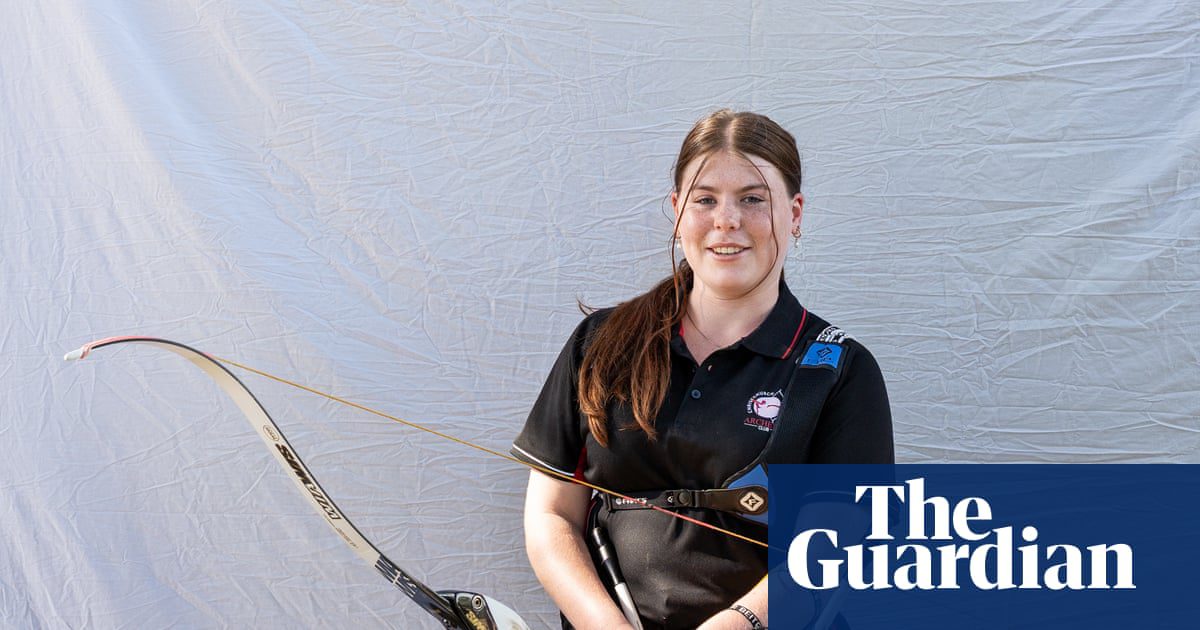
Julia Harrison, 26, is one of the club’s several rising stars. Just back from a world cup event in Shanghai, she tested her technique and mental toughness against Olympians and professionals.
“I was able to keep calm and go through my process and make the strong shots that I knew I needed to make,” she says. Seeded 55th, she advanced through early rounds to shoot against the 10th seed.
Working with Australian coach James Gaze, Harrison is targeting qualification for the Los Angeles Olympics in 2028.
Other young talents include Mieke Nel, 15, and 16-year-old Jacob Schouten, who both medalled in April’s World Archery Oceania Target Championships, despite competing in the under-18 category.
The club’s twin emphasis on competition and camaraderie is obvious during the Dave Henshaw Classic, a five-day tournament renamed in honour of Henshaw’s service.
A world-registered event, it attracts top archers from around the country. But away from the line there’s a companionable hum of music and chat among archers and supporters.
Inside the clubrooms, long-time volunteer Danni comes not to shoot but to help with administrative duties, keep the meat pie warmer hot and ensure everyone feels included.
“It’s just a really big family,” she says. “That’s archery.”
Source: https://www.theguardian.com/world/ng-interactive/2026/may/23/shoot-and-forget-your-troubles-how-archery-brought-a-new-zealand-community-together
About the Author