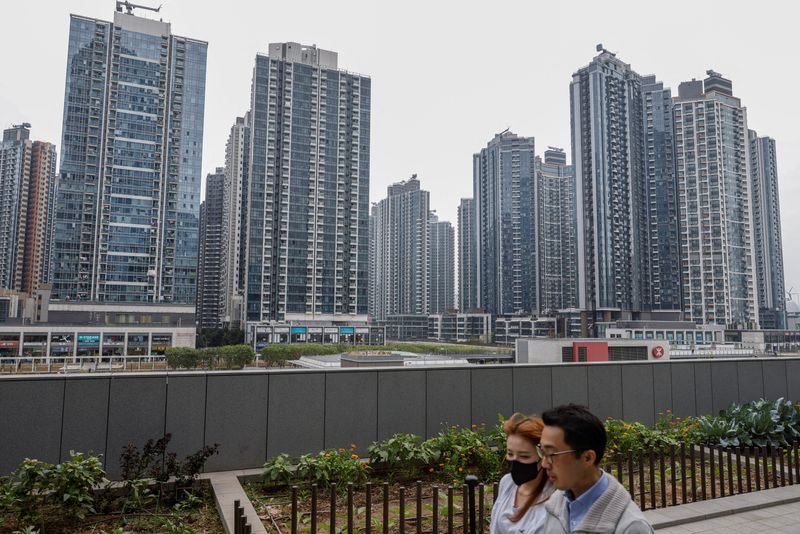
Hong Kong home prices surged by a significant 1.3% in September, marking the sixth consecutive month of growth. This sustained upward trend highlights the property market’s resilience amidst global economic uncertainties, a crucial indicator for investors and policymakers alike. The consistent appreciation reflects underlying economic strength and robust demand for prime real estate in this vital Asian financial hub.
This consistent appreciation is a key indicator of underlying economic strength and sustained demand for prime real estate in the region, vital for investor confidence.
According to the latest property index data, average prices climbed steadily with a modest increase in transaction volumes, signaling renewed buyer confidence and upward momentum.
This report offers an in-depth analysis of the trend’s drivers and future implications for the Hong Kong property market.
Expert Market Analysis
The Hong Kong property market’s impressive ascent, highlighted by a 1.3% rise in home prices for September—its sixth consecutive monthly gain—signals a period of renewed confidence and stability. Historically sensitive to global economic shifts and local policy adjustments, this sustained streak suggests underlying demand and market resilience that is exceeding many prior expectations. Periods of prolonged growth in the past have often preceded significant market peaks, making the current trajectory particularly noteworthy for market participants. This consistent expansion offers a stark contrast to earlier fluctuating conditions, indicating a maturing market now driven more by fundamental strengths than purely speculative fervor.
From a fundamental perspective, this persistent price appreciation is rooted in a confluence of factors, most critically an ongoing shortage of developable land coupled with robust demand from both local buyers and international investors who view Hong Kong real estate as a safe-haven asset. While higher interest rates are a consideration, the market has demonstrated a notable ability to absorb increased borrowing costs. Analysts are diligently monitoring debt-to-income ratios and overall affordability metrics to gauge sustainability. The average price per square foot, a key valuation metric, continues its upward climb, albeit at a pace that many economists deem manageable, thus steering clear of speculative bubbles characteristic of past market cycles. The Heng Seng Property Index, a key benchmark, reflects this sustained strength, providing a clear indicator of overall market health and investor sentiment.
When juxtaposed with other major Asian property markets, Hong Kong’s performance in the current year, amidst global economic uncertainties, stands out significantly. Cities such as Singapore and Seoul have experienced more moderate gains or even declines in property values during the same period. Hong Kong’s inherent land scarcity acts as a structural support for prices, a unique characteristic not shared to the same extent by many other major urban centers. Despite various regulatory measures intended to cool the market, these have so far proven insufficient to dampen the current growth phase, suggesting that deeper, more intrinsic market forces are at play, including strong underlying economic fundamentals and a persistently limited supply.
The expert consensus on this sustained growth leans towards cautious optimism. While the 1.3% monthly increase is a positive signal, long-term sustainability hinges on broader economic indicators, including employment rates and global trade dynamics. Retail investors are strongly advised to conduct thorough due diligence, focusing on specific location, property type, and potential rental yields before making any investment decisions. Institutional investors are likely to maintain or even increase their allocation to Hong Kong real estate, viewing it as a stable and appreciating asset class. Key risks, however, include potential shifts in monetary policy and unforeseen geopolitical developments that could influence market sentiment. The outlook suggests continued, albeit possibly moderating, growth in the coming quarters, making it a market to watch closely for emerging opportunities.
Related Topics:
Hong Kong Property Market, Asian Property Trends, Real Estate Asia 2025, September Property Data, Hong Kong Housing Index, Property Investment Asia, Market Update Hong Kong, Real Estate Analysis
About the Author