Trump claims Iran wants US to open strait of Hormuz as soon as possible
The US president, Donald Trump, has claimed in a new Truth Social post that Iran has “just informed” Washington that they are in a “state of collapse”. Trump also said Iran wants the US to open the strait of Hormuz “as soon as possible” as they try to “figure out” their “leadership situation”, something he says he believes is possible.
We have not been able to verify any of these claims. Iran has not commented on them yet.
Trump has not said who the US has been speaking to in Iran as he has cast the regime in a state of chaos with the country’s supreme leader, Mojtaba Khamenei, reportedly severely injured, and lawmakers divided on negotiations about Tehran’s nuclear programme.
Iran put forward a new proposal on Monday for a ceasefire deal focused on opening the strait of Hormuz, setting aside discussions on nuclear weapons, missiles, sanctions and other issues for later, according to officials in the region.
As my colleagues note in this story, Iranian officials said Tehran would be prepared to talk about the nuclear issue eventually, only after the US blockade of Iran’s ports had ended.
Key events
Earlier, an Iranian army spokesperson said that for Iran, “it is still a war situation and there is continuous monitoring … surveillance”.
“If the enemy takes a new action, they will be faced with new tools, methods, and arenas,” Iran’s IRGC-affiliated Fars news agency quoted the spokesperson as saying.
An Israeli strike on Lebanese troops and rescuers during a rescue operation in the village of Majdal Zoun in southern Lebanon wounded two Lebanese soldiers, the Lebanese army said on Tuesday.
Separately, the country’s health ministry said on Tuesday that at least 2,534 people have been killed and 7,863 wounded by Israeli attacks since 2 March.
Saudi Arabia welcomed leaders and officials from across the Gulf on Tuesday to discuss the ongoing crisis in the region triggered by the US-Israeli war against Iran.
The talks in the coastal city of Jeddah come as the White House considers Iran’s latest proposal to end the two-month-old conflict and reopen the Strait of Hormuz.
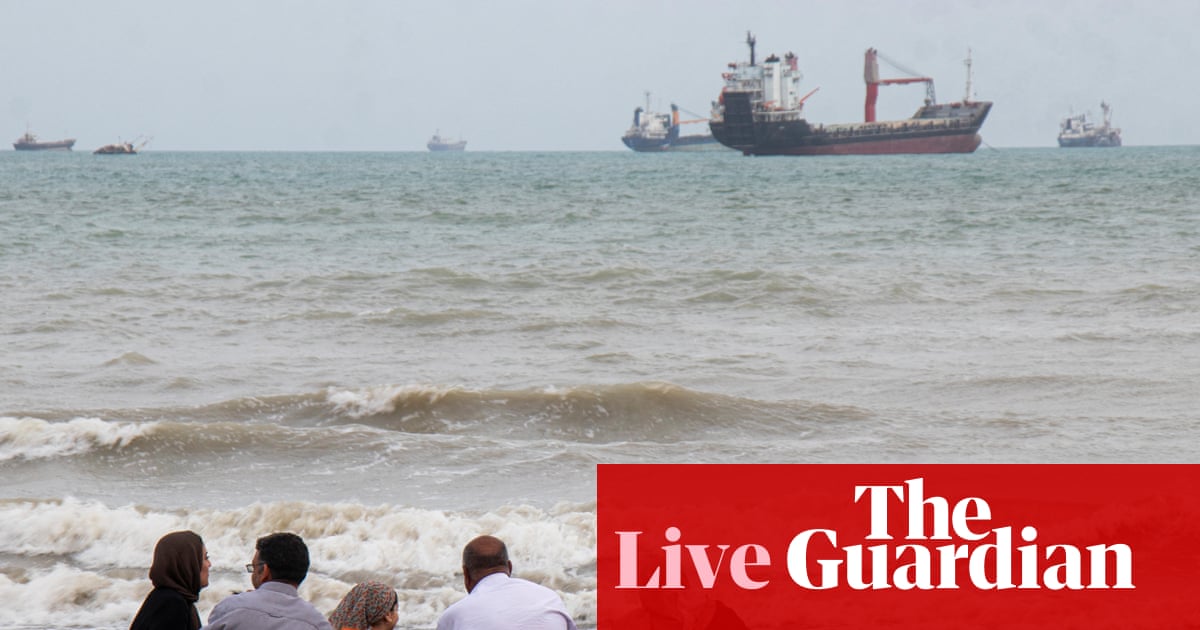
The crucial waterway saw roughly 20 percent of global crude and liquefied natural gas pass through its waters before the war largely choked off maritime traffic.
Leaders and officials from across the Gulf region were greeted by Saudi Crown Prince Mohammed bin Salman as they arrived in Jeddah, according to images released by Saudi state media.
Jillian Ambrose
The United Arab Emirates has quit the Opec oil cartel after 60 years of membership, in a heavy blow to the group and its de facto leader, Saudi Arabia, as global energy markets contend with the biggest supply crisis in history.
The shock loss of the UAE, Opec’s third largest oil producer, is expected to weaken the group, which for decades has worked together to use its collective oil production to influence global oil market prices.
The UAE on Tuesday set out a plan to sever its ties to the cartel within days as the market enters the ninth week of the US-Israeli war on Iran – which has blocked a fifth of the world’s seaborne oil from flowing from Gulf producers through the strait of Hormuz, causing record oil market volatility.
A statement from the UAE’s energy ministry said leaving Opec would give it greater flexibility to respond to a “new energy age” in line with its “long-term strategic and economic vision”.
The UAE joined Opec in 1967 through the Emirate of Abu Dhabi and remained in the organisation when the UAE was formed in 1971. Its departure has laid bare the long-running tensions between the UAE and Saudi Arabia over the group’s approach to oil production limits and geopolitics.
Iranian defence ministry spokesman Reza Talaei-Nik said on Tuesday that Washington “must abandon its illegal and irrational demands.”
“The United States is no longer in a position to dictate its policy to independent nations,” he said, according to state TV.
The day so far
-
The US president, Donald Trump, has claimed in a new Truth Social post that Iran has “just informed” Washington that they are in a “state of collapse”. Trump also said Iran wants the US to open the strait of Hormuz “as soon as possible” as they try to “figure out” their “leadership situation”, something he says he believes is possible.
-
The United Arab Emirates has announced it is quitting the Opec group of oil producers. In an unexpected move, the UAE is leaving Opec and Opec+ (which includes allies such as Russia) from 1 May, a move which could allow it – in theory – to produce more oil and gas.
-
Israel’s top diplomat said Israel was not seeking to take territory in Lebanon, as its military presses operations in the south against Iran-backed Hezbollah despite a ceasefire. “Israel has no territorial ambitions in Lebanon. Our presence in the areas by our northern border serves one purpose: protecting our citizens,” foreign minister Gideon Saar said at a joint news conference with his Serbian counterpart Marko Djuric.
-
Iran has banned the export of steel products, local media reported on Tuesday citing customs authorities, after airstrikes targeted the country’s steel industry in the war with Israel and the United States. Fars news agency reported a directive from the Islamic republic’s customs authorities “regarding the prohibition of the export” of steel products, effective from 26 April.
-
A superyacht owned by Russian billionaire Alexey Mordashov was able to transit the blockaded strait of Hormuz after undergoing maintenance in Dubai because neither Iran nor the United States objected, a source close to Mordashov said on Tuesday. It has been unclear how the multi-deck pleasure vessel, worth over $500 million, gained permission to sail on Saturday through the commercially important waterway at the heart of the US-Iran conflict, where traffic has been severely restricted since February, Reuters reported.
-
The Israeli military has ordered residents of 16 towns and villages in southern Lebanon to evacuate immediately to the Sidon area. The affected towns and villages are: Ghndouriyeh, Burj Qlawiyeh, Qlawiyeh, al-Sawana, al-Jumayjima, Safad al-Batikh, Braashit, Shaqra, Aita al-Jabal, Tibnin, al-Sultaniyya, Bir al-Sanasil, Dounin, Khirbet Silm, Salaa and Deir Qifa, according to a social media post by the IDF’s Arabic-language spokesperson, Avichay Adraee, who claimed the attacks are being launched due to Hezbollah violating the US-mediated ceasefire agreement Israel signed with the Lebanese state in mid April.
-
Lebanon’s minister for the environment has accused Israel’s military of committing “an act of ecocide” in the foreword to a report detailing the harm done to the country’s natural resources during the invasion of 2023 to 2024. Israeli military aggression “reshaped both the physical and ecological landscape” of southern Lebanon, according to the report, which does not consider the impacts of Israel’s latest barrage of attacks this spring.
-
The US treasury secretary, Scott Bessent, has said Iran’s oil industry is starting to shut production down because of the American blockade of the strait of Hormuz, the critical shipping channel via which about 20% of the world’s oil and liquefied natural gas is usually transported through. “Pumping will soon collapse. Gasoline shortages in Iran next,” he added in a post on X.
-
In its latest update, published on Tuesday, Gaza’s health ministry said at least 72,594 Palestinian people have been killed and 172,404 others injured in Israeli attacks on Gaza since 7 October 2023. At least 818 Palestinian people have been killed in Israeli attacks since a ceasefire between Hamas and Israel came into effect in October 2025, according to the ministry, whose figures the UN generally find reliable.
-
Saudi Arabia is to host a meeting of the Gulf Cooperation Council in Jeddah later today, in what will be first in-person meeting of Gulf leaders since their states became dragged into the war. A Gulf official told the Reuters news agency that the meeting aimed to craft a response to the thousands of Iranian missile and drone attacks Gulf states have faced since the US and Israel launched the war on Iran on 28 February.
A superyacht owned by Russian billionaire Alexey Mordashov was able to transit the blockaded strait of Hormuz after undergoing maintenance in Dubai because neither Iran nor the United States objected, a source close to Mordashov said on Tuesday.
It has been unclear how the multi-deck pleasure vessel, worth over $500 million, gained permission to sail on Saturday through the commercially important waterway at the heart of the US-Iran conflict, where traffic has been severely restricted since February, Reuters reported.
Sailing under a Russian flag, the yacht, called Nord, crossed the strait on an approved route in compliance with international maritime law, the source said.
“Iran did not interfere with the movement of the yacht, as it is a civilian vessel of a friendly country conducting a peaceful transit. The American side also raised no questions regarding the yacht’s movement, as it did not call at Iranian ports and has no connection to Iran,” the source said.
Trump claims Iran wants US to open strait of Hormuz as soon as possible
The US president, Donald Trump, has claimed in a new Truth Social post that Iran has “just informed” Washington that they are in a “state of collapse”. Trump also said Iran wants the US to open the strait of Hormuz “as soon as possible” as they try to “figure out” their “leadership situation”, something he says he believes is possible.
We have not been able to verify any of these claims. Iran has not commented on them yet.
Trump has not said who the US has been speaking to in Iran as he has cast the regime in a state of chaos with the country’s supreme leader, Mojtaba Khamenei, reportedly severely injured, and lawmakers divided on negotiations about Tehran’s nuclear programme.
Iran put forward a new proposal on Monday for a ceasefire deal focused on opening the strait of Hormuz, setting aside discussions on nuclear weapons, missiles, sanctions and other issues for later, according to officials in the region.
As my colleagues note in this story, Iranian officials said Tehran would be prepared to talk about the nuclear issue eventually, only after the US blockade of Iran’s ports had ended.
In its latest update, published on Tuesday, Gaza’s health ministry said at least 72,594 Palestinian people have been killed and 172,404 others injured in Israeli attacks on Gaza since 7 October 2023.
At least 818 Palestinian people have been killed in Israeli attacks since a ceasefire between Hamas and Israel came into effect in October 2025, according to the ministry, whose figures the UN generally find reliable.
Most of the people killed have been civilians and the true death toll is likely much higher given the number of those still buried under rubble across the Gaza Strip.
The Palestinian news agency Wafa reported this morning that a 9-year-old child was killed in an Israeli airstrike east of the southern city of Khan Younis after Israeli aircraft targeted the area.
UAE quits Opec group

Graeme Wearden
The United Arab Emirates has announced it is quitting the Opec group of oil producers.
In an unexpected move, the UAE is leaving Opec and Opec+ (which includes allies such as Russia) from 1 May, a move which could allow it – in theory – to produce more oil and gas.
The UAE’s energy ministry says in a statement that the decision “reflects the UAE’s long-term strategic and economic vision and evolving energy profile”, and follows a “comprehensive review” of its production policy, and its current and future capacity.
Opec, created back in 1960, agrees and sets production quotes for members in an attempt to control the oil price. The UAE is a long-standing member, having joined in 1967.
The UAE pledges to “act responsibly” after it quits Opec, saying it will bring “additional production to market in a gradual and measures manner” in line with demand and market conditions.
In the short-term, though, the UAE – like many Opec members in the Gulf – faces the serious challenge of the blockade on the strait of Hormuz.
Follow more developments related to this over on our business live blog:
Israel’s top diplomat said Israel was not seeking to take territory in Lebanon, as its military presses operations in the south against Iran-backed Hezbollah despite a ceasefire.
“Israel has no territorial ambitions in Lebanon. Our presence in the areas by our northern border serves one purpose: protecting our citizens,” foreign minister Gideon Saar said at a joint news conference with his Serbian counterpart Marko Djuric.
Iran has banned the export of steel products, local media reported on Tuesday citing customs authorities, after airstrikes targeted the country’s steel industry in the war with Israel and the United States.
Fars news agency reported a directive from the Islamic republic’s customs authorities “regarding the prohibition of the export” of steel products, effective from 26 April.
We have some comments through from Qatar’s foreign ministry spokesperson Majed al-Ansari, who has been speaking at a press conference.
He said: “We do not want to see a return to hostilities in the region anytime soon, we do not want to see a frozen conflict that ends up being thawed every time there is a political reason.”
Al-Ansari was also quoted as telling reporters that the strait of Hormuz should have “never been closed”, praising Pakistan’s mediation efforts and insisting that the war should be solved through diplomacy.
US-Iran talks have stalled since a ceasefire came into force on 8 April, largely over the status of the strait of Hormuz and Tehran’s nuclear programme. The US president, Donald Trump, has seemingly extended the ceasefire indefinitely despite the effective closure of the strait sending gas prices soaring in the US ahead of the November midterm elections.
Source: https://www.theguardian.com/world/live/2026/apr/28/middle-east-crisis-live-iran-us-israel-lebanon-hormuz-nuclear-oil-latest-news-updates
About the Author