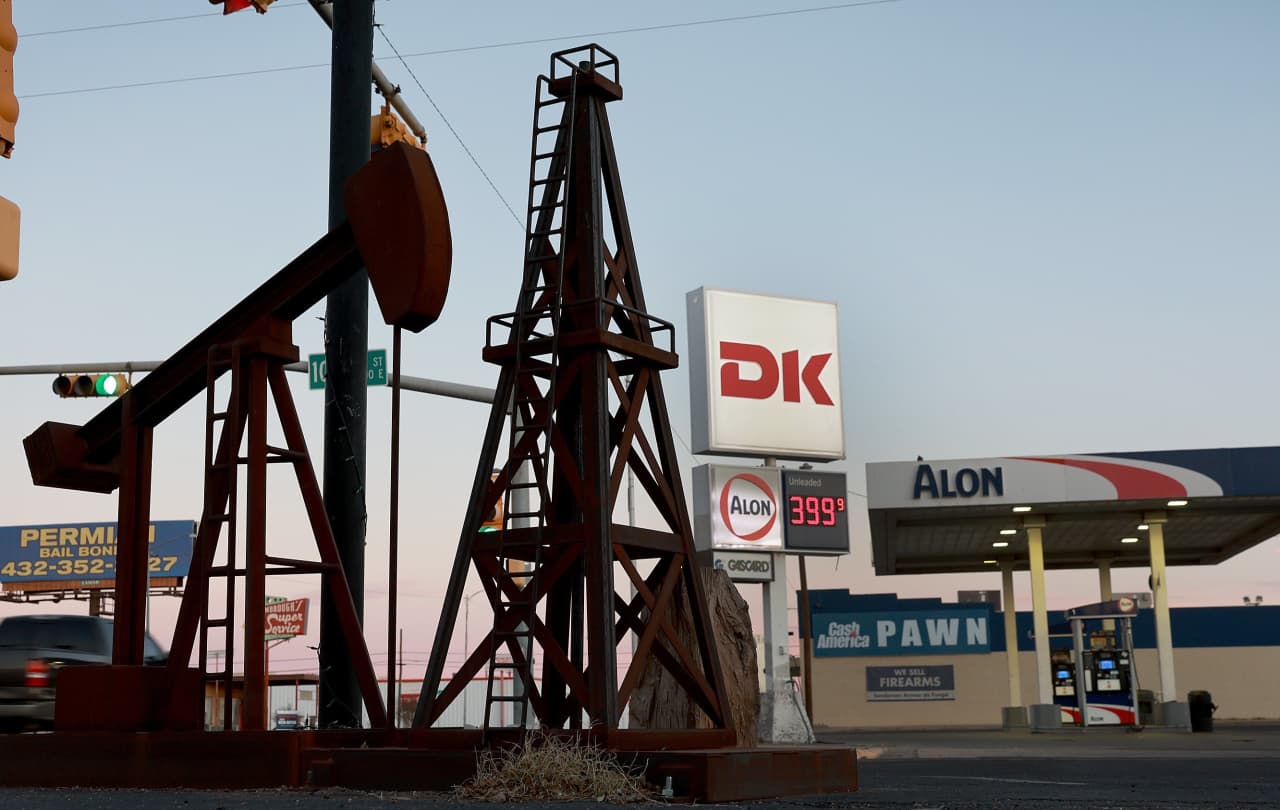
Gasoline prices are at their lowest average intraday in four years, yet market experts predict a dip below $2 a gallon to be highly improbable in 2025. This temporary consumer reprieve signals underlying market stability for investors.
Understanding these price dynamics is crucial for navigating economic shifts impacting consumer spending and business costs. The current energy market outlook remains complex.
Current WTI crude oil futures are at $78.50/barrel, with US average gas prices near $3.50/gallon.
This analysis explores the factors driving fuel costs and future projections.
Expert Market Analysis
The current energy landscape presents a nuanced picture for gasoline prices in 2025. While recent dips have offered consumers a temporary respite, reaching lows not seen in four years, the consensus among market experts is that a sustained price point below $2 per gallon is highly improbable. This outlook is shaped by a complex interplay of global crude oil production, geopolitical stability in key oil-producing regions, and predictable seasonal demand fluctuations. Historically, energy markets have demonstrated a robust floor, preventing dramatic, sustained crashes to such low levels, particularly during periods of robust global demand or supply disruptions. The underlying cost structure of crude oil production and refinement, combined with existing taxes and distribution expenses, collectively establishes a resilient price base, making sub-$2 gasoline a highly unlikely scenario for 2025.
The primary driver of gasoline prices remains crude oil, with benchmarks like WTI and Brent trading at levels that fundamentally preclude a sub-$2 per gallon retail price without a severe, unforeseen global economic contraction or a radical, immediate shift in global energy policies. Technical indicators for crude oil futures, such as the 50-day and 200-day moving averages, are currently exhibiting stability or a slight upward bias, reinforcing the notion that current price levels are firming. Refiners’ costs, logistical challenges, and governmental taxes also contribute significantly to the final pump price, adding further layers of cost that would need to be eroded for prices to fall dramatically. Factors like refining capacity utilization and the cost of feedstock are also critical components in the gasoline price equation.
Comparing the current global energy sector dynamics with historical trends reveals a consistent pattern of price resilience. Major oil-producing nations and global energy conglomerates operate within an intricately interconnected supply chain. While localized price variations can occur due to logistical hurdles or specific regional demand, the overall global market dictates the broader price trajectory. Industry reports consistently highlight that while efficiency gains are pursued, substantial investments in exploration and extraction, coupled with increasingly stringent environmental regulations, exert upward pressure on long-term energy costs. This makes sustained periods of extremely low gasoline prices an anomaly rather than the norm, reflecting the inherent cost structure within the petroleum industry.
For both retail and institutional investors, the current price dip in gasoline presents an opportunity for cautious optimism, tempered by a healthy skepticism regarding the sustainability of rock-bottom prices. The inherent risks of geopolitical flare-ups, unexpected production cuts by cartels like OPEC+, or a sudden surge in global economic activity could rapidly drive prices upward. Strategic opportunities lie in a deep understanding of these subtle market dynamics. Key events to monitor include upcoming OPEC+ meetings, geopolitical developments in the Middle East, and macroeconomic data releases signaling shifts in global demand. Investors should consider this established price floor when making entry decisions, potentially focusing on companies with diversified energy portfolios or those positioned to benefit from increased refined product demand amidst varying market conditions.
Related Topics:
gasoline prices outlook 2025, US gas prices, oil prices, crude oil futures, energy market trends, fuel cost analysis, WTI crude, OPEC+
About the Author