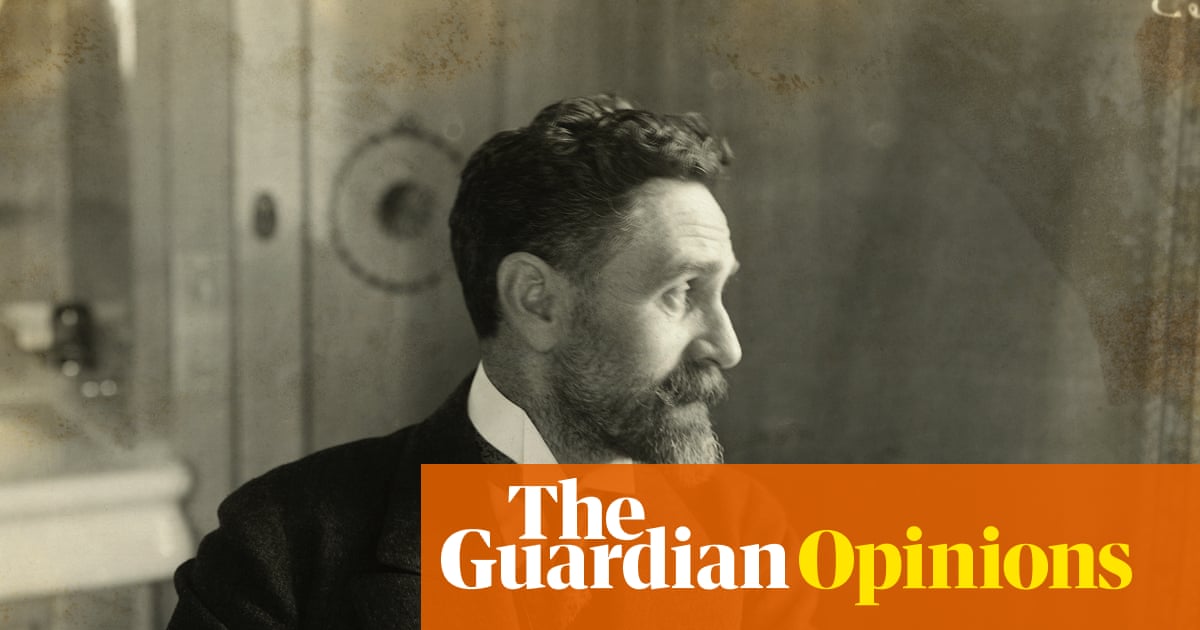
More than a century after he was marched to the gallows, there is still something radioactive about Roger Casement, a name that continues to emit a faint crackle in British-Irish relations.
He was knighted in 1911 by King George V for distinguished imperial service, but then embraced radical Irish nationalism and sought German help for the 1916 Easter Rising.
The British government made sure that when the noose went around his neck and the lever was pulled, he would drop not into martyrdom, but disgrace. He was not only a traitor but, as a cabinet memo put it, a pervert addicted to sexual degeneracy. “I see not the slightest objection to hanging Casement and afterwards giving as much publicity to the contents of his diary as decency permits,” wrote Sir Ernley Blackwell, chief legal adviser to the Home Office.
That decision to leak private diaries that documented Casement’s homosexuality remains unsettled business between these islands. Britain has done its best to forget the rogue Foreign Office consul who was convicted of high treason and executed at Pentonville prison on 3 August 1916 – a footnote, at most, to the first world war.
Ireland remembers. Casement appears on stamps, statues and murals, his fate recounted in ballads, poems and commemorations. A noble man – a humanitarian who exposed atrocities against Indigenous tribes in Congo and Peru, a patriot who sought Irish independence – done down by dirty tricks.
Casement’s last wish was to be buried in the glens of County Antrim, where he grew up. But Harold Wilson’s government insisted, when repatriating the bones from Pentonville in 1965, that they stay out of Northern Ireland. So they remain in the republican plot at Dublin’s Glasnevin cemetery, too contaminated with history to be disinterred and moved north. Even in 2026, it would stir up political tensions, and Northern Ireland has enough fallout from partition and the Troubles. So Casement lies in Dublin, an unquiet ghost.
British-Irish relations have digested the Brexit toxins and recovered a degree of trust and warmth. In March, the taoiseach, Micheál Martin, hosted Keir Starmer for a bilateral summit in Cork and then defended him in Washington when Donald Trump used a St Patrick’s Day ceremony to bash the prime minister. The same month, London and Dublin rebooted a defence agreement that could let the Royal Navy respond to hostile ships and other issues in Irish waters.
Casement, however, remains taboo. A can containing too many worms.
A Royal Navy captain, Reginald “Blinker” Hall, sits at the heart of the story. Brilliant, eccentric and ruthless, he was the head of admiralty intelligence who tracked Casement from Germany to Ireland and had the captive brought to London. This was not the end of the story.
In a remarkable twist, it turned out that Casement had returned to Ireland to try to call off the rising, which he believed was doomed and futile, and he begged to be allowed to send a message to his comrades in Dublin, imploring them to stand down.
Hall refused. He knew about the planned rising and withheld much of that intelligence from the British administration in Ireland in the apparent hope that the rebellion would proceed, fail and provide an excuse to crack down on Irish nationalists.
Hall did not anticipate the Irish capacity to turn a military debacle into a phoenix-like flame – a “terrible beauty”, as WB Yeats put it – that would ignite, three years later, the Anglo-Irish war and pave the way for independence for 26 of Ireland’s 32 counties.
After British troops crushed the Dublin rebellion, Casement was sentenced to death at the Royal Courts of Justice. English friends and allies, remembering his humanitarian record in Africa and the Amazon, petitioned for a reprieve. So too did Irish Americans with influence on Capitol Hill and Woodrow Wilson’s White House.
For Hall, justice demanded Casement’s death and dishonour. He had conspired with the Germans and tried to enlist Irish prisoners of war in a brigade to fight Britain. His diaries, obtained by Scotland Yard, did not just record homosexual encounters, they celebrated them.
With government approval, Hall shared excerpts with diplomats, journalists and clergy on both sides of the Atlantic before, during and after the trial. “The diaries of a degenerate,” howled the Daily Express. The traitor’s knighthood, Buckingham Palace announced, was erased. The clemency campaign withered; the execution trapdoor opened. When the prison bell tolled, the crowd gathered outside Pentonville cheered.
Alan Turing received a posthumous royal pardon in 2013, and so should Casement. He was guilty of treason, but he was killed by homophobia. For many years Ireland believed, or affected to believe, that the diaries were British forgeries. Now that there is greater readiness to celebrate a gay hero, there is widespread acceptance that the diaries are authentic, making Casement a nationalist and LGBTQ symbol.
Irish authorities, however, hesitate to lobby for a pardon. Casement liked youthful partners, including teenagers, which is an issue. And there are more recent, urgent legacy cases such as that of Pat Finucane, a Catholic solicitor murdered in Belfast in 1989.
“Take my body back with you and let it lie in the old churchyard in Murlough Bay,” Casement implored a cousin on the eve of his execution. But while so much of Ireland’s history remains contested – in March, IRA victims dropped a civil case against Gerry Adams – there is little chance of Casement returning to Antrim.
Northern Ireland is polarised between Sinn Féin and the Democratic Unionist party, who dispute the region’s past, present and future, caught in a holding pattern of endless feuding that incapacitates Stormont. An attempt to redevelop Casement Park, a derelict Gaelic Athletic Association stadium in west Belfast, has become a symbolic battle of wills.
The man after whom it was named is, depending on viewpoint, a rebel or a traitor. In truth, he was both. If all sides ever recognise that then, and only then, might Roger Casement be pardoned and allowed to go home.
Source: https://www.theguardian.com/commentisfree/2026/apr/04/roger-casement-hanged-traitor-pardon-ireland-easter-rising
About the Author