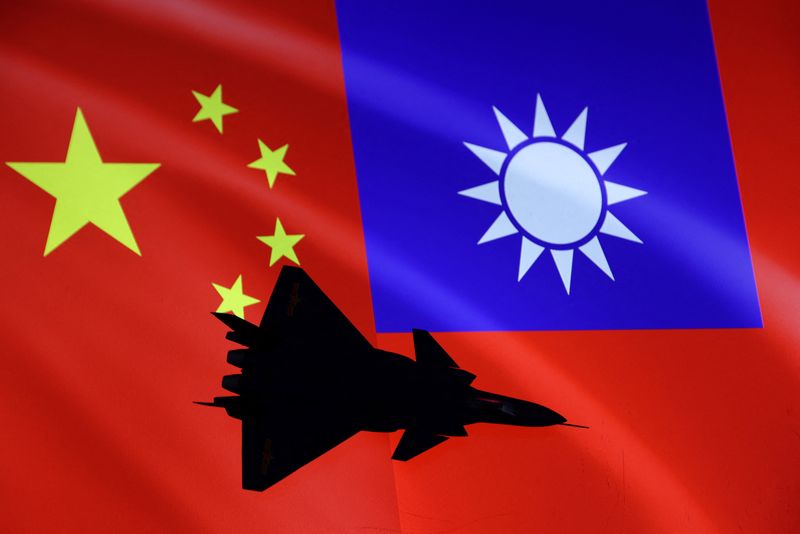
China bomber sorties near Taiwan are a growing concern ahead of the pivotal 2025 Trump-Xi meeting, injecting significant geopolitical risk into global markets. This development underscores the fragile security landscape impacting investor sentiment and strategic trade negotiations.
Investors are closely monitoring these maneuvers, as they could influence broader economic policies and affect key sectors. Currency fluctuations indicate a cautious sentiment across markets.
As of market close today (Oct 25, 2025), key Asian indices show marginal dips. Trade volumes are moderate.
Our analysis delves into the potential market ramifications and strategic outlook.
Expert Market Analysis
The recent aerial activity by Chinese bombers in proximity to Taiwan, occurring just before the highly anticipated Trump-Xi summit, injects a significant layer of geopolitical risk into global financial markets. This event echoes historical precedents where regional security concerns have directly influenced international trade relations and investor confidence. For instance, similar tensions in the South China Sea in past years led to increased volatility in emerging markets and a temporary flight to safety among institutional investors. The broader trend of increasing assertiveness from China, coupled with the ongoing trade dialogue with the United States, creates a complex backdrop against which economic policies and market movements are now being viewed. This particular incident, occurring at such a critical juncture, amplifies the potential for disruption, making the China Taiwan military situation a key focus for 2025, with analysts watching closely for any shifts in bilateral talks.
From a fundamental and technical perspective, the implications are multifaceted. While no immediate impact on specific company financials is discernible from this single event, the heightened geopolitical risk can indirectly affect economic growth forecasts and investment flows. Market analysts are observing the potential for increased defense spending from regional powers, which could benefit specific defense stocks. However, the overarching concern is the potential for any escalation to disrupt supply chains, particularly those reliant on shipping lanes passing through the Taiwan Strait. Investors are scrutinizing metrics like the Taiwan Semiconductor Manufacturing Company’s (TSMC) stock performance, a bellwether for the semiconductor industry, and considering the broader implications for technology stocks globally. Valuation multiples may come under pressure if perceived risk increases, influencing trading strategies and requiring a reassessment of existing portfolio allocations. Management guidance for companies with significant exposure to the region will be crucial for assessing potential revenue growth and future profitability.
In terms of sector and peer comparison, the IT and semiconductor industries, heavily dependent on stable cross-border relations and trade, face particular sensitivity. Companies like Samsung Electronics, SK Hynix, and of course, TSMC, are integral to the global tech ecosystem. Any perceived instability in the region can lead to diversified sourcing strategies by global tech giants, potentially impacting market share and revenue growth for these Asian powerhouses. The ongoing global demand for advanced semiconductors remains strong, but geopolitical friction can introduce unforeseen headwinds. Regulatory impacts, such as potential trade restrictions or tariffs, albeit not directly signaled by this bomber incident, are always a background concern when analyzing companies with significant international operations. The current market share dynamics could be subtly altered if supply chain disruptions become a prolonged issue, impacting profit margins for key players in the semiconductor value chain.
The expert takeaway for retail and institutional investors is one of heightened caution and strategic reassessment. While the Trump-Xi meeting itself offers an opportunity for de-escalation, the bomber sorties serve as a stark reminder of underlying geopolitical fault lines. Opportunities may arise in defense sectors or for companies that benefit from supply chain diversification. Conversely, sectors heavily reliant on stable Sino-US relations or direct trade through the Taiwan Strait may face increased risks. Price targets from market analysts might be adjusted to incorporate this elevated risk premium. Key events to watch include the official outcomes of the Trump-Xi meeting and any subsequent policy statements from both governments. For discerning investors, a careful evaluation of entry and exit points, alongside a thorough understanding of portfolio exposure to geopolitical risks, is paramount to navigating this complex environment effectively in 2025.
Related Topics:
China Taiwan military, Trump Xi meeting 2025, Geopolitical risk analysis, Global market impact, Defense stocks outlook, Semiconductor industry trends, Taiwan Strait tensions, US China relations
About the Author