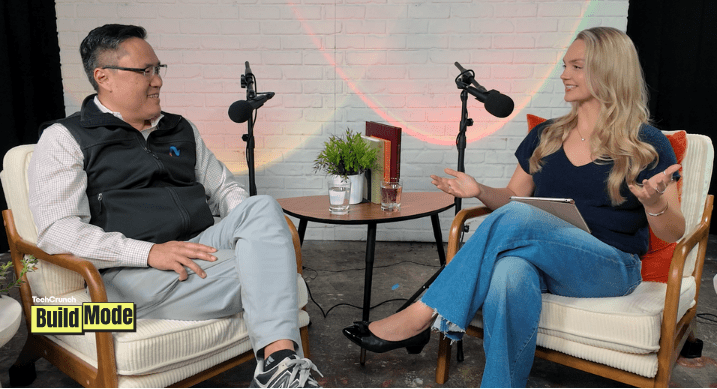
This isn’t David Park’s first rodeo. The veteran founder and TechCrunch Startup Battlefield alumnus has certainly been battle-tested in the enterprise arena. On this episode of Build Mode, Park joins Isabelle Johannessen to discuss how he and his team are intentionally iterating, fundraising, and scaling Narada. This enterprise AI solution uses large action models to automate complex, multistep workflows across enterprise systems.
At face value, Narada has everything that would likely have investors banging down its door: a dream founding team of experienced researchers and operators from Stanford and Berkeley, big name enterprise customers, and a product that works. So in 2024, when Narada applied for Startup Battlefield, it surprised the team how little fundraising they’d done. That choice was by design.
“We wanted to not waste too much money,” said Park when asked about why they waited to fundraise. “Because I do believe that when, again, when you have too much money in the bank and you are not near product-market fit, you’re tempted to just spend money on things that actually don’t help you evolve the company in the right way. It removes the friction to do a lot of wrong things.”
Park previously founded and exited Coverity. That founding experience taught him one crucial lesson that he’s taken with him to Narada: Take the time to talk to your customers before you do anything else. Park said that in the early days, he and his co-founders were not focused on reaching out to VCs, but instead the three of them made over 1,000 customer calls to deeply understand what the pain points were. Once the problem was extremely clear, the solution came into focus. These teams needed an AI product that they could speak to like a person and trust to take on multiple steps at once.
“If you want to build a real business, ask the hard questions, right? Spend time with customers, and not just in selling, because when you have that contract and that purchase order, that’s just the beginning, right?” Park advises viewing those early conversations as more than sales calls: “And some of those customers that we bootstrapped with ultimately turned into multimillion-dollar deals, right? And it’s always easier to sell more to a company that has already chosen you and has some level of trust in you.”
As a veteran founder, Park has a foundational belief that to build a company the correct way, the customer must be centered in every decision. Because at the end of the day, no matter how trendy, interesting, or well-received your product is by the industry, if people won’t pay for it, it won’t be a winner.
Techcrunch event
San Francisco, CA
|
October 13-15, 2026
Apply to Startup Battlefield: We are looking for early-stage companies that have an MVP. So nominate a founder (or yourself). Be sure to say you heard about Startup Battlefield from the Build Mode podcast. Apply here.
Founder Summit 2026: If you want to take these conversations beyond the podcast, then join us in person at the TechCrunch Founder Summit 2026 event on June 9 in Boston. This is essentially Build Mode in real life. It’s a full day focused entirely on founders, builders, and the conversations that actually move startups forward. It’s also a great way to sharpen your story. Get your tickets.
TechCrunch Disrupt 2026: We’re back for TechCrunch Disrupt on October 13 to 15 in San Francisco, where the Startup Battlefield 200 takes the stage. So if you want to cheer them on, or just network with thousands of founders, VCs, and tech enthusiasts, then grab your tickets.
Isabelle Johannessen is our host. Build Mode is produced and edited by Maggie Nye. Audience Development is led by Morgan Little. And a special thanks to the Foundry and Cheddar video teams.
Source: https://techcrunch.com/2026/03/05/how-1000-customer-calls-shaped-a-breakout-enterprise-ai-startup/
About the Author