Analyst: Oil prices could hit $100/bbl as strait of Hormuz traffic halts
Analysts are warning that the US-Israel war with Iran could drive oil prices up to $100 a barrel.
Consultancy firm Wood Mackenzie is warning that higher oil and gas prices are certain, and that oil prices could potentially exceeding $100/barrel if tanker flows through the strait of Hormuz are not quickly restored.
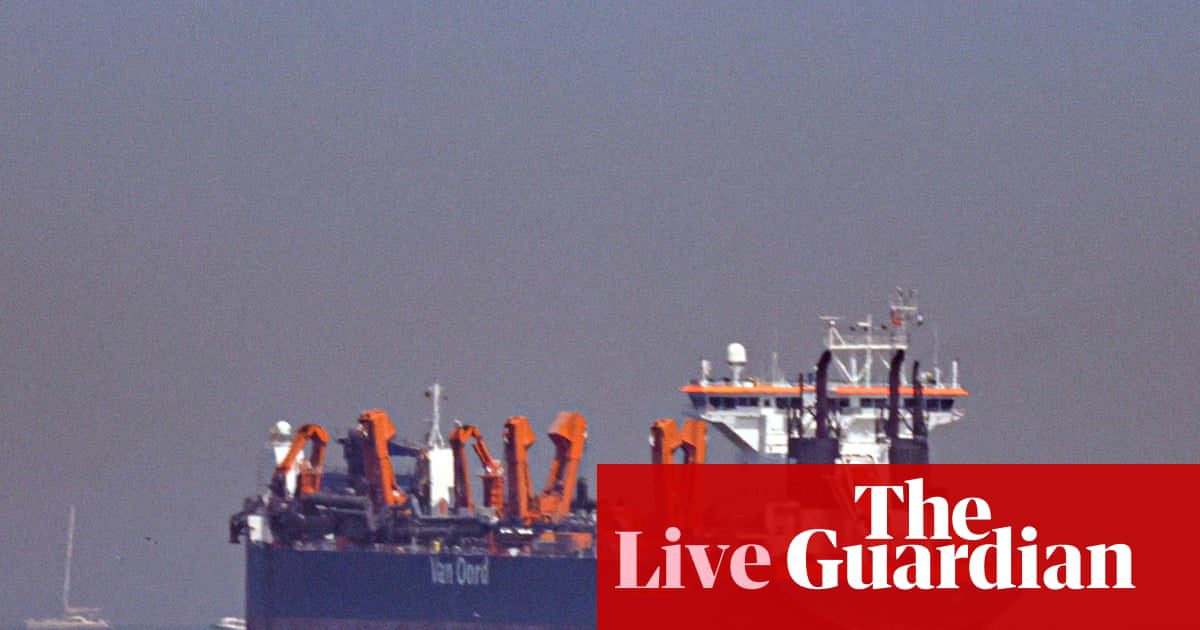
They say tanker traffic has been effectively halted, after Iran warned shipping away from the waterway and insurers withdrew coverage.
In the current scenario, oil prices over US$100/bbl are possible if transit flows are not re-established quickly, according to Alan Gelder, SVP of Refining, Chemicals and Oil Markets at Wood Mackenzie.
Gelder explains:
“The key question is when do vessels re-establish export flows.
“No doubt, tanker rates and insurance will increase dramatically, but these costs would only be a small part of the oil price impact associated with a curtailment of oil flows if they last for more than a few days.”
Even in the optimistic scenario where Iran cooperates with the US, it could take a few weeks for export flows to re-establish themselves, Gelder added, saying:
“During that time, oil prices are heavily risked to the upside.
The most recent comparison is during the early days of the Russia/Ukraine conflict, when the fear of loss of Russian supplies drove the oil price to over US$125/bbl.”
Brent crude last traded as high as $100/barrel in 2022, early in the Russia-Ukraine war.
Key events
Wall Street opens in the red
The US stock market has opened, with a bump!
With fears of a protracted conflict in the Middle East swirling, the Dow Jones Industrial Average (which tracks 30 large companies) is down 488 points, or 1%, at 48,489 points.
Paint and coatings company Sherwin-Williams (-3.1%) are the top faller on the DJIA, followed by athletic footwear firm Nike (-3%) and Walt Disney (-2.8%).
The broader S&P 500 index is also down 1%, while the tech-focused Nasdaq Composite fell by 1.53% at the opening bell.
Britain’s FTSE 250 share index of medium-sized companies, is also sliding today – down 1.5%.
But oil producers Harbour (+6.5%) and Ithaca (+5.5%) are the top risers, along with shipping services provider Clarkson (+5.3%), and Avon Technologies (+3.8%), who make protective clothing for ilitary, law enforcement and fire personnel.
Chances of a March cut to UK interest rates have plunged
The chance of a cut to UK interest rates later this month have tumbled today.
A quarter-point cut to interest rates is now seen as just a 48% chance, down from 80% last week when falling inflation and rising unemployment made it much more likely.
City traders are now anticipating that the Bank of England is less likely to support a cut this month, as higher oil and gas prices will drive up inflation.
Last month, the BoE was split 5-4 when a narrow majority of policymakers voted to leave Bank Rate at 3.75%, rather than cutting to 3.5%.
European stock market selloff deepens
Stocks are falling more sharply across Europe now.
The UK’s FTSE 100 share index is now down 1.6%, or 172 points, at 10,738, a level last seen on Wednesday.
That would be its biggest one-day fall since Donald Trump’s “Liberation Day” tariffs rocked the markets in April 2025.
Germany’s DAX index is now down 2.7%, France’s CAC 40 has lost 2.2% and Italy’s FTSE MIB has fallen by 2.4%.
Reuters: QatarEnergy to declare force majeure on LNG
QatarEnergy is set to declare force majeure on shipments of liquefied natural gas (LNG), after halting production following attacks on its facilities (see earlier post), Reuters are reporting.
That will allow QatarEnergy to avoid fulfilling its contractual obligations, by citing unforeseeable or uncontrollable events.
BoE policymaker: We shouldn’t raise rates to fight energy spike

Phillip Inman
A Bank of England policymaker has said the central bank should not raise interest rates to contain a spike in energy prices.
Speaking after the US attack on Iran and the shutdown of major oil and gas production across the region, Alan Taylor said energy price shocks “move faster than inflation-targeting central banks can respond”.
Taylor, a member of the nine-member monetary policy committee (MPC) has spent the last year concerned that high interest rates have held back the economic recovery.
He has voted to cut rates at a faster pace than a majority on the MPC, who have preferred to bring down the cost of borrowing more slowly.
Several analysts have said the Bank will delay cuts to interest rates this year should the middle east conflict persist.
Taylor said policymakers needed to recognise that “central banks can never fully solve every type of inflation problem, including the big shocks of recent years”.
He added:
“As an economic historian, I think when future scholars look back at the macroeconomic shocks of last fifty years and not just the past five, one of their main takeaways will be the outsized role of energy shocks in causing disruptive spikes in overall inflation.
“Prices are set in markets, and price shocks disturb that system and its dynamic equilibrium. Large energy shocks move faster than inflation-targeting central banks can respond, and after they propagate into the system, they leave an imprint, even if we can do better to contain them (now versus the 1970s, for example).
“No amount of tweaking in central bank mandates will fully insulate us from these [external] risks, which as of now derive from the present and very time-specific nature of our dependence on energy and the patterns of geopolitical risk. Tackling those issues requires thinking and actions well beyond the domain of central banking.”
Taylor said he was concerned that interest rates may need to remain high if the UK cannot recover its productivity mojo. Without a rise in productivity, there will be little scope for wage rises without causing inflation to increase, he said.
But this was a separate issue to a rise in oil and gas prices, that the UK central bank could do little about,” he added.
European natural gas prices have “gone stratopheric” after Qatar halted its LNG production, says Neil Wilson, investor strategist at Saxo UK.
Wilson fears that QatarEnergy’s move could being potentially huge disruption for European energy flows.
With the European benchmark contract up around 40% today, Wilson says:
QatarEnergy announced a stop to its LNG production and associated products following attacks on its operating facilities in Ras Laffan Industrial City and Mesaieed Industrial City.
Qatar is a top three LNG exporter, controlling roughly a quarter of expected supply over the next decade. Looks like Iran’s tactic is to pressure Gulf states so they in turn pressure the US and Israel to back off.
For context, we are a long way off 2022 in terms of pricing yet…but if LNG to Europe is effectively shut via Hormuz for a prolonged period we could see chaos on this contract. I am much more concerned about European natural gas prices than oil prices in terms of seeing a repeat of the 2022 European energy crisis.
Surging European gas prices
European gas prices have soared, as Qatar’s decision to shut down liquefied natural gas production (see earlier post) raises fears of shortages.
The Dutch day-ahead gas contract is up 39% today at €44.5 per megawatt hour (MWh), up from €32 per megawatt hour (MWh) on Friday.
That’s still lower than in the early months of the Ukraine war, though (it hit €337MWh in August 2022).
Chris Beauchamp, chief market analyst at IG, says:
“The huge bounce in European natural gas prices threatens to upset the more positive outlook for UK inflation and consumer spending.
Hopes that pricing pressures would ease and consumers could spend more could be dashed as a price spike similar to 2022 causes a major headache for both policymakers and consumers, potentially disrupting the plan for more UK rate cuts.”
Deutsche Bank: “Only” the 38th largest oil spike since 1990
A little earlier today, Brent crude was up 8.4% this session.
Although that’s a sharp move, it’s only the 38th biggest daily gain over the last 36 years, according to Deutsche Bank market strategist Jim Reid.
He explains:
So even though it’s a big move, to get into the top 20, 10 and 5 it would need to be up +9.6%, +13.6% and +13.9% respectively. There were huge moves around the GFC [Great Financial Crisis] and Covid-19 turmoil, whilst the Gulf War in 1990-91 also saw several double-digit gains.
Going forward, much will depend on the Strait of Hormuz. It seems it’s not officially closed but passage through it would be hazardous at the moment with self-imposed restrictions from virtually all that normally travel through it.
Gold, silver and aluminium prices follow oil higher
Phillip Inman
Investors are closely watching developments around shipping in the Strait of Hormuz, an important commodities trade route disrupted by Iranian attacks on US military bases in the region.
Most of the concern in Europe, China, India and Japan relates to the transport of oil and liquid natural gas (LNG) as US and Israeli strikes in Iran fuel concerns about prolonged conflict in the Middle East.
Industrial metals prices tend to be slower to react to global events.
Nevertheless, aluminium prices rose to their highest in more than a month on concerns that the region, a major producer of the metal, will suffer from a prolonged war.
The benchmark aluminium price on the London Metal Exchange was up 3.1% at $3,236 a metric ton at 10.50am after touching $3,254 for its highest since January 29.
Neil Welsh at Britannia Global Markets, said.
“Base metals are largely higher this morning as aluminium climbs on concerns that a critical supply route for Middle Eastern producers will be disrupted by conflict in a region responsible for a significant chunk of global output.
“The region accounts for about 9% of the world’s aluminium production capacity and prices have typically been sensitive to spikes in regional tensions.”
Increases in metals prices are expected to reverse should the war become protracted and result in a rise in energy prices that in turn hit global growth.
“We should expect global investment sentiment to falter, undermining industrial metals demand growth – including copper,” said Panmure Liberum analyst Tom Price.
Copper nudged higher at 0.2% to $13,370 a ton, zinc gained 1% to $3,351, lead rose 0.6% to $1,974 and tin lost 1.1% to $57,105. Nickel retreated by 1.1% to $17,645.
Of the metals, gold is almost purely sentiment driven and the best indicator of investor worries.
“Gold is the sum of all fears,” said Ross Norman, the chief executive of Metals Daily
“But is also a very small lifeboat, which means the price soars in times like these.”
The gold price was up 3% in early trading to £5,405.90 , which Norman said was an indication traders view the curent conflict in the middle east as a “strong, but limited event so far.”
“Gold is a safe haven asset, but there is a caveat to today’s rise, which is that event-driven rallies rarely last,” said Norman.
Silver prices on international markets also increased, though by a more muted 1.7% at $95.36 per ounce.
Source: https://www.theguardian.com/business/live/2026/mar/02/oil-price-us-israel-iran-war-100-dollars-a-barrel-stock-markets-drop-travel-news-updates
About the Author