Key Takeaways
32 Cuban soldiers killed during the Venezuela attack are returned for honors. Understand the geopolitical impact, US-Cuba tensions, and economic implications for Cuba. Key current affairs update.
Overview
The solemn arrival of 32 Cuban soldiers and security personnel, killed during a US military intervention in Venezuela, underscores escalating regional tensions. These Cubans, protecting Venezuelan leader Nicolás Maduro, died during a US raid on Caracas on January 3rd, an operation claiming over 100 lives according to Venezuelan officials. Maduro was subsequently removed to face drug trafficking charges.
This incident carries profound geopolitical implications, drawing parallels to the 1961 Bay of Pigs invasion. It highlights the volatile relationship between the US, Cuba, and its long-standing ally Venezuela. Such combatant losses are significant for Cuba, spotlighting its economic and political vulnerabilities amidst intensified external pressures.
Cuba now prepares for formal military honors and burials, alongside widespread public mourning and planned protests against the US embassy. This current affair emphasizes the human cost of international disputes, demanding attention from general news consumers. It serves as a critical breaking news update today.
Analyzing these developments provides crucial insights into immediate reactions, unfolding regional dynamics, and potential long-term strategic shifts. Grasping this context is vital for understanding global politics and current affairs impacting India and beyond.
Detailed Analysis
The recent return of 32 Cuban soldiers and security personnel, killed during a US military intervention in Venezuela, casts a long shadow over the already complex relationship between Washington, Havana, and Caracas. This solemn event brings to the forefront a historical narrative of intervention and geopolitical friction that has defined the region for decades. The incident itself stems from a dramatic US raid on Venezuela’s capital, Caracas, on January 3rd, which, according to the Venezuelan government, resulted in over 100 fatalities. Among the casualties were the Cuban personnel, who were reportedly serving as protection officers for Venezuelan leader Nicolás Maduro. His subsequent forcible removal from Venezuelan soil and transfer to New York to face drug trafficking charges adds another layer of contention, challenging notions of national sovereignty and international law.
This development resonates deeply within Cuba, a nation that has historically endured intense pressure and an economic embargo from the United States. The presence of Cuban security personnel in Venezuela is not new; it underscores a long-standing alliance built on ideological solidarity and mutual economic interests, particularly Venezuela’s oil provisions to Cuba. This partnership has been a critical lifeline for the communist-run island, especially in the face of persistent US sanctions. The deaths of these Cuban combatants serve as a stark reminder of the risks inherent in such alliances and the volatile nature of proxy conflicts. The US intervention in Venezuela, framed by Washington as an effort to restore democracy or combat drug trafficking, is viewed by Cuba and Venezuela as a blatant act of aggression, a direct infringement on their sovereign affairs. The incident, therefore, is not merely a localized conflict but a significant flashpoint in a broader, ongoing ideological struggle.
For general readers, understanding this backdrop is crucial. It positions the current crisis not as an isolated event but as a continuation of historical patterns. The forceful removal of a sitting head of state by an external power, regardless of the stated intentions, sets a contentious precedent and raises questions about international norms. The tragic loss of Cuban lives in this context intensifies anti-US sentiment in Cuba and among its allies, consolidating a narrative of resistance against perceived imperialistic aggression. This historical lens is essential for deciphering the motivations and reactions of the various stakeholders involved, offering a deeper comprehension of why this seemingly regional incident holds such substantial global weight in current affairs.
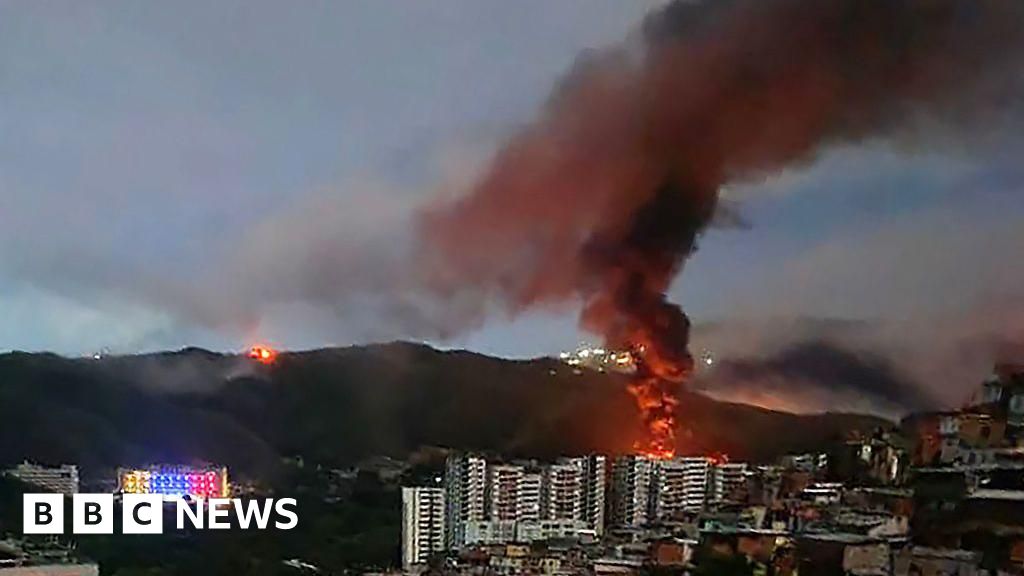
The specific details surrounding the Caracas raid on January 3rd paint a grim picture of the geopolitical stakes involved. The fact that 32 Cuban soldiers and security personnel were among the casualties underscores Cuba’s deep entanglement in Venezuela’s political landscape. These individuals were not merely observers; they served as protection officers for President Nicolás Maduro, highlighting the direct military and security support Cuba provides to its close ally. This role places Cuban personnel on the front lines of Venezuela’s internal and external conflicts, directly exposing them to the dangers of any foreign intervention. The Venezuelan government’s claim of over 100 people killed in the capital during the US raid indicates a significant, possibly brutal, confrontation, adding to the severity of the incident.
The profound historical significance of these deaths for Cuba cannot be overstated. The source content explicitly states that it is believed to be the largest number of Cuban combatants killed by the US military since the abortive Bay of Pigs invasion in 1961. The Bay of Pigs was a failed attempt by US-backed Cuban exiles to overthrow Fidel Castro’s regime, an event that remains a foundational trauma in Cuba’s collective memory and a defining moment in US-Cuba relations. To approach a similar casualty count in modern times, stemming from a US military action, rekindles deep-seated historical grievances and reinforces a narrative of enduring US hostility towards the island nation. This historical parallel elevates the current incident from a tragic loss of life to a symbolic moment of national defiance and renewed resolve against perceived aggression.
Furthermore, Venezuela’s identity as a “long-standing ally of Cuba” is central to understanding the motivations and implications. This alliance extends beyond shared political ideology, encompassing crucial economic ties, particularly Venezuela’s provision of oil to Cuba. This economic lifeline has been instrumental in sustaining Cuba’s economy, especially under the pressure of the US economic embargo. The vulnerability of this alliance, as demonstrated by the US intervention and Maduro’s removal, poses an existential threat to Cuba’s stability. US President Donald Trump’s subsequent rhetoric, maintaining pressure on the Cuban government and declaring the country “ready to fall,” directly targets this vital relationship. His assertion that the interim government of Delcy Rodríguez in Venezuela would cease sending oil to Cuba represents not just a political threat but a potentially “huge blow” to a nation already grappling with an “acute economic and energy crisis.” This direct economic weaponization of the conflict adds immense pressure on Cuba’s leadership and its populace.
Comparing the current intervention with the 1961 Bay of Pigs invasion reveals striking parallels in the strategic objectives, albeit with different methodologies and outcomes. The Bay of Pigs was a direct, albeit covert, attempt by the US to militarily unseat a Cuban leader. While the recent Venezuelan intervention involved the removal of Nicolás Maduro, rather than Fidel Castro, and was precipitated by drug trafficking charges, the underlying geopolitical tension—US opposition to a socialist government in its perceived sphere of influence—remains consistent. The scale of Cuban combatant deaths in this Venezuela incident, believed to be the largest since 1961, underscores the enduring, high-stakes nature of this ideological struggle and the willingness of Cuban personnel to engage in direct conflict to protect allied regimes.
The United States, under President Trump, has explicitly intensified pressure on the Cuban government following the Venezuela incident. Trump’s declaration that Cuba is “ready to fall” is not merely rhetoric; it signals a strategic policy aimed at exploiting Cuba’s existing vulnerabilities. The threat of cutting off oil supplies from Venezuela, specifically through the interim government of Delcy Rodríguez, is a direct and potent economic weapon. Venezuela has been Cuba’s “most important benefactor of the past 25 years,” providing critical energy resources that fuel the island nation. The cessation of these oil shipments would constitute a “huge blow to the communist-run nation,” exacerbating its already “acute economic and energy crisis.” This move highlights a calculated strategy to economically cripple Cuba, potentially fostering internal discontent and weakening the government’s ability to resist US demands.
Cuba’s reliance on Venezuelan oil has been a cornerstone of its economic stability since the collapse of the Soviet Union. To lose this vital supply source now, amidst an already severe economic and energy crisis, would push the country to the brink. This comparative analysis emphasizes that while military intervention may take different forms, the economic pressure exerted by the US remains a consistent and powerful tool in its foreign policy towards Cuba. The direct link between the Venezuelan intervention and the subsequent increase in US pressure on Cuba demonstrates a coordinated, multi-faceted approach to isolate and weaken the Havana regime, presenting an immense challenge for Cuba’s future.
For general readers and news consumers, the return of the fallen Cuban soldiers from Venezuela is more than just a somber military ceremony; it is a stark reminder of the human cost and the far-reaching implications of international conflicts. The incident highlights the intricate web of alliances and antagonisms that define geopolitics in the Caribbean and Latin America. The immediate concern for Cuba is the fallout from its commitment to Venezuela, which has now resulted in significant human losses and intensified US pressure. The Cuban government has publicly “vowed to continue to resist against pressure and the economic embargo from Washington,” signaling a firm stance. However, the practical implications for ordinary Cubans are dire and immediate.
The most pressing concern for Cubans revolves around the “basics” – specifically, “keeping the lights on in the country and obtaining food amid widespread scarcity.” Cuba is already in the grips of an “acute economic and energy crisis.” The potential loss of Venezuelan oil, its primary energy source for the last quarter-century, would exacerbate these challenges exponentially. This deepening conflict with the US risks worsening daily life, potentially leading to increased power outages, severe food shortages, and a further decline in living standards. These are not abstract political debates but realities that directly impact families and communities across the island.
What should the audience monitor next? Key indicators will include the actual flow of oil from Venezuela to Cuba, any shifts in US policy rhetoric or sanctions, and the Cuban government’s internal response to the economic hardships. The solidarity protests in Cuba, particularly outside the US embassy, will reveal the level of public resolve and anti-US sentiment. This situation underscores the delicate balance between international diplomacy, military intervention, and the well-being of ordinary citizens. The coming months will be crucial in determining the trajectory of US-Cuba-Venezuela relations and, more importantly, the fate of the Cuban populace facing unprecedented challenges.
About the Author