Key Takeaways
NASA’s Crew-11 astronauts returned to Earth after a medical evacuation, marking a rare event for the ISS. Understand the implications for future space missions.
Overview
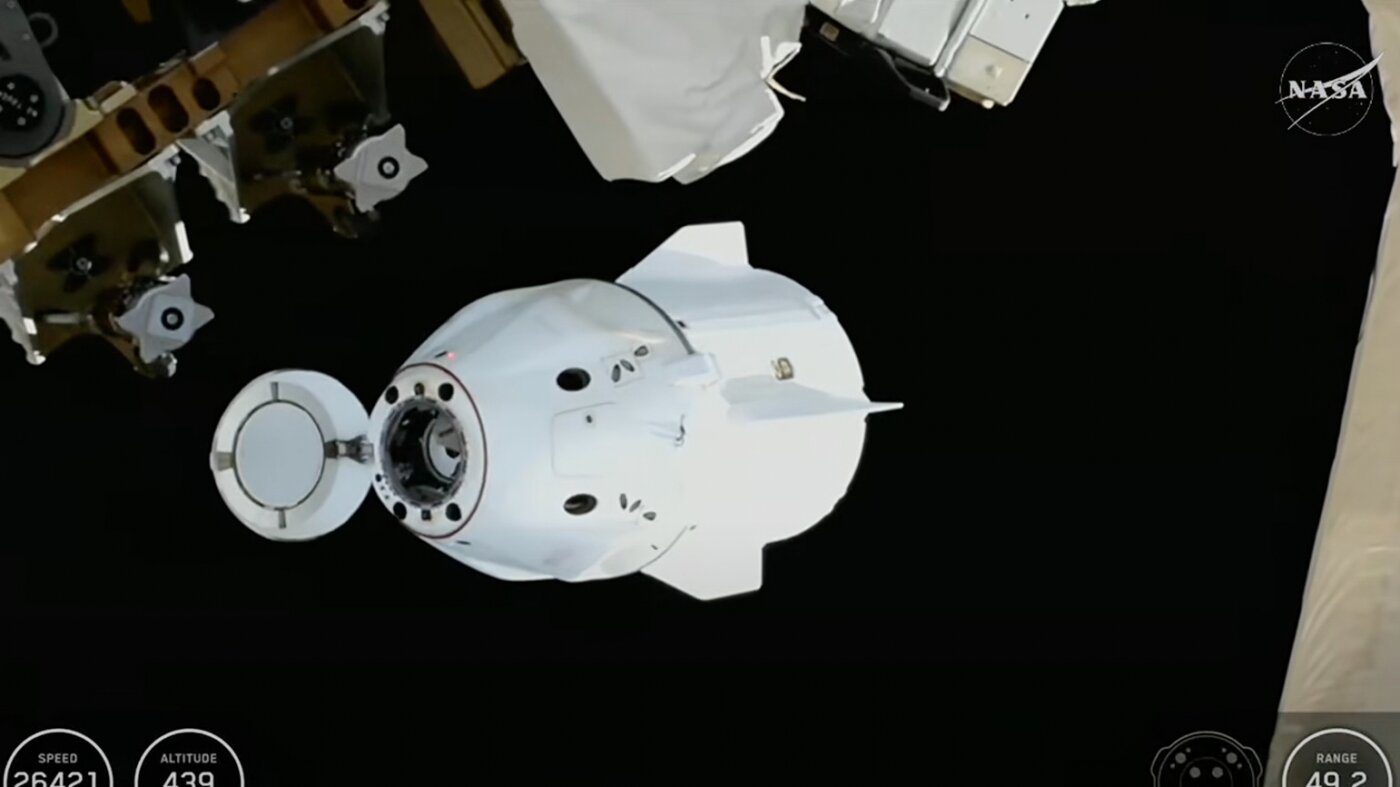
In a rare and significant event for human spaceflight, NASA’s Crew-11 mission successfully concluded with a splashdown in the Pacific Ocean off San Diego, marking the first medical evacuation from the International Space Station (ISS) in over a quarter-century of continuous human presence. This unscheduled return, shortened by approximately a month, underscores the critical importance of astronaut health and safety in orbital missions.
This unprecedented medical evacuation, a key piece of today’s current affairs, highlights the inherent risks and rapid response capabilities required for space exploration, making it a pivotal story for general readers and news consumers. The mission’s early termination underscores the complexities of long-duration space travel.
The SpaceX Dragon capsule brought home four astronauts after a nearly 10-hour journey from the ISS, completing 167 days in space and 165 days aboard the station. The crew logged an astonishing 2,672 orbits of Earth, covering 70.8 million statute miles.
This breaking news from January 2026 leaves the ISS with a reduced crew and prompts questions about future mission planning and astronaut health protocols, developments critical for India News and global updates.
Detailed Analysis
The sudden return of NASA’s Crew-11 mission on January 15, 2026, after a shortened five-month stint aboard the International Space Station, marks a historic milestone – though not one celebrated under typical circumstances. This event represents the first medical evacuation from the orbiting laboratory in its 25-year history of continuous human occupancy, and the first instance where a medical issue necessitated an early end to a NASA space mission. The gravity of the situation prompted an immediate, albeit discreet, response from NASA and its international partners, ensuring the safe return of all four crew members. While the specifics of the medical condition and the identity of the affected astronaut remain undisclosed due to privacy concerns, the impact of this decision reverberates across the space community.
The Crew-11 mission began on August 1, 2025, with a launch aboard a SpaceX Falcon 9 rocket from NASA’s Kennedy Space Center in Florida. The crew, comprising NASA astronauts Zena Cardman and Mike Fincke, Japan Aerospace Exploration Agency (JAXA) astronaut Kimiya Yui, and Russian cosmonaut Oleg Platonov, embarked on what was planned to be a routine six-month scientific expedition. Their time on the ISS was productive, involving numerous experiments and station maintenance. However, the mission took an unexpected turn last week when a serious but stable medical condition affecting one of the astronauts led to the cancellation of a planned spacewalk. The decision to bring the entire crew back to Earth was made shortly thereafter, driven by the practical reality that the SpaceX Dragon capsule served as their sole means of transport to and from the space station. The crew undocked from the ISS on Wednesday at 5:20 p.m. EST, completing their journey with a precise splashdown at 3:41 a.m. EST on Thursday beneath a canopy of parachutes off the coast of San Diego.
This incident brings to the forefront the challenges and stringent safety protocols governing human spaceflight, particularly as missions extend in duration and complexity. Since SpaceX began launching operational missions to the ISS in 2020, the station has typically maintained an operational crew of seven, ensuring robust staffing for scientific research, maintenance, and emergency response. The premature departure of Crew-11, however, has left the ISS temporarily with a significantly reduced complement of just three individuals: Roscosmos cosmonauts Sergey Kud-Sverchkov and Sergey Mikayev, alongside NASA astronaut Christopher Williams. These three arrived aboard a Soyuz capsule on November 27, 2025. This reduction in crew size directly impacts the station’s operational capacity, leading to fewer experiments being conducted and a potential deferral of routine maintenance tasks. The efficiency and continuity of scientific endeavors, crucial to advancing our understanding of space and its effects on the human body, face immediate constraints. Such events underscore the intricate interdependencies within international space collaborations.
For general readers and news consumers following today’s updates, this event offers a compelling look into the realities of space travel beyond the launches and scientific discoveries. It highlights the profound commitment to astronaut well-being and the readiness of international space agencies to adapt to unforeseen circumstances. The reduced crew complement on the ISS means that the remaining astronauts will bear an increased workload until the next crew rotation. Looking ahead, the focus shifts to SpaceX’s Crew-12 mission, which is currently scheduled to launch no earlier than February 15 from Florida’s Space Coast. This mission is critical, as it will transport NASA astronauts Jessica Meir and Jack Hathaway, European Space Agency astronaut Sophie Adenot, and Russian cosmonaut Andrey Fedyaev, bringing the ISS back to its standard operational crew size. Monitoring the health of the returning Crew-11 members and the subsequent launch of Crew-12 will be key indicators of how quickly and effectively the space agencies respond to and recover from this rare but significant challenge in human spaceflight, offering crucial insights into future long-duration missions and exploration efforts.
About the Author