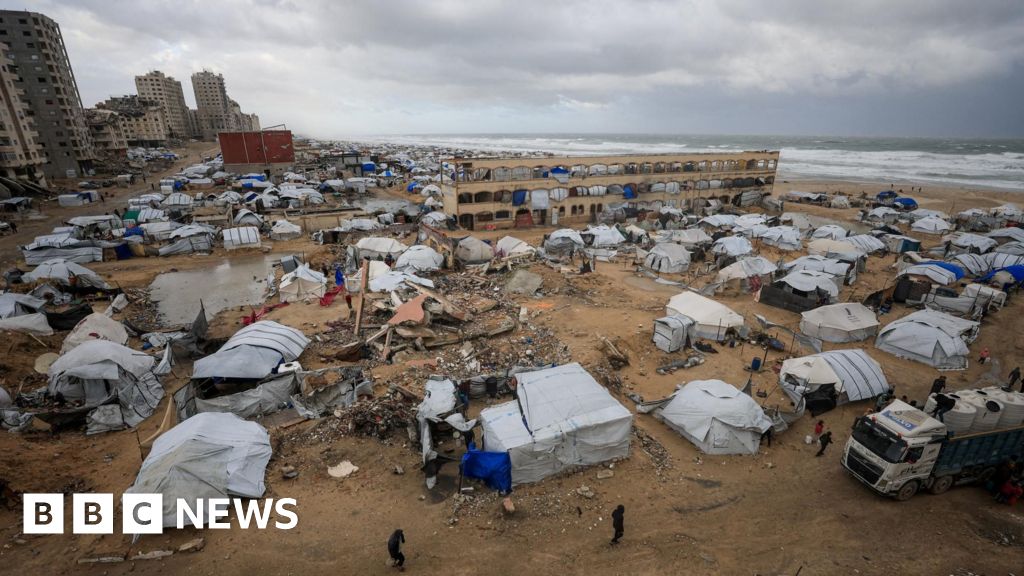
Key Takeaways
The US unveils phase two of Trump’s Gaza peace plan, focusing on reconstruction and demilitarization. Understand implications for the region and future stability.
Overview
The United States has officially commenced phase two of President Donald Trump’s comprehensive plan to resolve the ongoing conflict in Gaza. This crucial development signals a renewed push for stability in the volatile region, emphasizing a shift towards a post-conflict administrative structure.
This initiative is particularly significant for general readers and news consumers as it outlines a path for Gaza’s future, impacting regional security and international relations. It follows months of intense diplomatic efforts and a fragile ceasefire, marking a critical juncture in the conflict’s trajectory.
Key elements of this new phase include the establishment of a technocratic Palestinian government, alongside commitments for Gaza’s full reconstruction and demilitarisation. Phase one previously saw a ceasefire and a hostage-prisoner exchange in October, among other agreements.
The announcement provides vital context for current affairs and today updates, setting the stage for forthcoming actions and potential shifts in the Middle East.
Detailed Analysis
The unveiling of phase two of the Gaza peace plan by US envoy Steve Witkoff marks a pivotal moment in global current affairs, seeking to transition the devastated territory from conflict to reconstruction and stable governance. This initiative builds upon a history of peace efforts, though many have struggled to achieve lasting success in the complex Israeli-Palestinian context. Historically, plans for Gaza have often grappled with questions of security, governance, and humanitarian aid. The current proposal seeks to address these by outlining a clear, albeit ambitious, framework for demilitarization and administrative reform, intending to break cycles of violence that have plagued the region for decades since the initial conflicts.
At the core of phase two lies the establishment of a technocratic Palestinian government within Gaza. This new administrative body, known as the National Committee for the Administration of Gaza (NCAG), was initially announced by Egypt and will comprise 15 members. Crucially, this committee will operate under the guidance of a ‘Board of Peace’, a supervisory entity that, according to the 20-point plan revealed by President Trump three months prior, will be chaired by the former US President himself. The plan explicitly calls for the full demilitarisation of Gaza, which includes the disarmament of Hamas and other Palestinian groups. The US has issued a stern warning to Hamas, expecting full compliance, including the return of the body of the last dead Israeli hostage, with severe consequences threatened for any failure to adhere to these obligations. This detailed framework underscores an intent to reshape Gaza’s political and security landscape fundamentally.
When viewed against the backdrop of past peace proposals, this plan introduces distinctive elements, particularly the direct involvement of a ‘Board of Peace’ chaired by a former US President, aiming for a singular authority in overseeing the transitional government. Unlike some previous efforts that focused primarily on bilateral negotiations, this approach attempts to structure a post-conflict governance model with international oversight from the outset. Phase one, initiated in October, had already seen a temporary ceasefire, a significant hostage-prisoner exchange, a partial Israeli troop withdrawal, and a surge in humanitarian aid, providing a foundational contrast to the more structural changes proposed for phase two. The emphasis on technocratic governance and complete demilitarisation represents a robust, albeit challenging, blueprint compared to previous, often less prescriptive, peace initiatives.
For general readers and news consumers, these developments hold significant implications. The success or failure of this phase will directly influence regional stability, humanitarian conditions in Gaza, and the broader trajectory of the Israeli-Palestinian conflict. Monitoring the establishment and functionality of the NCAG, the progress of reconstruction efforts, and crucially, Hamas’s response to disarmament demands and the hostage return, will be key indicators of the plan’s viability. The potential for ‘serious consequences’ looms large, underscoring the high stakes involved in this India News and Current Affairs development. This represents a significant effort to alter the long-standing dynamics, offering a potential, though challenging, pathway towards enduring peace.
About the Author