Key Takeaways
US approves Nvidia H200 AI chip sales to China. Understand the market impact, geopolitical risks, and investment strategies for semiconductor stocks now.
Overview
The US government has officially approved the sale of Nvidia’s advanced H200 AI processors to China. This significant policy reversal marks a pivotal moment in US-China tech relations, carrying profound implications for the global semiconductor market and future technological competition.
This development is crucial for retail investors, swing traders, and long-term investors monitoring Nvidia’s stock and the broader tech sector. The move could unlock new revenue streams for Nvidia, yet introduces complex geopolitical considerations that require careful **financial analysis**.
The H200, positioned as Nvidia’s second-most-advanced semiconductor, was previously restricted due to Washington’s concerns about China gaining a technological edge. Sales are now permitted under strict conditions, including sufficient US domestic supply and stringent security protocols.
This article provides an in-depth **investment** analysis of the short, medium, and long-term impacts on Nvidia, its competitors, and the **Stock Market India**, emphasizing opportunities and potential risks.
Detailed Analysis
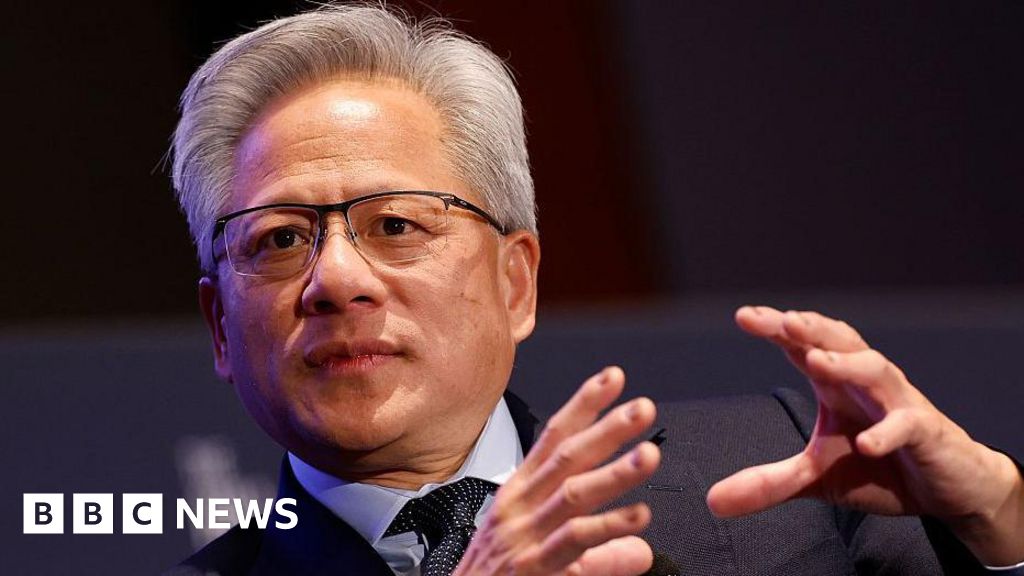
The recent green light from the US Department of Commerce for Nvidia to sell its H200 artificial intelligence (AI) chips to China signals a recalibration in the geopolitical dance between the world’s two largest economies. Historically, the US has tightened export controls on advanced semiconductors, fearing their dual-use potential for military applications and for bolstering China’s indigenous technology industry. This regulatory environment placed companies like Nvidia, a global leader in AI chips, squarely in the crosshairs of this strategic competition. The restriction on high-performance chips, including earlier Nvidia models, aimed to slow China’s progress in critical areas like AI and supercomputing, creating a significant barrier for US chipmakers in a lucrative market. Nvidia CEO Jensen Huang has consistently advocated for continued access to the Chinese market, arguing that global market engagement is vital for American competitiveness and innovation.
Delving into the specifics, the H200 is characterized as Nvidia’s second-most-advanced semiconductor, standing one generation behind its cutting-edge Blackwell processor. While the Blackwell remains explicitly blocked from sale in China, the conditional approval for the H200 represents a nuanced policy shift. Key conditions for the H200 sales include ensuring ‘sufficient supply’ of these processors within the US and requiring Chinese customers to demonstrate ‘sufficient security procedures,’ explicitly prohibiting military applications. Nvidia has publicly welcomed this decision, highlighting its potential benefits for US manufacturing and job creation. Conversely, Beijing has consistently voiced strong opposition to the ‘politicisation and weaponisation of tech and trade issues,’ arguing that such restrictions destabilize industrial and supply chains and do not serve mutual interests. This creates a delicate balance, where Nvidia seeks to capitalize on market demand while navigating stringent regulatory and geopolitical frameworks.
Comparing this development within the broader semiconductor landscape reveals a complex interplay of market dynamics and policy. The approval for H200 chips, while significant, maintains the blockade on the more advanced Blackwell, signaling Washington’s continued intent to manage the pace of China’s AI development. This partial lifting of restrictions can be seen as a pragmatic move, allowing Nvidia to capture some revenue from China, albeit potentially at lower margins due to a reported 25% fee imposed by the US government. Semiconductor analyst Austin Lyons suggests that Chinese firms will be eager to acquire H200 chips, at least until their domestic alternatives achieve parity. This underscores the current lag in China’s indigenous chip capabilities despite concerted efforts. Marc Einstein of Counterpoint Research views the 25% fee proposal as a unique precedent that could influence future trade tariffs and negotiations across other sectors, making it a critical aspect for **finance professionals** to monitor. [Suggested Matrix Table: Nvidia AI Chip Export Policy Comparison – columns: Chip Model, Advanced Status, China Export Status, US Policy Condition]
For **Retail Investors** and **Swing Traders**, monitoring Nvidia’s stock performance in the immediate aftermath of this news is crucial, with attention to trading volumes and price action indicators. This policy change introduces a new variable in Nvidia’s revenue forecast, potentially offering short-term volatility or a positive catalyst. **Long-term Investors** should evaluate Nvidia’s broader strategy for diversifying revenue streams and mitigating geopolitical risks inherent in its operations between major global powers. The implications for competitor companies in the **semiconductor sector** within the **Global Semiconductor Market** should also be assessed, especially those with significant exposure to the Chinese market. **Finance Professionals** will closely analyze the precedent set by the ‘25% fee’ on trade, considering its potential expansion to other industries and its impact on international trade agreements. Key metrics to watch include Nvidia’s upcoming earnings reports for revenue guidance from China, any further updates on US export control policies, and China’s advancements in domestic semiconductor manufacturing. The landscape remains dynamic, demanding continuous vigilance from the **investment** community in **Stock Market India**.
About the Author