Key Takeaways
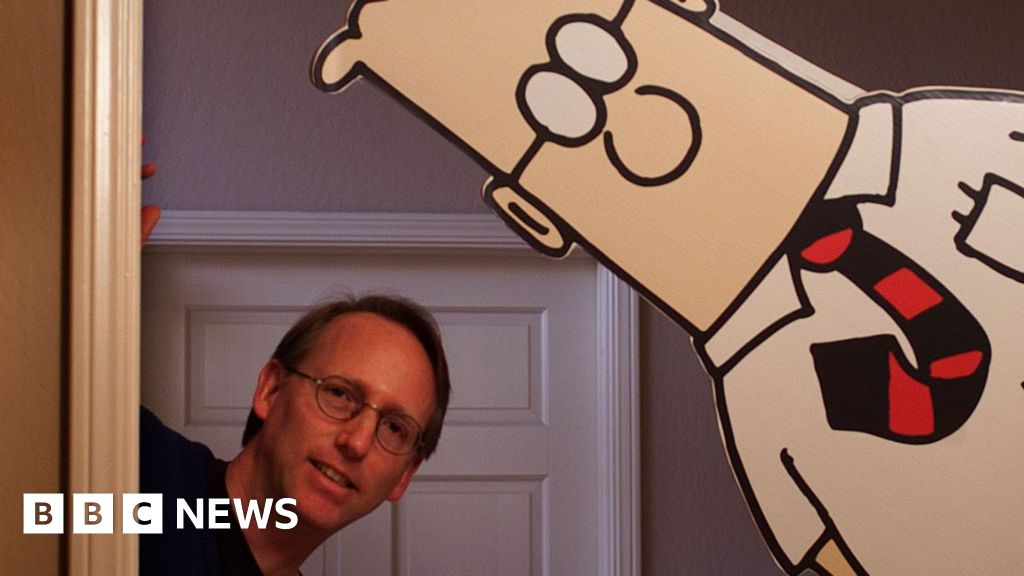
The controversial Dilbert cartoonist Scott Adams has passed away at 68. Explore his massive pop culture impact, career journey, and the legacy of his iconic comic strip.
Overview
The entertainment world is buzzing with news of the passing of Scott Adams, the renowned creator behind the iconic satirical comic strip, Dilbert. Adams, aged 68, passed away from cancer, a journey his ex-wife Shelly Miles revealed during his podcast livestream.
For pop culture fans and entertainment enthusiasts, Adams’s work, particularly Dilbert, was a staple. It skillfully captured the absurdities of corporate life, resonating globally across various media from print to animated TV, leaving an undeniable mark on satirical humor.
First published in 1989, Dilbert appeared in over 2,000 newspapers across 65 countries. Later adaptations included books, an animated TV series, and a video game.
This news sparks discussions about his complex legacy, impacting how we view creators and their contributions to pop culture, and invites reflection on the strip’s enduring cultural significance.
Detailed Analysis
Scott Adams’s journey through the world of pop culture began in 1989 with Dilbert, a comic strip that quickly became a global phenomenon. It masterfully blended everyday workplace frustrations with sharp, often cynical, wit, creating characters like the frustrated engineer Dilbert, his dog Dogbert, and his eccentric colleagues. This unique brand of humor transcended geographical boundaries, making it a beloved feature in newspapers worldwide. The strip’s success wasn’t just confined to print; it naturally expanded into other entertainment formats, proving its powerful cultural resonance through popular books, an animated television series, and even a video game. This expansion cemented Dilbert as more than just a comic; it was a mirror reflecting the universal absurdities of office life, building a dedicated following among entertainment enthusiasts and pop culture fans who saw their own experiences reflected in its panels.
However, Adams’s later career took a controversial turn that deeply impacted his professional standing. In 2023, the creator made comments that sparked widespread backlash, particularly when he referred to black Americans as a “hate group” and advised white Americans to “get the hell away from black people.” These statements, made in response to a poll he referenced, led to significant consequences, including the cancellation of his comic strip by numerous newspapers, notably the Washington Post. Adams later defended his remarks, claiming he used hyperbole to make a point and disavowing racist intentions, arguing that media reports lacked context. Despite his explanations, the controversy irrevocably altered public perception and his relationship with the entertainment industry, leading many to grapple with the separation of the art from the artist. Former President Trump, however, paid tribute to Adams, acknowledging him as a “Great Influencer” who fought a long battle with illness.
The cancellation of Dilbert by major publications serves as a stark reminder of the evolving dynamics between artists, their work, and public accountability in today’s pop culture landscape. While Dilbert itself was a product of a certain era of satirical humor, Adams’s later comments pushed the boundaries of what was acceptable to many publishers and readers. This situation isn’t entirely new; throughout history, creators have faced scrutiny for their personal views or actions, sometimes leading to their works being re-evaluated or even shunned. What makes Adams’s case notable is the swift and widespread nature of the industry’s response, highlighting a trend where public figures are held to increasingly high standards regarding their personal conduct and expressed views. This contrasts with earlier periods where the personal lives of artists might have been more easily separated from their creative output, prompting significant debate among pop culture fans on how best to reconcile these conflicting aspects.
For Entertainment Enthusiasts and Pop Culture Fans, Scott Adams’s passing closes a chapter on a creative force whose work once defined a genre of workplace humor. His legacy remains complex: a genius cartoonist who created a globally beloved and influential comic, yet whose later controversies overshadowed much of his career. Adams himself left a posthumous message: “I had an amazing life, I gave it everything I had… Be useful, and please know I loved you all to the very end.” This message adds another layer to how his career will be remembered. It prompts audiences to consider how the cultural impact of a work can endure even when its creator faces challenging scrutiny. As the entertainment landscape continues to evolve, the story of Scott Adams and Dilbert offers a poignant case study on the enduring power of satire, the responsibility of public figures, and the lasting impressions creators leave on the world of pop culture.
About the Author