Key Takeaways
Chinese researchers unveil advanced robot skin with human-like pain sensing, enabling instant reflexes. Discover its impact on AI, robotics, and future human-robot interaction.
Overview
A groundbreaking advancement in robotics is poised to redefine human-robot interaction (HRI) safety, as Chinese researchers announce the development of an advanced pain-sensing robot skin. This innovation allows robots to react to harmful stimuli with human-like reflexes, a significant leap forward in AI innovation for mechanical systems, crucial for the expanding robotics market in Technology India.
This breakthrough is particularly vital for Tech Enthusiasts, Innovators, and Startup Founders eyeing the burgeoning service robotics sector. The ability of a robot to detect and immediately withdraw from potentially damaging contact not only protects the machine but dramatically enhances its trustworthiness and safety in shared environments.
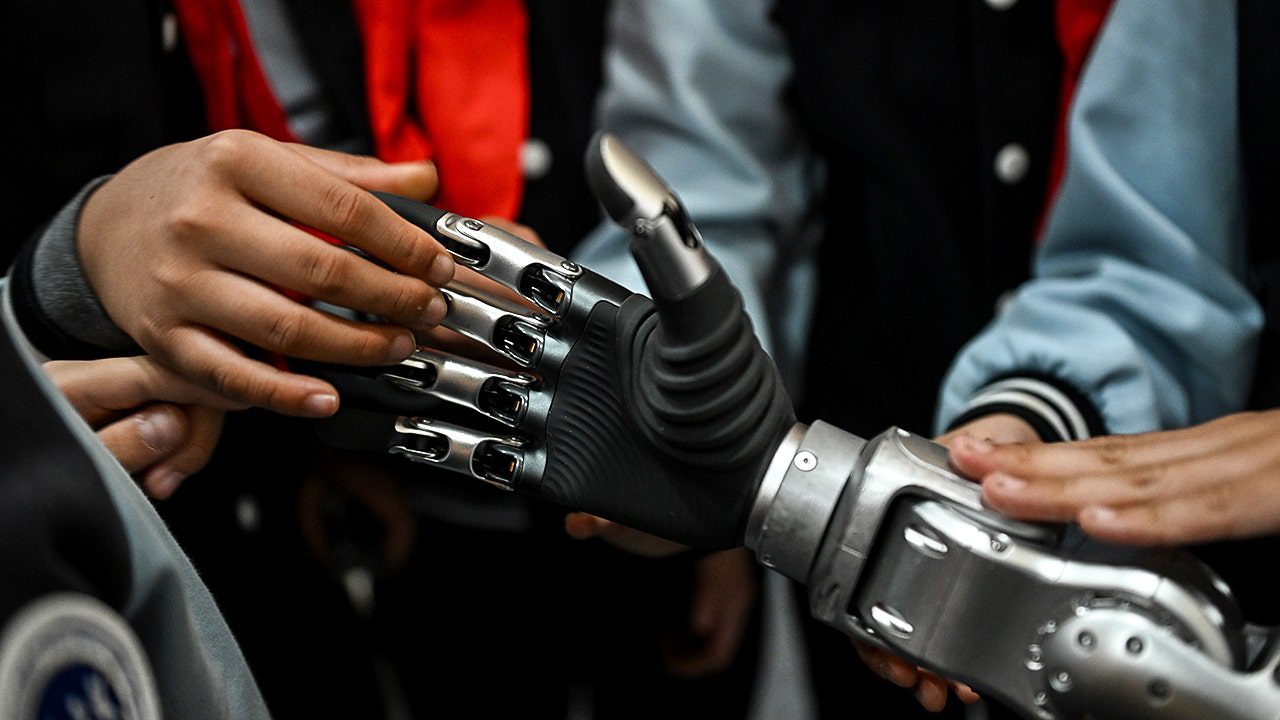
The neuromorphic e-skin mimics human sensory nerves, signaling a normal status every 75 to 150 seconds and triggering a high-voltage spike directly to motors for instant reflexes when extreme force is detected, bypassing central processing entirely.
This detailed tech analysis delves into the specifications, market context, and future implications of this pain-sensing technology, setting new benchmarks for robotic intelligence.
Detailed Analysis
The quest to imbue robots with human-like sensory capabilities has been a persistent challenge in robotics, primarily due to the inherent lag in traditional robotic response systems. Historically, when a robot encounters a harmful object, sensor data must travel to a central processor for analysis, after which instructions are sent back to the motors. This sequential process, though milliseconds long, can be catastrophic, leading to costly equipment damage or dangerous interactions in dynamic environments. The recent unveiling by scientists at the Chinese Academy of Sciences and collaborating universities addresses this fundamental limitation, introducing a neuromorphic robotic e-skin (NRE-skin) designed to mirror the immediacy of the human nervous system. This development marks a pivotal moment, pushing the boundaries of what is possible in responsive and intuitive robotics, a key area of focus for Innovation and Startups in the global tech landscape.
The NRE-skin is ingeniously constructed from four distinct layers, each analogous to components of human skin and nerves. The outermost layer functions as a protective epidermis. Beneath this, integrated sensors and circuits operate akin to sensory nerves. Crucially, even in a quiescent state, the skin emits a subtle electrical pulse every 75 to 150 seconds, acting as a constant ‘all clear’ signal. The cessation of this pulse immediately indicates damage, prompting the robot to alert its owner to the precise location of injury. For normal tactile interactions, the skin generates neural-like spikes that are routed to the robot’s central processor for interpretation. However, the system’s true innovation lies in its response to extreme pressure. Should a preset force threshold be exceeded, the e-skin directly generates a high-voltage spike to the motors, entirely bypassing the central processor. This direct neural pathway enables an instantaneous reflex, allowing the robot to recoil from danger with the same speed and instinct a human hand would withdraw from a hot surface, significantly enhancing its safety profile and operational resilience.
This innovative NRE-skin fundamentally differs from conventional robot skins, which primarily detect touch but lack the capacity to discern harmful force from benign contact. The integration of a direct reflex system, bypassing the central processor, radically reduces reaction times, a critical factor for robots operating in close proximity to humans. The modular design, featuring magnetic, interlocking patches, further enhances practicality for developers and innovators. A damaged patch can be replaced in seconds, minimizing downtime and maintenance costs, a significant advantage for Robotics Startups aiming for scalable solutions. This approach enables a more robust and adaptable robotic platform. [Suggested Matrix Table: Robotic Skin Capabilities Comparison with ‘Traditional e-skin’ and ‘Neuromorphic e-skin’ with features like ‘Pain Detection’, ‘Reflex Action’, ‘Modular Repair’, ‘Processor Bypass’, ‘Processor Reliance’] This technological leap is especially pertinent for the burgeoning field of service robotics, where safety and intuitive interaction are paramount for deployment in homes, hospitals, and public spaces, offering a competitive edge for Tech Launch initiatives.
For Tech Enthusiasts, this breakthrough signifies a tangible step towards more sophisticated and ‘intelligent’ robots that can operate autonomously and safely in complex human environments. Innovators and Developers can leverage this pain-sensing capability to design new generations of robots with enhanced dexterity and adaptive behaviors, opening up novel application areas beyond conventional industrial settings. Startup Founders should view this as a foundational technology for future service robots, particularly those involved in elder care, assisted living, or collaborative workspaces, where reducing the risk of accidental injury and improving user trust is critical for market adoption. The next frontier, as noted by the researchers, involves developing the skin’s ability to simultaneously recognize multiple points of contact without confusion. Mastering this multi-touch sensitivity will unlock even more intricate physical tasks, bringing humanoid robots closer to a state where they can truly act on instinct, seamlessly integrating into our daily lives and driving the next wave of AI Innovation.
About the Author