Key Takeaways
Iran’s escalating protests spark global market uncertainty. Analyze crude oil price impact, geopolitical risks, and investment strategies for Indian investors.
Overview
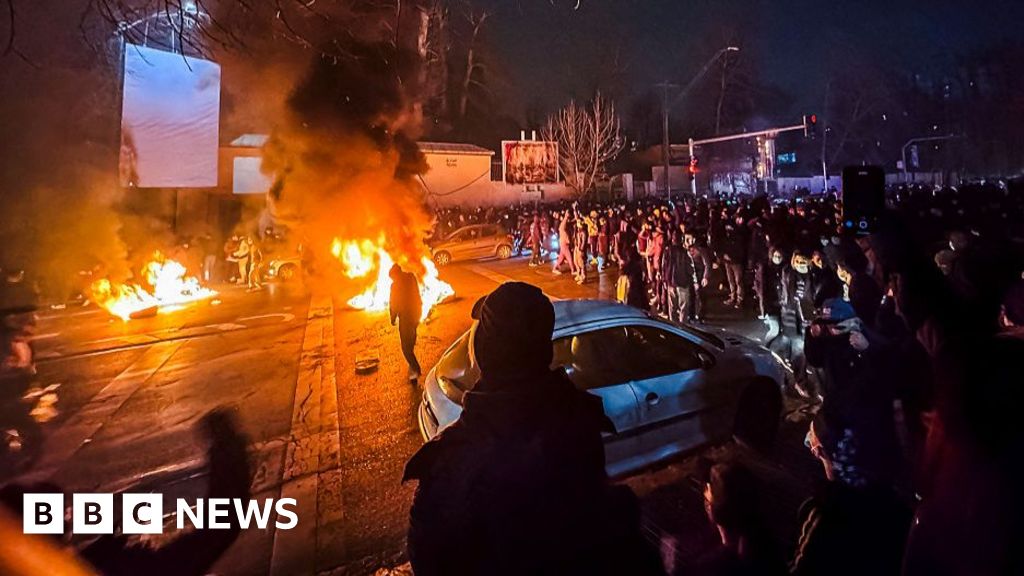
Amidst a severe government crackdown,
For Retail Investors, Swing Traders, and Finance Professionals, this escalating unrest directly translates into heightened volatility, particularly in crude oil prices and safe-haven assets. Geopolitical tensions in the Middle East inherently impact global supply chains and inflation outlooks, requiring careful investment analysis.
Reports indicate hundreds killed or wounded, thousands arrested, and an unprecedented internet shutdown. US threats of severe action and Iran’s warnings of retaliatory strikes further amplify the risk landscape.
This analysis will delve into the short-term market reactions, medium-term supply chain vulnerabilities, and long-term geopolitical shifts investors must monitor to navigate the ensuing uncertainty and manage investment portfolios effectively.
Detailed Analysis
The Islamic Republic of Iran is currently grappling with widespread protests, sparked by soaring inflation and fueled by calls for an end to clerical rule. This internal unrest, characterized by violent clashes and a severe government crackdown, is not merely a domestic political issue but a significant geopolitical event with tangible implications for global financial stability and, by extension, the Indian stock market. Historically, instability in the Middle East, a crucial region for global energy supplies, correlates directly with increased market volatility. The current situation echoes, and in some respects surpasses, previous periods of dissent, such as the 2022 Mahsa Amini uprising, indicating a deeper and potentially more disruptive challenge to the status quo.
The protests, which have spread to over 100 cities and towns across every province, underscore deep-seated economic grievances and political discontent. For investors, understanding these underlying factors is critical. Soaring inflation within Iran directly contributed to public unrest, mirroring how economic stress can trigger broader instability. The government’s escalating response, including the attorney general’s declaration that protesters are an “enemy of God” – an offense carrying the death penalty – signifies a regime determined to crush dissent at any cost. This level of state repression suggests that the conflict will be prolonged and brutal, contributing to sustained geopolitical risk premiums across various asset classes, a factor that Indian fund managers and individual investors cannot ignore when making investment decisions related to global or energy-dependent sectors.
The current wave of protests is marked by an unprecedented level of government repression and an information blackout, creating significant uncertainty for global markets. Reports from BBC sources and US-based Human Rights Activists in Iran (HRANA) indicate over 100 people, including security personnel, have been killed, with some estimates suggesting hundreds more wounded in just three days. Hospital staff describe horrific scenes, with many dying from direct shots to the head and heart, overwhelming emergency services. Such a high human cost implies a deeply entrenched conflict rather than a fleeting moment of unrest, making a swift resolution unlikely. This prolonged uncertainty typically leads to cautious investor sentiment and a flight to safety in global markets. The Iranian government’s imposition of an internet shutdown since Thursday, described by experts as more severe than the 2022 uprising, severely restricts the flow of verifiable information. For financial professionals and swing traders, this information vacuum makes real-time risk assessment incredibly challenging, often leading to amplified market reactions based on speculation rather than confirmed facts. The mention of Starlink as the only viable connection, alongside warnings of government tracing, further highlights the regime’s tightening grip on information, which exacerbates market opacity.
Adding a critical geopolitical dimension, US President Donald Trump has threatened to hit Iran “very hard” if the crackdown continues. While US media reported “preliminary discussions” on military strike options, Iran’s parliament speaker retaliated with a warning that any US attack would make Israel and all US military and shipping bases in the region “legitimate targets.” This escalation in rhetoric elevates the risk of regional conflict, directly impacting the security of crucial shipping lanes, particularly the Strait of Hormuz, through which a significant portion of the world’s oil supply transits. Any disruption here would send crude oil prices soaring globally, directly impacting India’s substantial oil import bill, exacerbating inflation, and putting pressure on the Indian Rupee (INR) against the US Dollar. For long-term investors, this necessitates a re-evaluation of exposure to energy-consuming sectors and a potential pivot towards more resilient, defensive assets.
Comparing the current situation to previous periods of Middle Eastern instability provides crucial context for investors. Historically, major geopolitical flare-ups in oil-producing regions, such as the Iran-Iraq War or the Gulf Wars, have consistently triggered significant spikes in crude oil prices, a flight to safe-haven assets like gold, and increased volatility across global equity markets, including the NSE and BSE. India, as the world’s third-largest oil importer, is particularly vulnerable to such shocks. A sustained rise in crude oil prices directly impacts manufacturing costs, transportation logistics, and household budgets, potentially slowing economic growth and prompting inflationary pressures. This could lead to a reassessment of interest rate trajectories by the Reserve Bank of India, which would in turn affect various sectors, from banking to real estate.
The current protests are described as the most widespread since the 2022 uprising, which itself saw over 550 people killed and 20,000 detained. The fact that the current internet shutdown is more severe, coupled with direct calls for an end to clerical rule by figures like Reza Pahlavi, the exiled son of Iran’s last shah, suggests a deeper challenge to the regime’s authority. This intensifies the potential for prolonged instability compared to prior events that were perhaps more focused on specific grievances. Such prolonged unrest in a major oil producer can structurally alter global energy supply dynamics, forcing economies to consider alternative sources and long-term energy security. This structural shift, while gradual, can have profound implications for companies engaged in energy exploration, production, refining, and distribution. [Suggested Line Graph: Brent Crude Oil Price Volatility during Major Middle East Geopolitical Events (e.g., 2022 Iran Protests, 1990 Gulf War, 2019 Saudi Oil Attack)] This visual could effectively demonstrate the historical correlation between regional instability and crude market reactions.
For **Swing Traders**, the escalating situation in Iran will likely create significant short-term volatility in crude oil futures, gold, and potentially currency markets (INR/USD). Opportunities may arise from rapid price movements, but these come with commensurately higher risks. Monitoring real-time news feeds, technical support and resistance levels for Brent crude, and currency pair charts is paramount. Speculative positions should be managed with strict stop-losses given the unpredictable nature of geopolitical events.
For **Retail Investors** and **Long-term Investors**, the focus shifts to portfolio resilience and diversification. Assess exposure to sectors highly dependent on crude oil (e.g., airlines, logistics, paints, chemicals) and consider hedging strategies or reallocating towards more defensive sectors less sensitive to commodity price shocks. Investments in companies with strong pricing power and robust balance sheets are crucial to withstand potential input cost inflation. Furthermore, consider the impact on global supply chains and commodities. A sustained period of instability could elevate the overall geopolitical risk premium in global asset valuations, affecting the long-term outlook for emerging markets like India. Diversifying internationally, or into assets like gold, could serve as a hedge against regional instability.
For **Finance Professionals**, a thorough stress-testing of portfolios under various geopolitical escalation scenarios is advisable. This includes modeling the impact of Brent crude prices reaching $100-$120 per barrel, assessing currency depreciation, and analyzing the cascading effects on corporate earnings, particularly for Indian conglomerates with significant international trade or energy sector exposure. Reviewing counterparty risks in trade finance, particularly for businesses with exposure to the Middle East, is also prudent. Continuous engagement with geopolitical analysts and scenario planning exercises are essential to anticipate and mitigate potential systemic risks. The situation in Iran, triggered by economic grievances and escalating into a geopolitical flashpoint, represents a complex and evolving risk. Investors must remain vigilant, prioritize risk management, and stay informed on both internal developments within Iran and the broader international responses to safeguard their investments in the face of such profound uncertainty.
About the Author