Key Takeaways
A protester scaled the Iranian embassy in London amidst widespread anti-government movements. Explore global policy implications and diplomatic reactions to the escalating crisis.
Overview
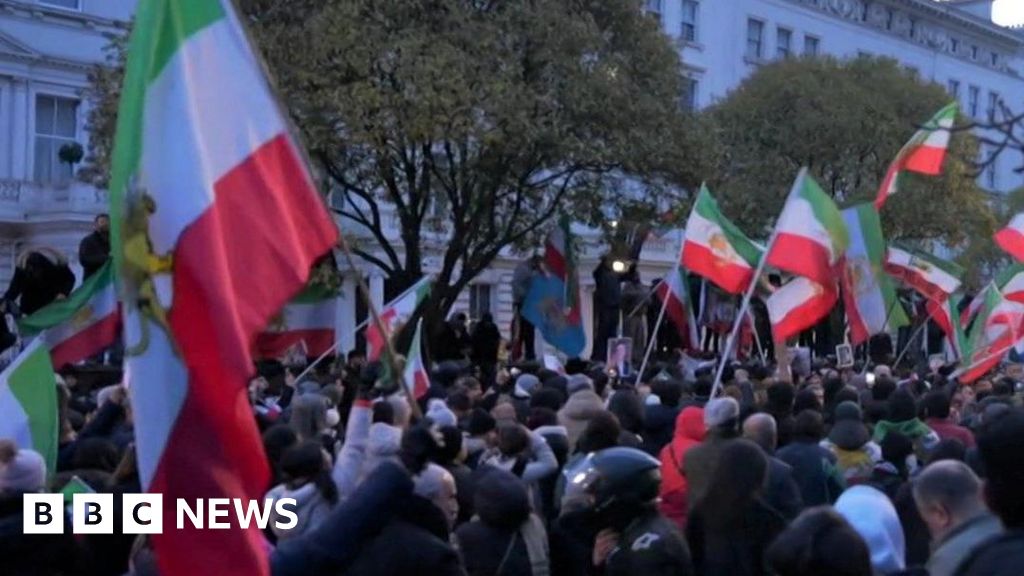
A recent incident at the Iranian embassy in west London has sharply focused global attention on the ongoing anti-government protests in Iran. A protester scaled the embassy balcony, dramatically tearing down the Iranian flag, amidst a large gathering waving flags and shouting anti-government slogans, underscoring the deep unrest facing the Iranian regime.
This escalation on international soil highlights the significant policy implications for diplomatic relations and global governance. The Metropolitan Police acknowledged the demonstration, deploying additional officers to maintain order, as the diaspora amplified dissent against the current Iranian government.
The protests, now in their 13th day, initially erupted over economic grievances but have evolved into broader calls for an end to the Islamic Republic, with some advocating for a return to monarchy. Human rights groups report at least 50 protesters killed in Iran since the demonstrations began on December 28.
Policy watchers and informed citizens are closely monitoring international reactions, particularly after condemnations from Western leaders, and the Iranian government’s response, including a widespread internet blackout, for insights into potential future developments.
Detailed Analysis
The recent dramatic scenes outside the Iranian embassy in London serve as a powerful emblem of the widespread discontent against the Iranian regime, extending far beyond its borders. This particular incident, involving a protester climbing onto the embassy balcony and tearing down the national flag, provides a tangible representation of the global reach of the anti-government movement that originated within Iran. The London demonstration mirrors similar gatherings outside Iranian diplomatic missions worldwide, underscoring a coordinated international effort by expatriate communities to amplify the voices of those protesting domestically. The historical context of this discontent is rooted in the 1979 revolution, which saw the overthrow of Mohammad Reza Shah Pahlavi and the end of Iran’s monarchy. The current resurgence of calls for the return of the exiled son, Reza Pahlavi, from some demonstrators, connects the present unrest directly to a pivotal moment in Iran’s modern history, suggesting a deeper longing for fundamental political transformation rather than mere economic reforms.
Detailed analysis of the protests reveals several critical facets. The Metropolitan Police’s deployment of additional officers to the London embassy underscores the volatile nature of such demonstrations and the host government’s responsibility to manage public order while upholding rights to peaceful assembly. The core demands of the protesters, both domestically and internationally, have broadened significantly from initial economic grievances to fundamental political change, including calls for an end to the Islamic Republic itself. The tragic reports from human rights groups, indicating at least 50 protester fatalities, highlight the severe crackdown by Iranian security forces. This grim statistic fuels international outrage and intensifies the pressure on global policymakers. The Iranian Supreme Leader, Ayatollah Ali Khamenei, has notably dismissed the protesters as “troublemakers,” accusing them of aligning with external interests, specifically “trying to please the president of the US.” This narrative from the Iranian government attempts to delegitimize the movement by portraying it as foreign-instigated rather than an organic expression of internal dissent. Furthermore, the imposition of an internet blackout across the country critically impedes information flow, making social media a primary, albeit often unverified, source for understanding on-the-ground developments, especially given the restrictions on international news organizations.
The international response to the Iranian government’s handling of the protests illustrates a significant divergence in stakeholder perspectives. Leaders from the UK, Germany, and France, including UK Prime Minister Sir Keir Starmer, French President Emmanuel Macron, and German Chancellor Friedrich Merz, issued a joint statement expressing “deep concern” over violence and unequivocally condemning the killing of protesters. Their collective statement emphasized the Iranian authorities’ responsibility to protect their population and ensure freedom of expression and peaceful assembly without fear of reprisal. This unified stance from prominent Western governments contrasts sharply with the Iranian regime’s internal messaging and its leader’s accusations of foreign interference. The global nature of the protests, occurring at multiple embassies, demonstrates the international solidarity among Iranian diaspora communities and presents a diplomatic challenge for the Iranian government, as it faces increasing external scrutiny and condemnation while simultaneously battling internal dissent. This scenario highlights the complex interplay between domestic political instability and international diplomatic relations.
For News Readers, Policy Watchers, Informed Citizens, and Political Analysts, the unfolding situation carries substantial implications. In the short term, continued international pressure through diplomatic channels and public statements will likely persist, potentially leading to further sanctions or international isolation for the Iranian government. Medium-term ripple effects could include further erosion of trust between the Iranian populace and its leadership, potentially fueling greater calls for political reform or regime change. The reliance on social media for information during the internet blackout means that narratives can be contested and difficult to verify, posing challenges for accurate policy assessments. Long-term implications may involve a re-evaluation of Western foreign policy towards Iran, considering the efficacy of current diplomatic and economic strategies in influencing the country’s human rights record and political trajectory. Policy watchers should closely monitor the unity of international responses, the internal dynamics within Iran’s political establishment, and the ongoing human rights reports to gauge the trajectory of this evolving political crisis and its potential impact on regional stability and global governance.
About the Author