Key Takeaways
Venezuela’s US$100 Bn oil investment signals major global energy shifts. Analyze market impact, crude prices, and investor strategies for Stock Market India.
Overview
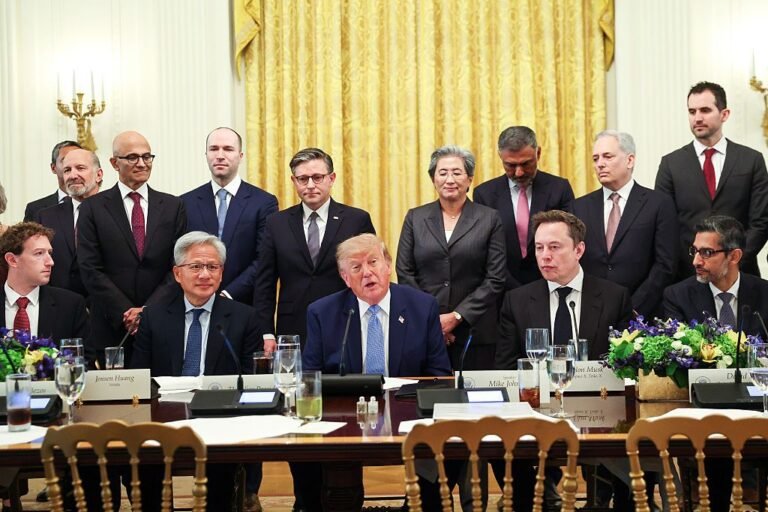
US President Donald Trump’s announcement signals a potential US$100 billion ‘BIG OIL’ investment into Venezuela’s oil and gas infrastructure, marking a critical geopolitical and energy sector shift.
This move profoundly impacts global crude dynamics and Stock Market India, influencing investment and trading across the NSE and BSE for all investor categories.
The US$100 billion commitment aims to rebuild Venezuela’s vast, underutilized energy assets, contingent on diplomatic progress and the release of political prisoners.
Our financial analysis examines the market impact, investor implications, and key metrics for informed strategic decisions.
Detailed Analysis
Venezuela, once a global oil giant, has seen its production plummet due to prolonged political instability, economic mismanagement, and international sanctions. Its vast crude reserves, among the largest globally, have remained largely untapped or underutilized. President Trump’s announcement, explicitly linked to diplomatic de-escalation symbolized by the release of political prisoners, signals a potential pathway for Venezuela’s reintegration into the global energy market. This marks a profound shift from a period of severe isolation to a renewed focus on energy sector engagement. Historically, such significant geopolitical pivots have dramatically impacted global energy supply-demand dynamics, crude benchmarks like Brent and WTI, and the profitability of upstream and downstream companies. The sheer scale of a US$100 billion investment underscores a long-term commitment, providing crucial context for global financial analysis and trading strategies.
The proposed US$100 billion capital infusion from ‘BIG OIL’ is a monumental sum for infrastructure development, specifically aimed at rebuilding and modernizing Venezuela’s severely curtailed oil and gas capabilities. While specific details regarding the participating companies, the precise timeline for investment, or projected production targets are not disclosed in the source content, the magnitude of the investment implies comprehensive infrastructure development. This would likely target upgrading existing upstream facilities, developing new fields, enhancing crucial midstream infrastructure such as pipelines and storage, and potentially boosting downstream operations like refineries. For major global energy firms, this represents a significant opportunity for asset acquisition and long-term production growth. However, the ultimate success hinges on sustained political stability, clear and predictable regulatory frameworks, and favorable fiscal terms for these international oil companies. Without specific company-level financial metrics such as P/E ratios or EBITDA margins from the source, direct micro-level financial analysis for individual entities is currently limited, though analysts would scrutinize these intently once more granular data emerges, alongside examining debt-to-equity ratios of potential investing entities.
Comparing Venezuela’s potential re-emergence in the oil market to other significant global supply shifts offers valuable perspective. For instance, the US shale revolution dramatically altered global supply dynamics in the last decade, leading to lower crude prices and reshaping geopolitical influence. Similarly, significant changes in OPEC+ production quotas or disruptions from conflicts in the Middle East have historically caused immediate and volatile price movements. The gradual, yet substantial, return of Venezuelan crude could act as a long-term balancing force against potential future supply shocks or tightening markets. For comparison, consider the impact of Iran’s return to the market after sanctions were lifted, which led to a notable increase in global supply, albeit on a potentially smaller scale than the full recovery of Venezuela’s vast reserves. This scenario could intensify the competitive landscape for existing major oil producers, including those in the Middle East and Russia, potentially leading to increased competitive pressure on pricing and market share, necessitating strategic adjustments from other energy giants. Indian companies heavily reliant on crude imports, such as refiners and petrochemical firms, might significantly benefit from a more stable and potentially lower global crude price environment.
For Retail Investors, this development suggests a need for diversified exposure to the global energy sector, potentially via broad-based energy Exchange Traded Funds (ETFs) or carefully selected large-cap integrated oil companies with global footprints. Direct individual stock picking without further clarity on specific company involvement carries elevated risk. Swing Traders should closely monitor crude oil futures contracts (Brent, WTI) for increased volatility, which could be triggered by political news from Venezuela or definitive statements from major oil companies. Price action around key technical levels on crude charts could offer short-term trading opportunities. For Long-term Investors and Finance Professionals, the focus should extend beyond immediate price movements to the structural shifts in the global energy market. Key metrics to monitor include Venezuelan oil production figures published by official sources like OPEC, announcements from major oil companies regarding capital deployment in emerging markets, and any further US-Venezuela diplomatic developments. The potential for US$100 billion in investment in Venezuelan oil represents a significant, long-term opportunity, but it remains contingent on sustained political stability and the successful implementation of large-scale infrastructure projects, urging cautious yet informed investment strategies.
About the Author