Key Takeaways
Iran’s internet blackout sparks protests, raising geopolitical risk. Analyze market volatility, crude oil impact, and investment strategies for investors.
Overview
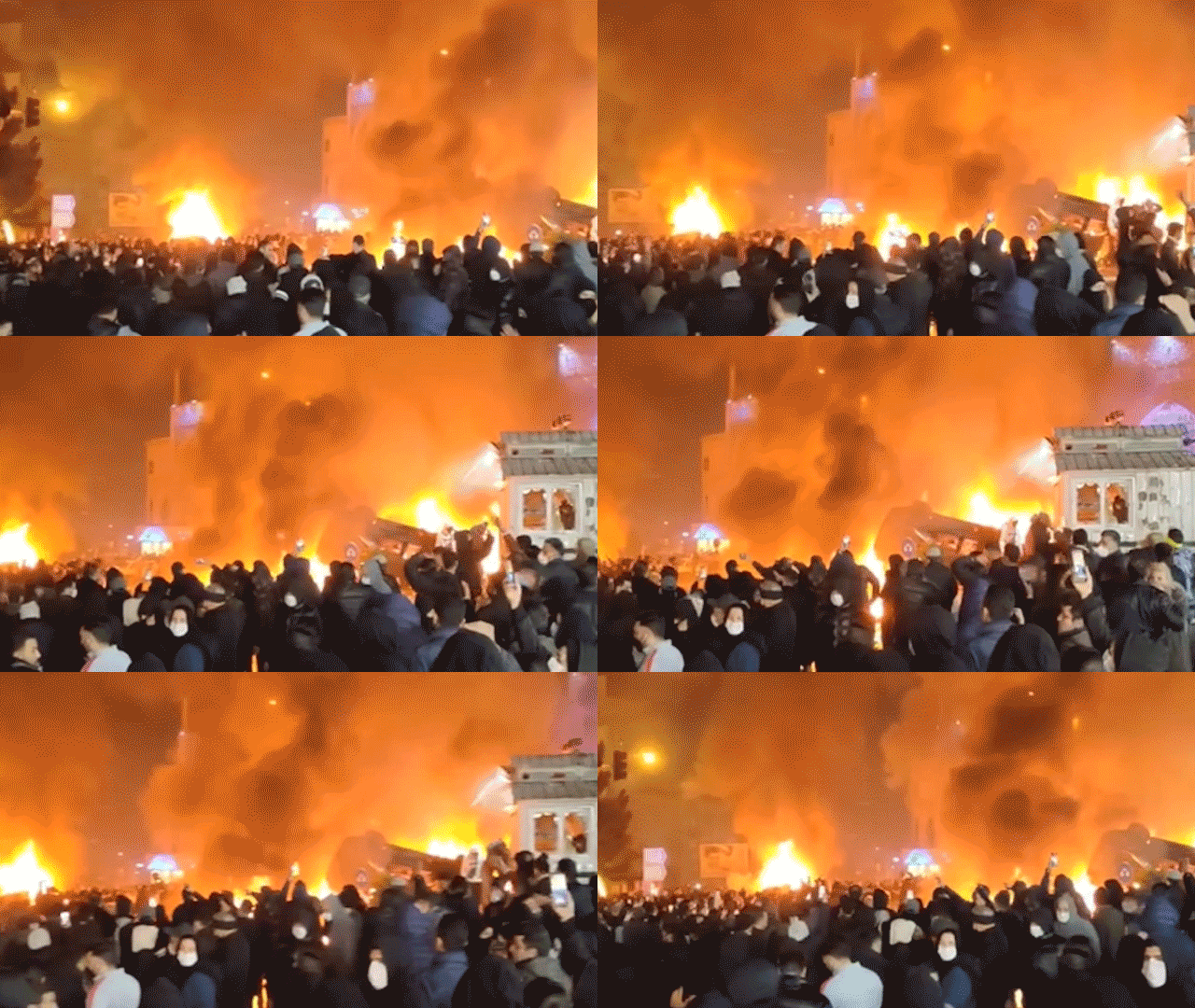
A nationwide internet blackout in Iran, coupled with intensifying anti-regime protests, has escalated geopolitical risks, demanding immediate attention from global investors. This critical development, unfolding as demonstrations enter their second week, signals potential volatility for international markets and commodity prices.
For Retail Investors, Swing Traders, Long-term Investors, and Finance Professionals, understanding the broader implications of such regional instability is paramount for risk assessment and strategic planning. The disruption of communication in a key Middle Eastern nation can trigger shifts in investor sentiment globally.
Source reports confirm internet traffic collapsing, with the death toll reaching 44 protesters amidst violent confrontations. These events follow a prior currency collapse and soaring inflation, highlighting deep economic and political fragilities.
This analysis delves into the short-term market reactions, medium-term ripple effects, and long-term structural shifts, offering crucial insights for navigating potential market turbulence in the context of Indian Stock Market, NSE, and BSE.
Detailed Analysis
Geopolitical stability remains a cornerstone of global financial market equilibrium. When significant unrest erupts in a region pivotal to global trade and energy supply, such as the Middle East, the reverberations are felt across continents, impacting the Indian equity market, including the Sensex and Nifty. The current situation in Iran, characterized by a sweeping internet blackout and escalating anti-government protests, represents a critical stress test for global risk appetite. Historically, internal strife in oil-producing nations has often translated into heightened volatility in crude oil markets and a general flight to safe-haven assets. This current wave of protests, ignited by economic grievances like currency collapse and soaring inflation, quickly morphed into a broader movement challenging the existing political structure, a development that commands investor vigilance. The Iranian regime’s decision to implement a nationwide internet blackout, severely restricting communication, not only stifles dissent but also creates an information vacuum, contributing to market uncertainty. This lack of transparent communication channels exacerbates concerns for investors attempting to gauge the true scale and potential trajectory of the crisis.
In the short term, the primary financial impact manifests as increased market uncertainty and potential upward pressure on global crude oil prices. Even without immediate supply disruptions, the mere *threat* of instability in the Gulf region can trigger a risk premium in energy futures. For swing traders, this translates to heightened volatility in energy-related stocks and commodity ETFs, creating both opportunities and significant risks. The internet blackout itself introduces an unusual dynamic: it restricts information flow, which is antithetical to efficient market operations and can fuel speculative trading based on rumors rather than verified facts. President Donald Trump’s prior warnings to the Iranian regime underscore the international dimension, suggesting potential diplomatic or economic responses that could further impact global trade flows. The reported death toll of 44 protesters and widespread clashes, including government building torchings and state radio stations set ablaze, signal an escalating crisis that investors must factor into their immediate risk assessments. The long-term implications are profound if the protests continue to broaden, as they demand the ‘overthrow of the Islamic Republic,’ indicating a potential for fundamental shifts in Iran’s geopolitical and economic alignment, which could reconfigure global energy and trade landscapes.
Comparing the current Iranian situation to past geopolitical flashpoints reveals critical parallels and distinguishing features for Financial Analysis. Historically, similar periods of unrest in oil-rich regions, such as the Arab Spring or previous periods of heightened tension in the Persian Gulf, have often led to significant spikes in global crude oil benchmarks like Brent and WTI, and corresponding inflows into safe-haven assets like gold. The current crisis, while rooted in economic discontent, shares a similar market-moving potential. However, the systematic internet blackout introduces a unique challenge. Unlike crises where information, even if biased, was readily available, the complete severing of communication lines amplifies information asymmetry, making it harder for markets to price in risk accurately. This scenario underscores the critical role of data transparency for global market stability and Investment. For economies heavily reliant on oil imports, such as India, sustained higher crude oil prices due to Middle Eastern instability can exacerbate inflationary pressures and impact trade deficits, influencing the performance of indices like the Sensex and Nifty. Understanding these historical correlations and distinguishing factors is crucial for investors navigating the current environment. Suggested visuals that would aid this analysis include:
[Suggested Line Graph: Brent Crude Oil Price Volatility vs. Major Geopolitical Events (2000-2026)]
[Suggested Matrix Table: Historical Geopolitical Events & Market Impact (Crude Price Change, Gold Inflow, Global Volatility Index)]
For Retail Investors, the ongoing situation in Iran underscores the importance of a diversified portfolio and a cautious approach to highly speculative assets. Monitoring global crude oil prices, particularly Brent benchmarks, is crucial, as sustained increases can impact the Indian economy through higher fuel costs and imported inflation. Consider defensive sectors or investments in safe-haven assets like gold, which often appreciate during times of geopolitical uncertainty. Swing Traders should prepare for increased volatility, especially in commodity futures (oil, gold) and currency pairs involving commodity-linked currencies. Technical levels for the Nifty and Sensex should be closely watched for potential support and resistance breaches, as global sentiment can trigger correlated movements in the Indian Stock Market. Implementing robust risk management strategies, including strict stop-loss orders, is highly recommended during such unpredictable periods of Trading. Long-term Investors need to re-evaluate their exposure to global energy companies and companies with significant supply chain links through the Middle East. The potential for a long-term shift in Iran’s political landscape, as suggested by the ‘overthrow’ movement, could fundamentally alter regional dynamics and global energy security. Finance Professionals should stress-test portfolios against various geopolitical shock scenarios, refine risk models to account for information blackouts, and engage in thorough scenario planning. Key metrics to monitor include Brent Crude prices, the USD-INR exchange rate, global volatility indices (VIX), and the stability of major global shipping routes. Ultimately, remaining agile and data-driven in the face of evolving geopolitical risks is paramount for prudent Investment.
About the Author