Key Takeaways
Explore US Immigration and Customs Enforcement (ICE) powers, use of force, and policy implications. Understand its mission, criticisms, and impact on communities.
Overview
The tragic shooting of Renee Nicole Good in Minneapolis has sharply refocused public and political attention on the US Immigration and Customs Enforcement (ICE) agency. This incident underscores broader concerns regarding the expansive powers of ICE agents and their operational protocols across American communities, particularly under the Trump administration’s amplified deportation initiatives.
ICE, established post-9/11, has seen its budget and mission significantly grow, leading to thousands of arrests and extensive operations in public settings. These actions often face resistance from local residents and spark debates on federal authority and civil liberties.
Since January 2025, the Trump administration reported 605,000 deportations, alongside 1.9 million voluntary self-deportations, and approximately 65,000 individuals held in ICE detention facilities as of November 2025.
This article provides a balanced political analysis, delving into ICE’s formation, its legal framework for arrests and use of force, operational scope, and the critical policy implications for informed citizens and political analysts alike.
Key Data
| Metric/Category | Data Point | Value (as of 2025) | Context |
|---|---|---|---|
| Deportations by Trump Admin | Total Individuals Deported | 605,000 | Jan 20 – Dec 10, 2025 |
| Voluntary Self-Deportations | Total Individuals | 1.9 million | Trump administration era |
| ICE Detention | Individuals in Detention | ~65,000 | As of Nov 30, 2025 |
| Public Opinion (Pew Research) | Believe some deportation necessary | Over 50% | Oct 2025 survey |
| Public Opinion (Pew Research) | Admin doing “too much” to deport | 53% | Oct 2025 survey |
| Public Opinion (Pew Research) | Backed Admin’s approach | 36% | Oct 2025 survey |
Detailed Analysis
The recent shooting of Renee Nicole Good in Minneapolis brought the operational tactics and legal authority of US Immigration and Customs Enforcement (ICE) into sharp focus. This incident serves as a critical juncture for examining the evolving role of federal immigration enforcement within the United States. Established under the Homeland Security Act of 2002, a direct legislative response to the 9/11 terror attacks, ICE was created to spearhead investigations into undocumented immigration and facilitate removals. Its formation underscored a national pivot towards enhanced border security and internal immigration controls, integrating various federal entities under the newly formed Department of Homeland Security (DHS).
Historically, immigration enforcement in the US has cycled through periods of stringent application and more lenient approaches, often influenced by geopolitical events, economic conditions, and shifting political tides. The Trump administration significantly expanded ICE’s mandate, budget, and operational presence, making mass deportations a central promise and a cornerstone of its governance. This expansion has led to an unprecedented number of arrests, frequently conducted in public spaces, and an increased presence of federal agents in diverse communities across the country. This proactive enforcement strategy has, in turn, generated considerable resistance from local residents and advocacy groups, highlighting a growing tension between federal directives and community autonomy. Understanding this historical and political context is essential for analyzing the contemporary challenges faced by ICE and the broader implications for the American populace and its international relations.
ICE agents possess distinct powers compared to typical local police departments in the US. Their primary mission encompasses public safety and national security, yet their authority is specifically geared towards immigration law enforcement. Critically, ICE agents hold the power to stop, detain, and arrest individuals suspected of being in the US illegally. However, this authority generally does not extend to US citizens, except under limited circumstances such as interfering with an arrest or assaulting an officer. Despite these legal boundaries, reports from news organizations like ProPublica documented over 170 incidents during the initial nine months of the Trump presidency where federal agents unlawfully held American citizens, mistakenly suspecting them of being undocumented immigrants. These incidents illuminate a significant concern about potential overreach and the implications for civil liberties.
Regarding the use of force, ICE agents are governed by a multilayered framework comprising the US Constitution, federal law, and internal Department of Homeland Security policy guidelines. The Constitution permits law enforcement to use deadly force only when an individual poses a serious danger to them or others, or has committed a violent crime. The Supreme Court has consistently granted law enforcement officers broad latitude in making split-second, in-the-moment decisions, acknowledging the complexities of dynamic situations and often deferring to an officer’s perspective in hindsight reviews. A 2023 DHS policy memo further clarifies that federal law enforcement may use deadly force only when absolutely necessary, specifically when an officer holds a reasonable belief that the subject presents an imminent threat of death or serious bodily injury to themselves or another person. These guidelines are intended to provide clear parameters, yet their application in high-stress field operations remains a contentious area, subject to intense scrutiny and legal challenges, especially in incidents involving fatalities or serious injury.
While ICE’s primary operational base is within the US, with some personnel stationed abroad, its functional boundaries have increasingly blurred with those of its sister agency, US Customs and Border Protection (CBP). Historically, CBP focused on patrolling the nation’s physical borders. However, the Trump administration’s emphasis on comprehensive immigration enforcement led to federal law enforcement agents from various agencies, including Border Patrol, being redeployed for internal immigration operations. This strategic shift has seen Border Patrol officers increasingly operate within US interiors, frequently participating in joint raids with ICE. This cooperative deployment has extended to major metropolitan areas, with hundreds of officers deployed to cities such as Los Angeles, Chicago, and recently Minneapolis. The Associated Press reported that as many as 2,000 federal officers were slated for deployment to Minneapolis as part of the latest enforcement operations. This blurring of roles and expanded internal presence raises significant questions about jurisdiction, accountability, and the operational footprint of federal agencies within diverse local communities, often without explicit local government consent or coordination, intensifying stakeholder perspectives on federalism and local governance.
The impact of ICE enforcement actions on individuals is profound and varied. The scale of deportations during the Trump era has been substantial, with the administration reporting 605,000 individuals deported between January 20 and December 10, 2025. Additionally, an aggressive public awareness campaign encouraging self-deportation reportedly led to 1.9 million immigrants voluntarily leaving the country to avoid arrest or detention. An immigrant encountering ICE may face diverse outcomes, from temporary detention and release after questioning to transfer to one of several larger detention facilities across the US. While many pursue legal avenues for status while detained, unsuccessful cases often result in ultimate deportation. Data obtained by the Transactional Records Access Clearinghouse’s Immigration project from Syracuse University indicated approximately 65,000 people were in ICE detention as of November 30, 2025. Immigration attorneys have highlighted the critical challenge that once an individual is detained, families or legal counsel often face delays, sometimes days, in ascertaining their whereabouts, adding to the distress and legal complexities faced by those caught in the system. This aspect profoundly impacts not only the individuals but also their families and the broader community, leading to increased calls for transparency and expedited communication processes within the detention system.
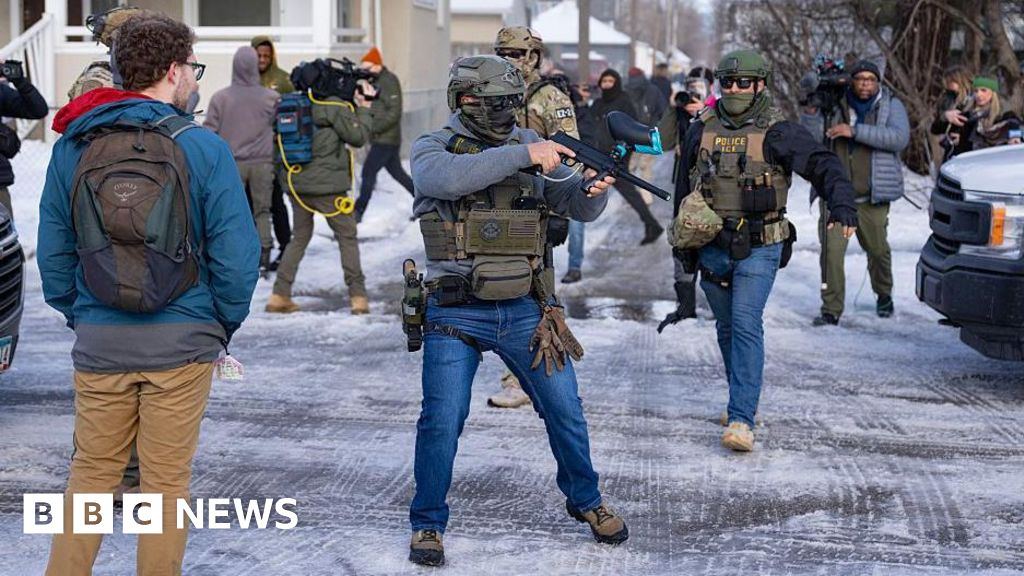
Public and community resistance to ICE operations has been significant, often escalating into aggressive or violent encounters. Many communities have actively pushed back against the presence and tactics of ICE and its partner agencies. It has become a common practice for residents to record ICE agents during arrests, using mobile phones as a tool for accountability and documentation. High-profile incidents, such as operations in Chicago, saw a collective of media organizations sue the Border Patrol, alleging improper force against journalists, religious leaders, and protesters. Although a federal judge initially sided with the plaintiffs, an appeals court later overturned the order, demonstrating the complex legal battles surrounding these confrontations. The Minneapolis shooting of Renee Good is not an isolated incident; previous reports, including two incidents in Los Angeles in October where agents shot at drivers, highlight the recurring nature of such events. DHS officials defended these incidents, stating drivers threatened officers with their vehicles. Furthermore, ICE officers and other immigration agents have faced criticism for wearing masks during operations, a practice DHS defends as necessary to protect agents from doxing and harassment. These confrontations underscore a deeply divided public sentiment and ongoing tensions regarding the methods and transparency of federal immigration enforcement, impacting stakeholder trust and community relations.
American public opinion on Trump’s immigration enforcement policies presents a complicated and nuanced picture, as suggested by polling data. An October 2025 survey by the nonpartisan Pew Research Center revealed that slightly more than half of Americans believe some level of deportation is necessary, a figure largely consistent with findings from the previous March. This indicates a general acceptance among a majority of the population for the principle of immigration enforcement. However, the same poll simultaneously highlighted significant concerns regarding the Trump administration’s specific enforcement methodologies. A majority of American adults, specifically 53%, expressed the belief that the administration was doing “too much” to deport undocumented immigrants. In contrast, only 36% actively supported the administration’s approach. This divergence illustrates a national debate where the necessity of enforcement is acknowledged, but the intensity, scope, and human cost of the specific policies enacted are widely questioned. Political analysts and policy watchers must closely monitor these evolving sentiments, as they indicate the potential for future policy shifts and the ongoing challenge for any administration to balance perceived national security needs with humanitarian concerns and civil liberties.
About the Author