Key Takeaways
CES 2026 Health Tech launches redefine wellness. Discover AI mirrors, smart scales, and exoskeletons. Insights for Tech Enthusiasts and Innovators.
Overview
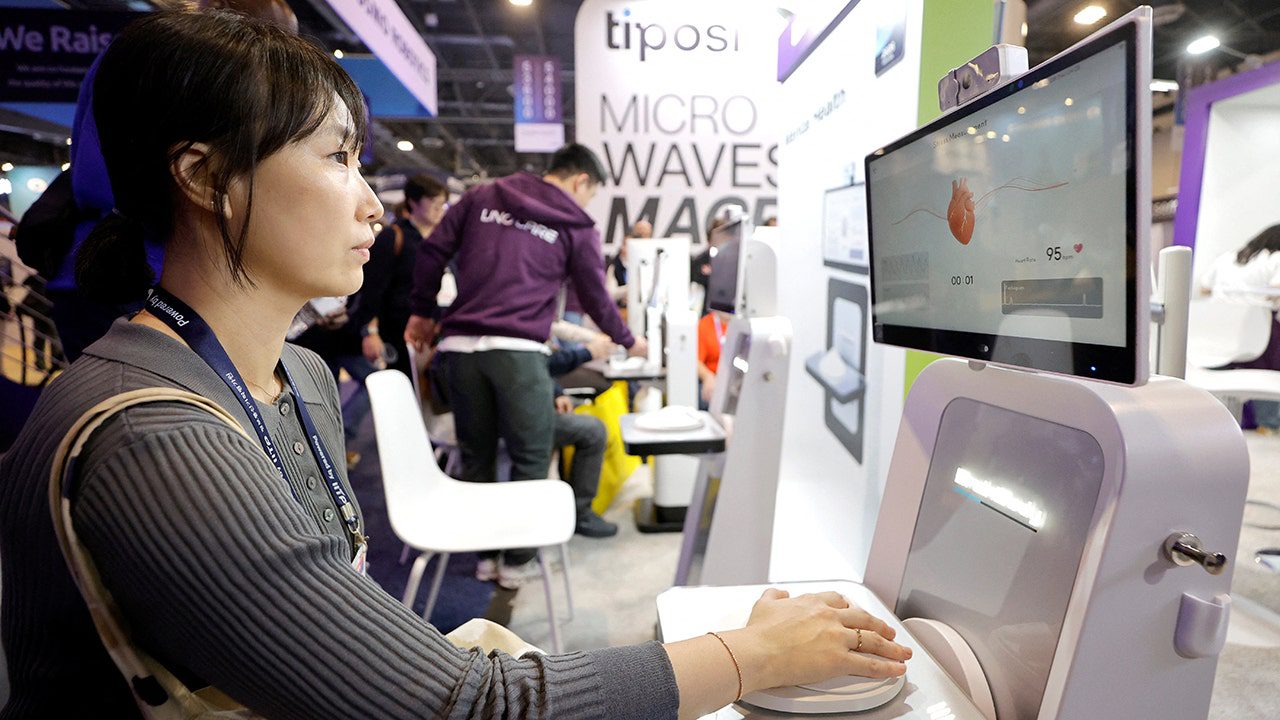
CES 2026 in Las Vegas showcased a pivotal shift, with health tech products taking center stage and highlighting a transformative era for personal wellness. The global consumer technology event unveiled cutting-edge gadgets and AI-driven solutions set to redefine preventative care.
For Tech Enthusiasts, Innovators, and Startup Founders, this convergence of technology and health presents immense opportunities. These innovations promise market disruption, new development avenues, and deeper integration of wellness into daily life across Technology India.
Key revelations include NuraLogix’s AI-powered Longevity Mirror ($899, 30-second health prediction) and Withings BodyScan 2 (ECG, hypertension risk in 90 seconds).
This analysis delves into these products’ specifications, market context, and future implications for health innovation.
Key Data
| Product | Core Function | Key Technology/Feature | Price/Availability |
|---|---|---|---|
| NuraLogix Longevity Mirror | Predicts long-term health outlook | AI analyzes blood flow, scores metabolic/heart health, physiological age in 30s | $899 (includes 1yr sub), $99/yr after; Launches early 2026 |
| Ascentiz H1 Pro | Lightweight walking exoskeleton | AI adapts assistance to motion/terrain; Modular, dust/water resistant | Not disclosed; Demonstrated at CES 2026 |
| Allergen Alert | Handheld food allergen/gluten detector | Lab-grade technology (bioMérieux expertise); Minute-level detection | Not disclosed; Pre-orders end 2026 |
| Withings BodyScan 2 | Smart scale as health hub | Measures ECG, arterial stiffness, metabolic efficiency, hypertension risk in 90s (CES Innovation Award) | Not disclosed; CES Innovation Award 2026 |
Detailed Analysis
CES has traditionally served as the definitive global showcase for consumer technology, offering a tantalizing glimpse into the products and innovations poised to shape our near future. However, CES 2026 marked a pivotal moment, signaling a profound redirection of this technological prowess towards health tech products and personalized wellness solutions. Far from being relegated to niche medical expos, health technology commanded significant attention in Las Vegas, transcending the usual array of flashy gadgets to embed preventative care, recovery enhancement, mobility support, and long-term well-being directly into consumer-accessible devices. This evolution reflects a maturing industry landscape, where technology is increasingly seen not just as a convenience, but as an essential partner in managing and optimizing personal health. Historically, health tech often grappled with adoption barriers and regulatory complexities, primarily existing within specialized clinical settings. The advancements showcased at CES 2026, driven by sophisticated AI integration, miniaturization, and user-centric design, demonstrate a clear and accelerated trajectory towards mainstream integration. This profound shift holds immense implications for Tech Enthusiasts, Developers, and Startup Founders, particularly within the burgeoning Technology India ecosystem. It opens vast new markets for specialized software development, robust hardware engineering, and innovative service models focused on holistic wellness and precision health. The global healthcare paradigm is unmistakably shifting towards proactive measures, early detection, and individualized care, rendering these innovations not merely interesting, but fundamentally relevant and urgent for the next wave of technological progress. This year’s CES cemented health tech’s position at the forefront of innovation, promising significant market disruption and transformative societal benefits.
The diverse array of health tech products unveiled at CES 2026 underscores a remarkable integration of advanced technological capabilities, fundamentally enhancing diagnostic, preventative, and rehabilitative care. NuraLogix’s Longevity Mirror, set to launch in early 2026 at $899 plus a $99 annual subscription, exemplifies the forefront of predictive health. This AI-powered smart mirror transforms a simple 30-second selfie video into a comprehensive health snapshot by meticulously analyzing subtle blood flow patterns in the face. It provides users with metabolic health, heart health, and physiological age scores on a scale of zero to 100, alongside clear explanations and actionable recommendations. The AI’s training on “hundreds of thousands of patient records” lends significant credibility, allowing it to translate complex biometric data into understandable insights, supporting up to six user profiles. This product alone represents a monumental leap in accessible, non-invasive health screening, providing early warnings that encourage proactive engagement with one’s health journey. In the realm of mobility, Ascentiz showcased its H1 Pro walking exoskeleton. Distinguished by its lightweight, modular design, the H1 Pro is designed to reduce strain while providing motor-assisted movement over varying terrains and distances. Crucially, its AI system intelligently adapts assistance to the user’s motion and the ground conditions, proving effective on inclines and uneven surfaces. Its compact, belt-based attachment and “dust- and water-resistant construction” signify a clear move beyond rigid clinical environments towards practical, everyday mobility support. Complementing this, Cosmo Robotics earned a CES Innovation Award for Bambini Kids, the first overground pediatric exoskeleton with powered ankle motion, specifically designed for children aged 2.5 to 7 with neurological disorders. Offering both active and passive gait training, Bambini Kids represents a critical advancement in pediatric rehabilitation, aiming to reduce complications associated with conditions like cerebral palsy by encouraging guided, natural movement. These specific technological advancements, from AI-driven diagnostics to intelligent robotic mobility, illustrate a market context ripe for innovation and significant health impact, especially for developers creating software and algorithms for these advanced gadgets.
The comparative landscape at CES 2026 reveals a significant divergence from the earlier generation of wellness wearables. While devices like the Garmin Venu 4 smartwatch, an Innovation Honoree, continue to refine health tracking with its “health status feature” highlighting deviations from personal baselines in metrics like heart rate variability and respiration, and “lifestyle logging” linking habits to sleep and stress, the newer cohort of health tech products offers a far more expansive and diagnostic-adjacent functionality. For instance, Withings BodyScan 2, another CES Innovation Award winner, redefines the bathroom scale. In under 90 seconds, it measures ECG data, arterial stiffness, metabolic efficiency, and hypertension risk, shifting the focus from mere weight management to comprehensive cardiometabolic health tracking. This multi-metric approach surpasses the singular data points of many smartwatches, providing a more holistic view. In terms of specialized solutions, Allergen Alert introduces a groundbreaking handheld device for detecting food allergens or gluten in meals within minutes. Built on “laboratory-grade technology derived from bioMérieux expertise,” this mini-lab brings a level of precision and confidence previously unavailable in consumer settings, impacting dining experiences for millions. Similarly, Samsung’s preview of Brain Health for Galaxy wearables, analyzing walking patterns, voice changes, and sleep data for early cognitive decline signs, represents a preventative-focused innovation. While Samsung emphasizes it’s “not intended to diagnose medical conditions,” its aim for early warnings positions it as a crucial tool for proactive health management. These products signify a market where devices are not just passively collecting data but actively interpreting it, offering insights that blur the lines between consumer gadgetry and medical screening tools. This intensifies the competitive landscape for Technology India startups, necessitating a focus on both user experience and clinical validation.
[Suggested Matrix Table: Key Health Tech Products at CES 2026: Features, Technology & Market Positioning]
For Tech Enthusiasts, Innovators, Early Adopters, Developers, and Startup Founders, CES 2026 serves as a powerful testament to the burgeoning potential of health tech products. The profound emphasis on AI-driven diagnostics, such as NuraLogix’s predictive mirror, adaptive mobility solutions like Ascentiz’s exoskeletons, and personalized recovery systems exemplified by RheoFit A1, which uses AI body scans for tailored massages, opens an expansive frontier for innovation. Software developers will find new challenges and opportunities in refining AI algorithms for health data interpretation, ensuring accuracy, and maintaining user privacy. Hardware engineers, meanwhile, can explore compact, robust designs for wearable and integrated health devices. Early adopters should vigilantly monitor not only the technological advancements but also the evolving regulatory frameworks, particularly concerning data privacy and the medical classification of these diagnostic-adjacent tools. Subscription models, like NuraLogix’s annual fee, will also be a key factor in market penetration and profitability. For Startup Founders in Technology India, this presents a fertile ground to identify specific niches in localized wellness solutions, develop AI-powered preventative care platforms, or create accessible mobility aids, perhaps extending solutions like Bambini Kids for broader applications. The surprising integration of existing home tech, such as Ring Fire Watch leveraging doorbells for wildfire detection, further illustrates the scalable potential of applying current technology to broader public safety and health challenges. Key metrics to monitor include the adoption rates of these sophisticated devices, the expansion of their feature sets (e.g., Allergen Alert’s plans for more allergens), and the formation of strategic collaborations between tech giants and healthcare providers. The future of wellness technology is unequivocally moving towards highly personalized, intelligent, and seamlessly integrated solutions that empower individuals to take a proactive stance on their health, creating a robust and dynamic market for innovation.
About the Author