Key Takeaways
Venezuela’s interim leader sworn in after Maduro’s US arrest, intensifying political crisis. Explore policy implications, stakeholder views, and global geopolitical shifts.
Overview
Delcy Rodríguez was sworn in as Venezuela’s interim president following the dramatic arrest and US court appearance of ousted leader Nicolás Maduro. This event marks a critical juncture in the escalating Venezuela political crisis, reshaping its governance and international standing.
For Policy Watchers and Informed Citizens, these developments highlight complex dynamics of national sovereignty and international law. The situation holds significant implications for regional stability and states facing external pressures.
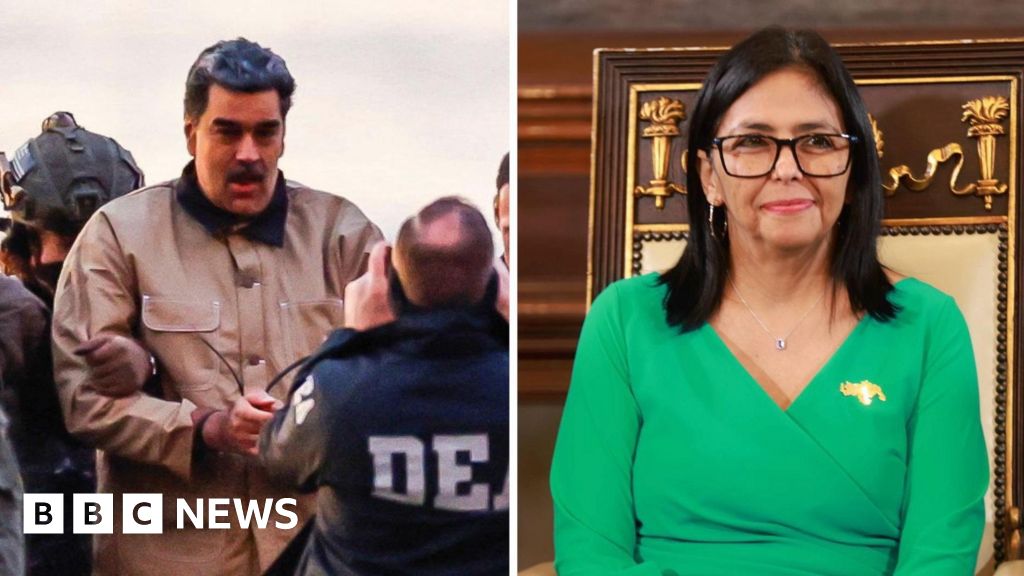
Maduro pleaded not guilty to four charges, including drug trafficking and terrorism, after US forces seized him. Rodríguez, 56, was sworn in amidst demands for his release, describing the detention as a “kidnapping.”
This article provides balanced political analysis, exploring immediate reactions, governmental perspectives, and broader international policy implications.
Detailed Analysis
Venezuela’s political trajectory over the past years has been marked by profound internal divisions and significant international scrutiny, culminating in the recent dramatic events surrounding Nicolás Maduro. This latest episode, involving the physical apprehension of a sitting, or recently removed, head of state by a foreign power, signifies an unprecedented escalation in international relations and poses substantial questions regarding national sovereignty and the permissible limits of extraterritorial jurisdiction. The nation has grappled with a severe economic downturn, political instability, and a contentious power struggle that has seen various international actors, particularly the United States, advocating for a change in leadership. The underlying context includes Venezuela’s vast energy reserves, frequently highlighted by US officials as a critical global asset, which adds an economic dimension to the political and legal complexities.
Historically, international law generally protects state leaders from foreign prosecution while in office, a principle often at odds with universal jurisdiction claims for grave international crimes. Maduro’s arrest by US forces, framed by the US as a “surgical law enforcement operation” against a “fugitive from justice” rather than a political act, directly challenges this delicate balance. This incident follows years of deteriorating diplomatic ties between Caracas and Washington, punctuated by sanctions, accusations of human rights abuses, and allegations of narcotrafficking against Venezuelan officials. The overnight raid by US forces and Maduro’s subsequent appearance in a New York courtroom on serious charges of drug trafficking and terrorism, without Venezuela’s consent, introduces a novel and highly contentious element into this already volatile dynamic.
The immediate response within Venezuela saw Delcy Rodríguez, vice president since 2018, sworn in as interim president in a parliamentary session. This action demonstrates a clear intent by Maduro’s allies to maintain continuity of governance despite the US intervention. The session itself reportedly began with explicit demands for Maduro’s release from US custody, underscoring the united front presented by the ruling faction. Rodríguez’s public statement, expressing pain over what she termed the “kidnapping” of Maduro and his wife, Cilia Flores, frames the US action not as a legitimate law enforcement effort but as an illegitimate act of aggression, laying the groundwork for a prolonged diplomatic and legal battle. This narrative is crucial for rallying domestic support and garnering international sympathy from nations wary of foreign intervention in sovereign affairs.
The legal confrontation unfolded dramatically in a New York courtroom, where Nicolás Maduro, appearing in shackles alongside his wife, defiantly insisted on his continued presidency of Venezuela. He pleaded not guilty to four grave charges: narco-terrorism conspiracy, cocaine importation conspiracy, possession of machine guns and destructive devices, and conspiracy to possess machine guns and destructive devices. During the 30-minute hearing, Maduro vocally asserted his status as a “kidnapped president” and a “prisoner of war,” declaring, “I’m a decent man. I am still president of my country.” Judge Alvin Hellerstein, 92, acknowledged these claims but indicated there would be “a time and a place to get into all of this,” deferring the substantive debate on his presidential legitimacy to a later stage. The next court hearing is set for March 17, marking a critical juncture for both the legal proceedings and Venezuela’s political future.
Concurrently, the international diplomatic arena became a battleground of conflicting narratives. The US faced sharp criticism at the United Nations for its actions. Venezuela’s ambassador, Samuel Moncada, vehemently denounced the US operation as an “illegitimate armed attack lacking any legal justification,” echoing his government’s stance on the violation of sovereignty. In stark contrast, US Ambassador to the UN, Mike Waltz, vigorously defended the intervention. He characterized Maduro as an “illegitimate so-called president” and a “fugitive from justice,” asserting that “the largest energy reserves in the world could not be left in the hands of an illegitimate leader.” Waltz explicitly described the action as a “surgical law enforcement operation” aimed at apprehending Maduro, reinforcing the US position that this was a legal rather than a military or political intervention.
Further dissecting the US perspective, President Trump, just hours after the operation involving over 150 aircraft and 200 US personnel entering Venezuela, declared the US would “run” Venezuela until “a safe and proper and judicious transition” was possible. He also promised that US oil companies would move into the country to “fix infrastructure” and “start making money for the country,” explicitly linking the intervention to Venezuela’s vast oil wealth and potential economic restructuring under US influence. This statement clearly outlines the geopolitical and economic interests underpinning the US action. However, this US strategy was met with skepticism even within the US political establishment. Senate Minority Leader Chuck Schumer, following a classified briefing at the US Capitol, criticized the plan as “vague, based on wishful thinking, and was unsatisfying.” Schumer voiced concerns about the broader implications, stating, “I did not receive any assurances that we would not try to do the same thing in other countries,” and argued that “When the United States engages in this kind of regime change and so-called nation building, it always ends up hurting the United States.” This internal US debate reveals the contentious nature and potential long-term risks associated with such assertive foreign policy.
Despite the US administration’s explicit intentions and actions, the immediate ground reality remained that Maduro’s allies retained control within Venezuela. The swift swearing-in of Delcy Rodríguez and the public display of support by thousands of Venezuelans outside the Federal Legislative Palace for Maduro, his wife, and the interim president, underscored the resilience of the existing power structure. Maduro’s son also publicly expressed “unconditional support” for Rodríguez and vowed that his parents “will return” to Venezuela, signaling a determination to resist foreign pressure and maintain the political status quo.
The US operation in Venezuela, viewed through a historical lens, aligns with past instances where major powers have intervened in the affairs of sovereign nations, often citing national security interests, humanitarian concerns, or the necessity to combat illicit activities. However, the direct apprehension of a nation’s leader from within its territory by a foreign military force, regardless of the charges, represents a significantly elevated level of intervention compared to sanctions or diplomatic pressure. This action risks setting a contentious precedent for international law, potentially normalizing direct action against leaders deemed illegitimate or criminal by certain states, thus undermining the principle of non-intervention enshrined in the UN Charter. The criticism faced by the US at the UN Security Council, with Venezuela’s ambassador decrying an “illegitimate armed attack,” highlights the divergence in interpretation of international legal frameworks.
Comparing the US justifications, Mike Waltz’s emphasis on Venezuela’s energy reserves and the illegitimacy of Maduro as a “fugitive from justice” parallels historical narratives where resource control and combating perceived threats have driven foreign policy. Speaker Mike Johnson reinforced this, suggesting the seizure of oil exports would “bring the country to a new governance in very short order,” explicitly linking economic leverage to political outcomes. This approach contrasts sharply with more multilateral or regionally negotiated resolutions to political crises. The internal US debate, particularly Senator Schumer’s warnings about the pitfalls of “regime change and so-called nation building,” draws on lessons from previous US interventions in other countries where initial objectives often devolved into prolonged engagements with unintended consequences, ultimately detrimental to US interests.
The resilience shown by Maduro’s allies in Venezuela, immediately swearing in an interim leader and garnering public support, contrasts with historical instances where the removal of a leader led to immediate government collapse. This suggests a robust internal support base or an entrenched political system capable of resisting external pressures in the short term. Rodríguez’s subsequent invitation for “collaboration” with the US on an “agenda of co-operation orientated towards shared development within the framework of international law” can be interpreted as a strategic diplomatic maneuver. It attempts to re-frame the narrative from one of confrontation to one of potential, albeit conditional, engagement, while implicitly demanding adherence to international legal norms. This subtle shift in rhetoric from Caracas suggests a nuanced approach to navigating an intensely difficult geopolitical landscape.
For News Readers and Informed Citizens, the events in Venezuela signify a perilous intensification of its long-standing political crisis, with profound implications for its sovereignty and the broader principles of international law. The detention of Nicolás Maduro by US forces, juxtaposed with the swearing-in of Delcy Rodríguez as interim president, creates a dual-track scenario: a legal battle in US courts against Maduro and a political struggle for legitimacy and control within Venezuela. The public displays of support for Maduro and Rodríguez in Caracas demonstrate the internal resilience and challenges any external attempt at regime change will face. Citizens globally should understand that this situation sets a potentially far-reaching precedent for international intervention, raising questions about how nations will respond when foreign powers act unilaterally against sovereign leaders.
Policy Watchers and Political Analysts must closely monitor several key indicators. Foremost among these is the progression of Maduro’s legal case, particularly the next hearing scheduled for March 17. The outcome of these judicial proceedings, and any legal challenges to the US’s jurisdiction, will have significant bearing on the international legal landscape. Equally important will be the reactions from key international bodies like the UN and regional organizations in Latin America, which could either legitimize or condemn the US’s actions. Furthermore, the effectiveness of the US’s stated intention to “run” Venezuela and the impact of its seized oil exports on Venezuela’s internal governance structure need careful observation. Rodríguez’s offer for an “agenda of co-operation” with the US, though under the umbrella of international law, presents a nuanced diplomatic opening that could either lead to dialogue or be rejected outright, fueling further tension.
The immediate risks involve further destabilization in Venezuela, potential for regional spillover, and intensified geopolitical friction between the US and its allies versus nations advocating for non-intervention. Opportunities for resolution appear slim but might emerge from diplomatic channels if the international community can foster a dialogue that respects Venezuela’s sovereignty while addressing the grave charges against Maduro. The conflicting narratives from both the US and Venezuela underscore the urgent need for clarity on the application of international law in an era of complex global challenges, particularly concerning sovereign leaders and resource-rich nations. The long-term implications will likely include a re-evaluation of international legal norms regarding extraterritorial arrests and state sovereignty, impacting future global affairs and policy decisions.
About the Author