Key Takeaways
US-Venezuela Tensions escalate as Trump warns of ‘another strike’ after Maduro’s capture. Understand the narco-terrorism charges, oil reserves’ role, and global implications.
Overview
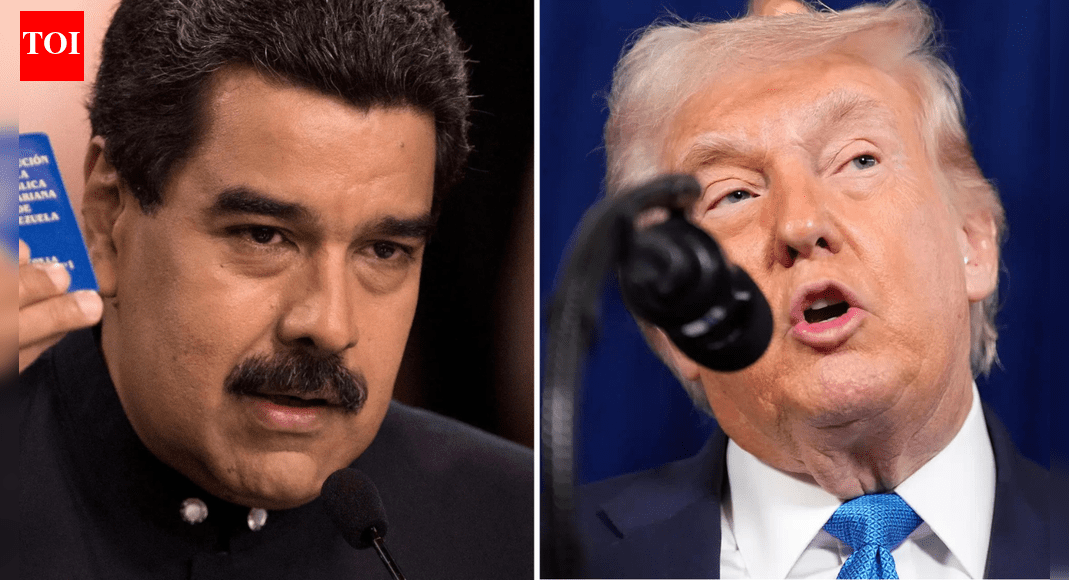
US President Donald Trump issued a stern warning to Venezuela late Sunday, threatening another US strike “if they don’t behave.” This statement intensifies US-Venezuela tensions, creating significant breaking news in current affairs for news consumers.
This follows US military action that captured Venezuelan President Nicolas Maduro and his wife, Cilia Flores, on Saturday. They are held in Brooklyn, facing federal charges of drug trafficking and narco-terrorism.
Maduro rejects claims, accusing the US of targeting Venezuela’s 303 billion barrels of oil reserves. This update explores the implications of Trump’s warning and the ongoing crisis.
Detailed Analysis
The latest stern warning from former US President Donald Trump to Venezuela marks another critical juncture in a deeply troubled bilateral relationship. This recent declaration, threatening further US military action if the South American nation “doesn’t behave,” follows swiftly on the heels of a dramatic military operation. That audacious Saturday action saw the US orchestrate the toppling of the Venezuelan government and the subsequent capture of its sitting President, Nicolas Maduro, and his wife, Cilia Flores, in Caracas. Such direct intervention underscores a significant shift in international diplomatic norms and sets a precedent with wide-ranging implications for sovereign states. For general news consumers, this sequence of events spotlights the evolving dynamics of global power and the increasing use of overt military force in pursuit of foreign policy objectives, particularly in resource-rich regions.
President Maduro and Cilia Flores are currently held at Brooklyn’s Metropolitan Detention Centre, facing a litany of severe federal charges. The Southern District of New York has charged the pair with conspiracy to commit narco-terrorism, cocaine importation, possession of machine guns and destructive devices, and conspiracy to possess those weapons. These accusations place Maduro at the heart of an alleged international drug trafficking network. Crucially, Maduro has vehemently rejected these allegations, publicly accusing the United States of weaponizing its “war on drugs” narrative. He argues that the true motivation behind the aggressive US posture is Venezuela’s vast oil reserves. These reserves, estimated by the US Energy Information Administration at approximately 303 billion barrels, constitute nearly one-fifth of the world’s total, making Venezuela a crucial player in global energy geopolitics. This narrative from Maduro offers a counter-perspective to the official US stance, suggesting a complex interplay of geopolitical interests beneath the surface of the drug trafficking charges.
Comparing this US action against Venezuela to historical precedents reveals a recurring pattern of superpower intervention in nations with strategic resources. While the US cites drug trafficking, Maduro’s counter-claim, highlighting Venezuela’s immense oil wealth, aligns with historical interventions linked to economic interests. The explicit narco-terrorism charges against a sitting head of state are exceptionally rare, elevating legal and diplomatic stakes. This approach differs from prior US strategies, often relying more on sanctions or covert operations. The direct military action and public detention signify a more aggressive, overt policy shift, potentially setting a new precedent for international dispute resolution, especially concerning resource-rich nations. It impacts global norms of national sovereignty.
For general readers and news consumers, these developments in Venezuela carry significant weight. The immediate risk is further destabilization within Venezuela and potentially the broader Latin American region, particularly if Trump’s “second strike” threat materializes. This current affair could also impact global oil markets, given Venezuela’s substantial reserves, even though direct market impacts were not immediately disclosed. The legal proceedings against Maduro and Flores in Brooklyn will be a critical event to monitor, as they could unveil more details about alleged cartel links and US evidence. Additionally, international reactions from other major powers will reveal the global community’s stance on such direct interventions. The situation highlights the delicate balance between national sovereignty, international law, and the foreign policy objectives of powerful nations. Understanding these nuances is crucial for comprehending the complex geopolitical shifts unfolding today.
About the Author