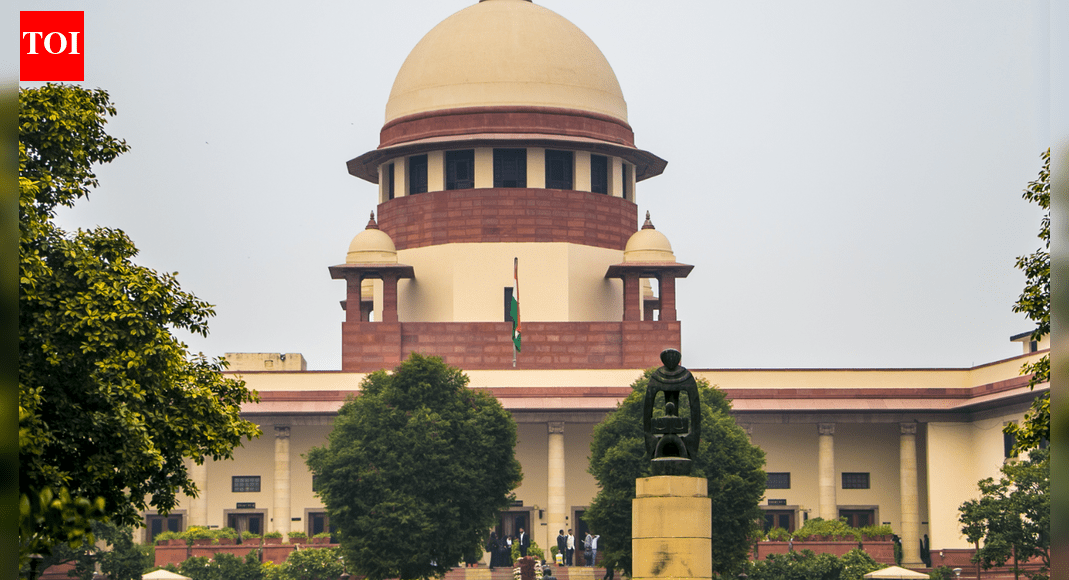
Key Takeaways
Supreme Court clarifies that quota candidates can secure general category posts on merit. Understand the ruling’s impact on government jobs and fair employment in India.
Overview
The Supreme Court of India has issued a pivotal ruling, declaring that candidates belonging to Scheduled Castes, Scheduled Tribes, Other Backward Classes, and Economically Weaker Sections are fully entitled to secure general category posts if they achieve the cutoff marks stipulated for the general category. This landmark decision clarifies a long-standing point of contention in public recruitment processes, poised to significantly impact future government job opportunities across India.
This judgment marks a crucial development in India News, reinforcing the principle that meritocracy should operate in harmony with affirmative action. It means reserved category candidates will not face exclusion from unreserved positions solely based on their category if they demonstrate sufficient merit to qualify under the general criteria.
A bench comprising Justices Dipankar Datta and Augustine G Masih delivered this ruling, drawing inspiration from the Supreme Court’s monumental 1992 Indra Sawhney case. The bench notably dismissed a petition from the Rajasthan High Court, which had previously argued that considering reserved candidates for general posts amounted to an impermissible ‘double benefit.’
This analysis will delve into the immediate, medium-term, and long-term implications of this judgment for job seekers, recruitment bodies, and the evolving landscape of affirmative action within current affairs and public employment in India.
Detailed Analysis
The Supreme Court of India consistently acts as the ultimate interpreter of the Constitution, particularly in matters of social justice and equality, which include the complex framework of reservations. This recent ruling is a testament to the judiciary’s ongoing effort to refine the application of reservation policies, ensuring their intended beneficiaries are not inadvertently disadvantaged by restrictive interpretations. The bedrock of this decision lies in revisiting the principles established in the celebrated Indra Sawhney case of 1992, often referred to as the ‘Mandal Commission case.’ That landmark verdict, while famously granting 27% reservation to Other Backward Classes (OBCs) in government jobs, also laid down crucial guidelines regarding the implementation of quotas, including the ‘creamy layer’ concept and the 50% ceiling on total reservations. By referring back to Indra Sawhney, the current bench underscores a continuity in judicial thought: reservations aim to level the playing field, but they do not negate the possibility of reserved category candidates competing and succeeding in open, merit-based categories. This historical context highlights that the debate isn’t about abolishing reservations but ensuring their equitable and just application, preventing misinterpretations that could unintentionally create barriers for meritorious individuals.
The core of the Supreme Court’s recent judgment unequivocally states that reserved category candidates, including those from Scheduled Castes, Scheduled Tribes, Other Backward Classes, and Economically Weaker Sections, are fully entitled to be considered for general category posts if they secure marks equivalent to or higher than the general cutoff. This pronouncement directly addresses and overturns the restrictive interpretation previously adopted by the Rajasthan High Court. Justice Dipankar Datta, penning the judgment, lucidly articulated the rationale, stating, “We hold that the word ‘open’ connotes nothing but ‘open’, meaning thereby that vacant posts which are sought to be filled by earmarking it as ‘open’ do not fall in any category.” This clarifies that ‘open’ or ‘unreserved’ posts truly are for anyone who qualifies on merit, irrespective of their background. The court dismissed the argument that allowing reserved category candidates into general posts, despite their merit, would constitute a ‘double benefit.’ Instead, it reiterated, “The availability of reservation doesn’t operate as a bar for a reserved category candidate from being considered on merit against the unreserved category.” This legal clarity provides a vital safeguard against administrative misinterpretations that could previously have limited opportunities for highly capable individuals. The judgment also specified the process for recruitment based on a written test and interview: if a reserved category candidate surpasses the general cutoff in the written test, they proceed to the interview under the general category. Should their cumulative marks (written + interview) fall short of the general cutoff, they would then be considered under their respective reserved category, ensuring fair consideration at every stage.
The Supreme Court’s ruling stands in direct contrast to the Rajasthan High Court’s earlier position, which had explicitly barred reserved category candidates from being appointed against general category posts, even when they secured higher marks. This divergence illuminated a significant legal interpretation gap that the Supreme Court has now decisively closed, providing much-needed uniformity across India’s varied recruitment landscapes. Many state public service commissions and recruitment boards often grapple with the nuances of implementing reservation policies, sometimes leading to localized interpretations that, while well-intentioned, could inadvertently restrict opportunities. This judgment sets a national precedent, compelling all recruitment bodies to align their rules and practices with the principle that ‘open’ means truly open. It harmonizes the constitutional mandate of affirmative action, designed to uplift historically disadvantaged communities, with the fundamental principle of meritocracy. By ensuring that belonging to a reserved category does not become a disadvantage for candidates who compete successfully on merit for unreserved seats, the ruling strengthens the integrity of competitive examinations. It moves beyond a narrow view of reservations as separate entitlements, instead framing them as tools to ensure comprehensive social justice that also acknowledges individual merit wherever it surfaces. This judicial stance prevents the unintended consequence of creating artificial ceilings for reserved category individuals who demonstrate exceptional capability.
For millions of job seekers across India, particularly those aspiring to public sector employment, this Supreme Court ruling provides crucial clarity and significantly broadens their scope of opportunity. Reserved category candidates can now approach competitive examinations with the confidence that their merit will be recognized irrespective of their background if they outperform the general cutoff. This shift could foster increased competition and encourage a wider pool of talent to aim for the highest standards. Conversely, while unreserved candidates might perceive increased competition in the ‘open’ category, the ruling fundamentally reinforces that all selections in this category remain purely merit-based. For government departments and public sector undertakings, the immediate impact necessitates a thorough review and potential amendment of existing recruitment policies, guidelines, and application software to ensure full compliance. This will help prevent future legal challenges and streamline the recruitment process. Policymakers will find this judgment a guiding light for future legislative actions related to employment and education, promoting an equitable framework that blends social justice with excellence. In the medium term, we anticipate a reduction in legal disputes concerning reservation interpretation, contributing to greater efficiency in public recruitment. The long-term implications point towards a more inclusive employment landscape where the perception of ‘reserved seats’ and ‘general seats’ might evolve towards a more integrated competitive environment, ultimately contributing to a more cohesive and merit-driven workforce for India’s public services. Stakeholders should closely monitor the circulars and notifications issued by state governments and central recruitment agencies in the coming months, which will detail the revised application procedures and selection criteria, ensuring widespread adherence to this landmark decision.
About the Author