Key Takeaways
Senator Marco Rubio outlines US stance on Venezuelan oil, warning China, Russia, and Iran against influence in the Western Hemisphere. Understand the geopolitical implications and current affairs.
Overview
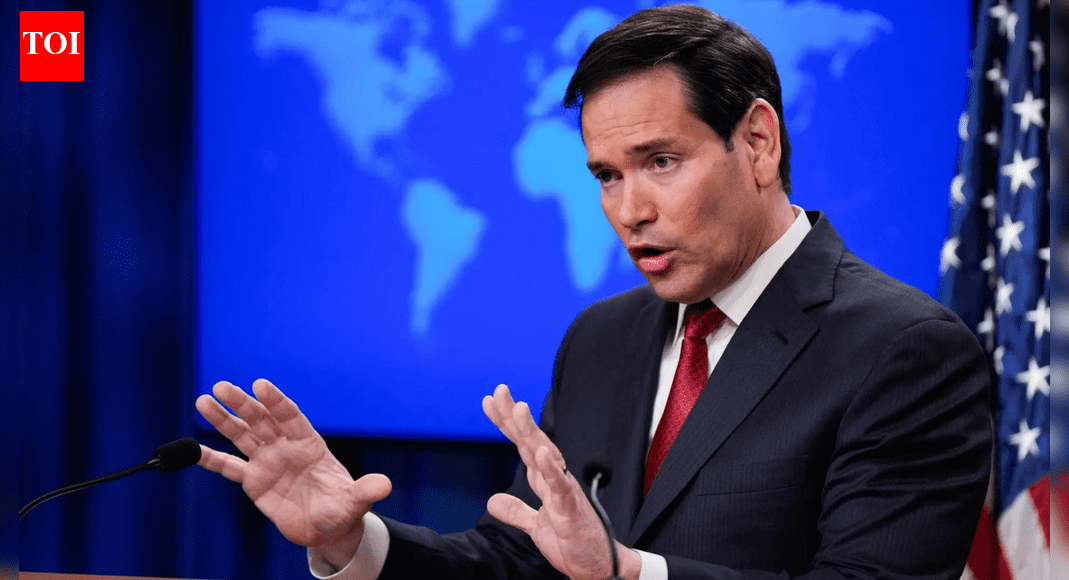
In a significant geopolitical declaration, Senator Marco Rubio articulated the United States’ firm stance on the US Venezuelan oil industry, directly addressing the involvement of China, Russia, and Iran. Rubio asserted that the Western Hemisphere is not to be a “base of operation” for American adversaries, signaling a robust defense of regional influence in current affairs.
Speaking on NBC News, Rubio clarified that US interest in Venezuela’s oil is not driven by a domestic need, emphasizing, “We have plenty of oil.” Instead, the objective centers on preventing foreign adversaries from controlling Venezuela’s vital resources, a critical development for today updates on global power dynamics.
He questioned China, Russia, and Iran’s presence, noting their geographical distance and accusing their involvement of destabilizing the region since 2014. This has led to mass migration, which he called “deeply destabilizing stuff.”
Rubio stressed that such external interference “is not going to continue to happen” under President Trump, framing it as a decisive move to protect the US “backyard,” a crucial point for news consumers worldwide.
Detailed Analysis
The US assertion over Venezuelan oil, as articulated by Senator Marco Rubio, re-emphasizes a long-standing principle of American foreign policy concerning its regional influence, particularly within the Western Hemisphere. Historically, the United States has often viewed Latin America as its strategic “backyard,” where external powers’ significant presence has been met with scrutiny. The ongoing political turmoil in Venezuela, characterized by a leadership dispute involving now-deposed leader Nicolas Maduro, provides a volatile backdrop for these declarations. For general readers tracking current affairs, understanding this historical context is crucial. Venezuela’s vast oil reserves make it a valuable geopolitical prize, attracting interest from various global powers. The entry of nations like China, Russia, and Iran into Venezuela’s economic and strategic sphere has consistently challenged US dominance, setting the stage for direct confrontations like Rubio’s recent remarks. These developments reflect a global shift towards a multipolar world where traditional spheres of influence face increasing pressure from rising international competition.
Senator Rubio’s commentary clarifies the strategic rationale behind the US stance on Venezuelan oil. He explicitly stated US action was not driven by economic need, affirming, “We have plenty of oil.” This indicates the intervention’s primary goal is geopolitical: safeguarding the Western Hemisphere from perceived threats. Rubio questioned why China, Russia, and Iran, “not even on this continent,” needed Venezuelan oil, suggesting strategic ambitions over economic necessity. He characterized these nations as seeking to use Venezuela as a “base of operation” to challenge American interests. Furthermore, Rubio directly attributed Venezuela’s mass migration crisis, ongoing since 2014, to this foreign involvement, labeling it “deeply destabilizing stuff.” He assured such destabilization would not be tolerated under President Trump, signaling a proactive US posture. On Congressional approval, Rubio maintained the operation was “not an invasion” or “extended military operation,” but a “very precise operation” requiring only “a couple of hours,” thereby bypassing traditional legislative oversight.
Rubio’s declaration signals a more assertive US regional policy, echoing historical doctrines limiting external influence in the Americas. This positions the US in direct geopolitical competition with China, Russia, and Iran, whose growing ties in Latin America are seen as challenging regional stability and US interests. For general news consumers, this marks a hardening of US foreign policy in its immediate neighborhood, potentially impacting global diplomatic relations. It reflects a proactive shift from previous approaches, which may have tolerated greater foreign economic engagement, towards directly challenging perceived strategic threats. This sets a crucial precedent for how the US might respond to similar adversary engagements in other sensitive global regions, vital for understanding current affairs.
For general readers, Senator Rubio’s statements underscore escalating geopolitical rivalries impacting current affairs. This warning to China, Russia, and Iran signals the US is prepared for decisive action to protect its regional interests, even through controversial steps like asserting control over another nation’s key industries. Short-term impacts could include heightened diplomatic tensions or retaliatory measures. Medium-term effects might involve shifts in global trade and investment patterns. Long-term, this could redraw global spheres of influence and foster a more fragmented international system. Citizens should monitor official reactions from Beijing, Moscow, and Tehran, alongside any subsequent US actions, to gauge these unfolding international dynamics. The stakes for global stability, regional security, and international law are considerable.
About the Author